
Honda Hybrid Sales Just Hit A July Record — And $4-Per-Gallon Gas Is Why Buyers Are Finally Switching
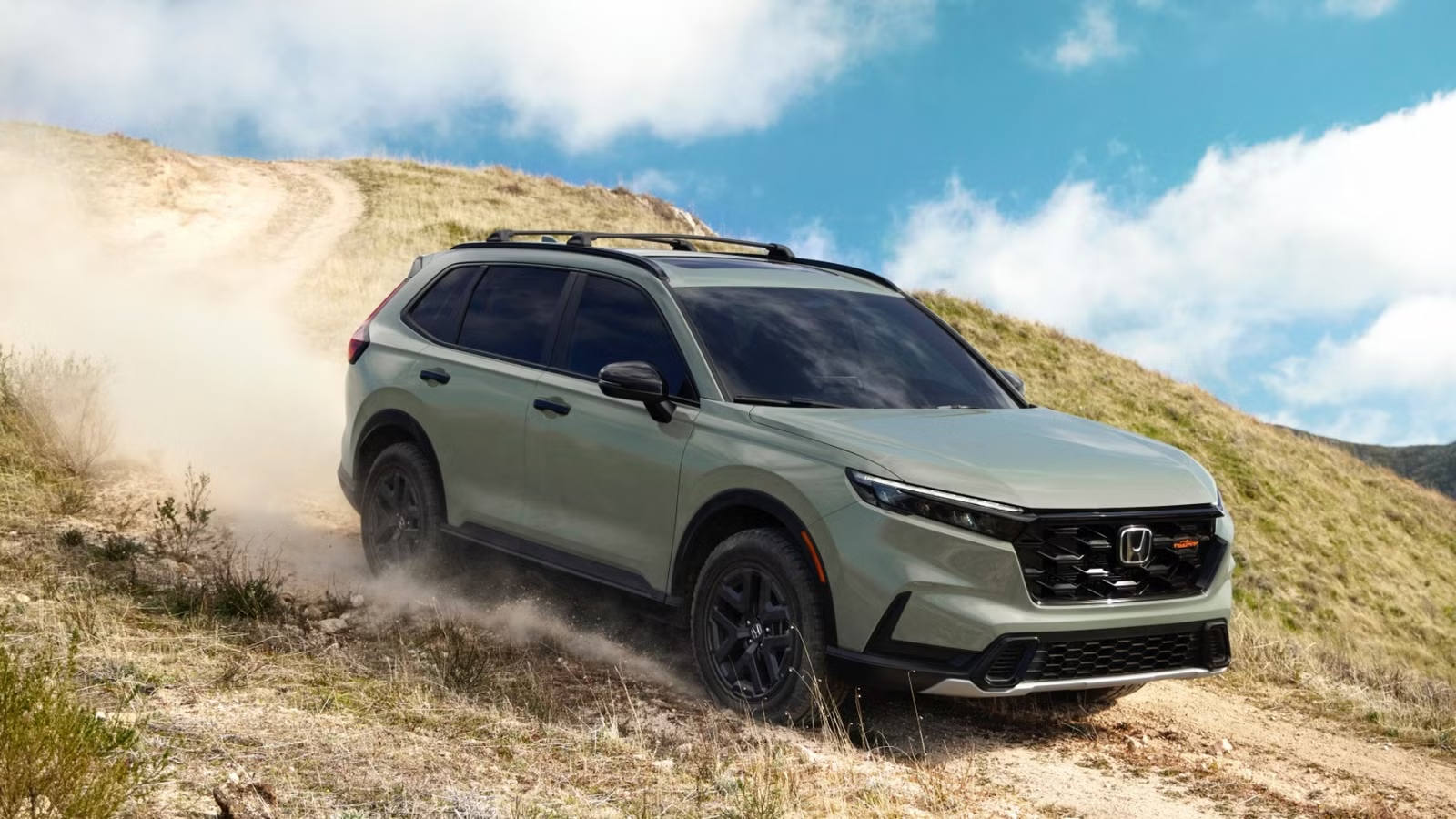
Honda sold 36,609 hybrids in July 2026, a new all-time record for the month, as the national gas average hit $4.10 per gallon — up 95 cents from a year ago. The timing is not a coincidence. With California drivers already paying $5.66 at the pump and analysts warning prices could climb further, mainstream buyers who once shrugged at hybrid premiums are doing the math differently now.

The CR-V Hybrid led the charge, but the broader story is how deeply hybrid powertrains have taken hold across Honda’s lineup. More than half of all CR-Vs sold in July were hybrids. The Accord Hybrid posted its strongest year-over-year gain in the group. Even the Prologue, Honda’s lone battery-electric model, quietly exited the conversation — down 75.4% as the brand doubled down on gas-electric models buyers are actually buying.
CR-V and Accord Hybrids Are Carrying the Most Weight
The CR-V Hybrid accounted for 20,710 units in July, a 18.4% year-over-year increase, and hybrid variants made up 54% of all CR-V sales. That’s a meaningful shift: just a few years ago, the hybrid trim was the option buyers considered; now it’s the version most of them choose. The CR-V overall found 38,335 buyers — an 18.8% gain — and Honda says it remains the best-selling crossover in America.

The Accord Hybrid ran a 41% sales mix and climbed 28.7% year over year. The Accord as a whole topped 20,000 units in July for the first time since 2019, a 54.7% surge that reflects both hybrid demand and a broader return to passenger cars as buyers look for fuel-efficient alternatives to larger SUVs. The Civic Hybrid was the one soft spot in the group, slipping 6.8% despite holding a 32% mix — though the Civic overall still posted its best July since 2021, up 20.7%.
For buyers weighing whether to pay the hybrid premium, the fuel-economy case has gotten easier to make. At $4.10 per gallon nationally — and considerably more in high-cost states — the payback period on a hybrid shortens noticeably. Industry analyst Sam Abuelsamid put it plainly: buyers swapping an older, less-efficient vehicle for a hybrid can typically recover the price difference in fuel savings in under two years at current gas prices.
What the Prologue’s Collapse Says About Where Buyers Are Right Now

Honda’s Prologue electric crossover sold just 1,554 units in July, a 75.4% drop from the same month last year. The contrast with the hybrid numbers is stark, and it reflects a broader market pattern: after the federal $7,500 EV tax credit expired at the end of 2025, battery-electric sales fell sharply across the industry. EVs now account for roughly 6% of new-car sales nationally, down from around 8% for all of 2025.
Hybrids have filled that gap. Across the industry, gas-electric models accounted for 15.9% of July sales, up from 13.4% a year earlier, according to J.D. Power. Honda’s 29% hybrid share of its own July volume puts it ahead of that industry average. The Prologue is being wound down anyway — Honda has signaled it is stepping back from standalone EVs in the near term — but the sales gap between the Prologue and any single hybrid model tells the story of where buyer appetite actually sits in mid-2026.
Acura Joins the Surge, and the Next Hybrid Move Is Already Planned

Acura had its best July since 2023, with overall sales up 18.9% to 11,996 units. The MDX climbed 60.8% to 4,786 units, and the Integra hatchback jumped 68.8% to 2,370. The entry-level ADX continued its momentum with a 28.3% gain. The one weak point was the RDX, down 4.2% — but that model is being phased out, and Honda has confirmed it will return as the first Acura to feature the brand’s two-motor hybrid-electric system.
Honda VP of Auto Sales Lance Woelfer framed July’s results around the company’s deliberate product strategy. “By maintaining our commitment to a balanced lineup of passenger cars and light trucks, Honda and Acura customers are able to find affordable products that meet their needs as market conditions change,” he said. “Our Honda hybrid models also have been a big hit, bringing in a record number of buyers looking for vehicles with high fuel economy that are still fun-to-drive.”
The new Prelude — offered exclusively as a hybrid — sold 354 units in July, which Honda said pushed the coupe past its sales goal and brought its year-to-date total to 2,077 units. It’s a small number, but it signals Honda’s intent: going forward, hybrid-only nameplates are part of the plan, not an experiment.
If Gas Keeps Climbing, the Hybrid Case Only Gets Stronger

The $4.10 national average is already high enough to shift buyer behavior, but the more relevant number for many shoppers is what their region pays. At $5.66, California drivers are already living the scenario the rest of the country may be approaching. If prices push toward $5 nationally — a real possibility given ongoing geopolitical pressures — the hybrid payback math gets even more favorable.
Honda is not waiting to find out. The company has said it will accelerate the rollout of hybrid models and expand the list of hybrid-only nameplates beyond the Prelude. For buyers currently deciding between a standard CR-V and the hybrid trim, or weighing whether the Accord Hybrid’s premium is worth it, the market is giving a clearer answer every month. At current gas prices, the hybrid version of most Honda models pays for itself faster than it did two years ago — and the gap is widening.

Related posts





Latest Post



No Comments