
The British-Built Plymouth That Quietly Pioneered Detroit’s Turbo Era
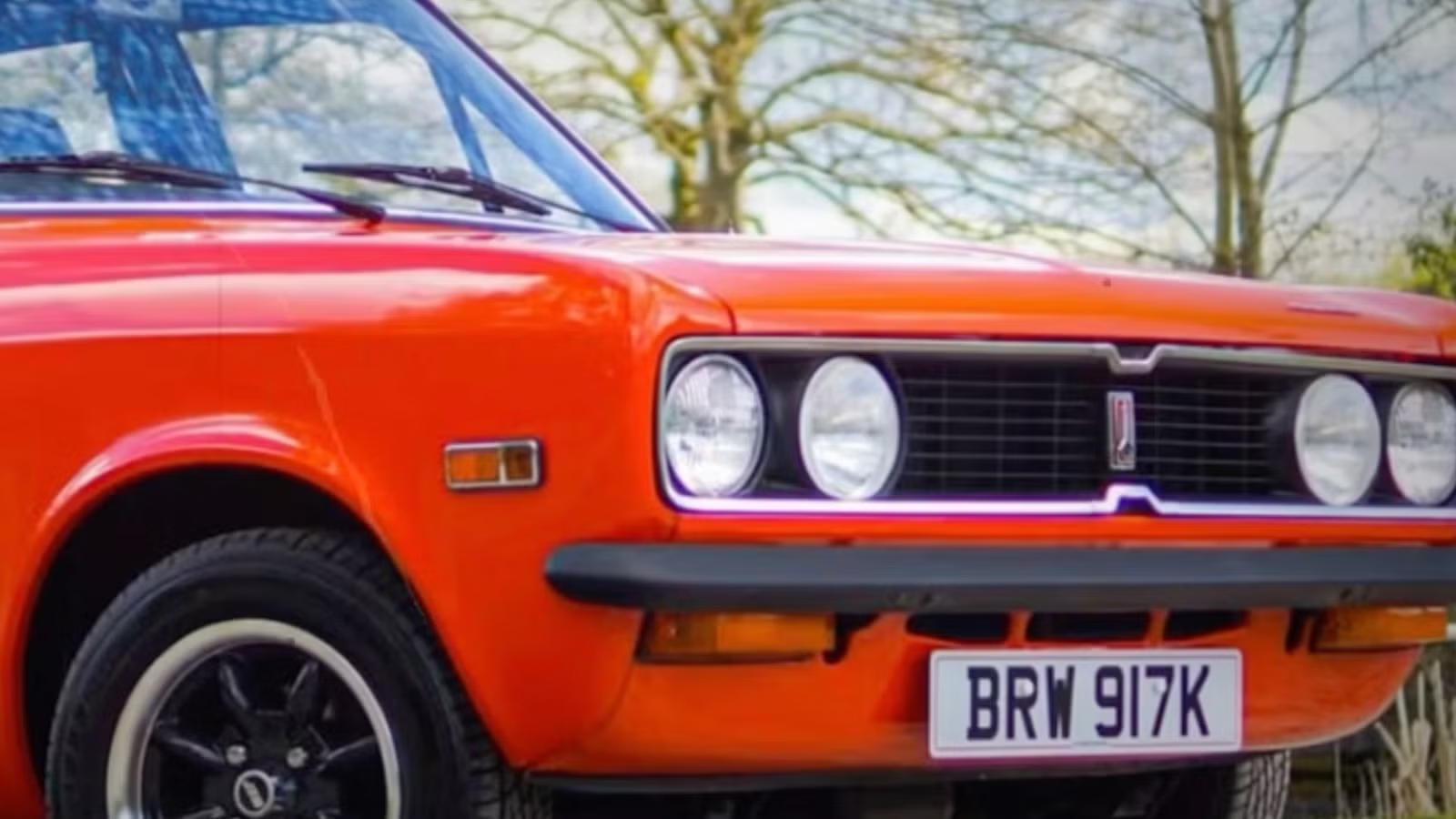
As muscle cars faced the infamous malaise era of the 1970s, automakers like Chrysler were scrambling to figure out how to improve efficiency without sacrificing high-performance power. The automotive industry wanted to keep the profits from the ‘Win on Monday, Sell on Sunday’ period alive.

This led to a lot of experimenting as new equipment like catalytic converters choked out power. As a result, Chrysler built a forgotten British Plymouth model that quietly jump-started Detroit’s turbocharged era. Turbo upgrades provided a solution by delivering extra power without increasing engine size.
However, this rare Plymouth car only scratched the surface of solving the emissions vs power problem that plagued Detroit for years. It ran into a few developmental problems that became too complicated to solve. As a result, the project was scrapped, and it fails to get the credit it deserves as an early turbo innovator.
The 1978 Buick Turbo Regal Didn’t Start The Turbo Party

Sure, the 1978 Buick Turbo Regal deserved to be celebrated for its historical significance and engineering innovations that it delivered to the automotive industry. It does feature the first General Motors turbocharged V6 engine. On that note, the 230 cubic-inch (3.8-liter) turbocharged V6 delivers 165 hp and 285 lb-ft of torque.
However, it does overshadow an earlier turbocharged Plymouth model. Years before the Buick Turbo could spin, Chrysler was dabbling in a rebadged model to try to bridge the widening gap between extremely potent American V8 power and strict fuel economy requirements. Rising insurance premiums didn’t help things either.
The Buick Turbo Regal is celebrated as the predecessor to the Buick Grand National, which is a straight-up turbocharged legend, though. It dominated NASCAR and could outperform plenty of muscular V8 cars from the 1980s. But this Buick still owes its success to an experimental model that existed nearly a decade earlier.
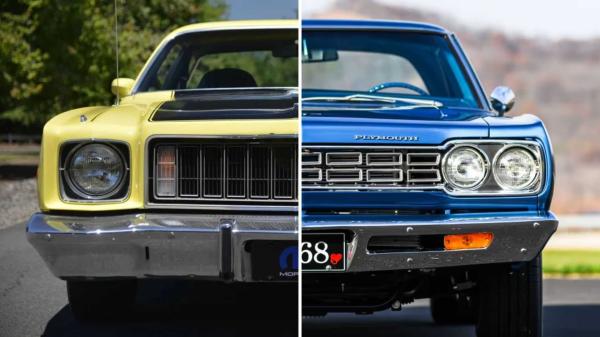
Plymouth Road Runner Generations (All Years, U.S.): Engines, Trims, Specs & Value
The Plymouth Road Runner is arguably the greatest muscle car of all time. Here’s your guide to every generation.
The Plymouth Cricket Experimented With Turbo Power

The 1971 – 1973 Plymouth Cricket had a short but impactful run as it sought to battle increasing emissions standards that choked out iconic muscle cars in the early 1970s. It’s referred to as a British-made car because it is a rebadged Hillman Avenger model. Also, the Avenger moniker is still in use by Stellantis (formerly Chrysler) today, so that’s some neat extra historical context.
Anyway, Chrysler and Texaco teamed up to build the Plymouth Cricket Texaco Controlled Combustion System (TCCS) Concept. It features Texaco’s advanced stratified-charge engine technology with the goal of reducing pollutants while achieving a solid fuel economy. The system actually boosts the power from the original, sluggish British engine.
The 1.5-liter inline-four engine was paired with the TCCS system that uses coordinated in-cylinder air swirl and direct fuel injection. This setup improved power output from 55 to 80 hp and increased torque to 83 lb-ft. It could accelerate from 0 to 60 mph in about 14 seconds while standard models took about 18.5 seconds to get there.
The Plymouth Cricket TCCS Was Efficient

To create a stratified charge in the Plymouth Cricket TCCS, fuel was injected late into the compression stroke and swept into the spark plug. Fuel immediately burned off upon entering the chamber, forming ‘no end’ gas. This gave the engine the ability to run on a wide variety of fuels, including traditional gasoline, diesel, and broader mixtures such as JP-4.
The experimental British Plymouth features a cooled Exhaust Gas Recirculation (EGR) system and oxidation catalysts to meet increasingly strict United States emission standards. The Cricket did quite well in EPA testing as it met 1975 interim standards with three different types of fuel. Plus, the power boost to 80 hp came with a 35% fuel economy gain.
It truly shone against other standard production subcompact cars of the era, as it provided better fuel economy and low-emission capability on the Federal Test Procedure. If the concept ever made it to production, things could have gone differently for the tiny Cricket. However, it ran into significant issues and failed to escape its weak reputation.
The Rarest Plymouth Muscle Car Ever Sold To The Public
It’s the result of an oddball specification that actually wasn’t supposed to be allowed!
The Plymouth Cricket TCCS Faced Challenges

Unfortunately, the Plymouth Cricket TCCS never entered production. The car was designed to meet early emissions standards in the 1970s, which it did accomplish. However, standards continued to increase in 1977. This is when the stratified-charge engine struggled to reach 1977 levels without negatively impacting fuel economy.
The increasing standards reduced allowable NOx from 3.1 gpm to 2.0 gpm, forcing automakers to implement more advanced controls for recertification. Complying with the stricter hydrocarbon limits would require additional combustion requirements, which may have killed the program. It was scrapped and forgotten.
Overall, the production, development, and engineering costs were getting out of hand, and Chrysler turned its back on the experimental Plymouth. It came extremely close to solving the difficult problems of meeting rising emission standards without sacrificing power or fuel efficiency that continued plaguing the industry for years.
The Plymouth Cricket Didn’t Sell Well Either

On top of facing stricter emission standards, the standard Plymouth Cricket wasn’t exactly popular. There are plenty of reasons why it only lasted in production for two years. However, its twin, the Hillman Avenger, did better globally for decades in other markets. In America, it was simply seen as too weak compared to rivals, as 80 HP wouldn’t cut it. However, without the TCCS system, it only had 55 hp!
Plus, the Cricket quickly gained a notorious reputation for being unreliable. It faced tremendous assembly and quality issues with a terrible fit-and-finish. It deteriorated during assembly, leading to severe rusting and mechanical troubles. Also, British cars from the era were known for premature rusting, electrical failures, and water leaks. On top of that, getting a Cricket repaired in a timely manner was difficult. Getting replacement parts took months as they were back ordered from the United Kingdom.

Buyers preferred the imported Dodge Colt to the Plymouth Cricket. It was a rebadged Mitsubishi Galant. Since the Cricket and Colt were both under the Chrysler umbrella, there was cross-divisional competition. Or at least, there could have been, if people actually bought the Cricket over the Colt.
The British Plymouth also struggled against other American compact cars. Despite being a massive fire risk, the Ford Pinto was a more popular option. Also, the Chevrolet Vega attracted more buyers. While you can classify the Plymouth Cricket as a disaster and a failed experiment, it still deserves credit for its early contributions to the Detroit turbo era.
SOURCE: EPA, Hemmings

Related posts





Latest Post




No Comments