
The Sports Bike That Looks Slow But Is Actually A Performance Beast
MV Agusta has always thrived on the edge — of performance, of financial drama, and of what a motorcycle can be. The majority shareholder, Pierer Mobility, is in serious financial difficulty and is now in the process of selling its stake in the company back to the former owner. For a brand with MV Agusta’s history, turbulence is practically a tradition. If anything, it speaks to a company that has never been willing to compromise the product in the name of easy profit.

Performance sits right on the ragged edge of what is possible, and a materials list that is laser-focused on weight savings. All the bikes MV Agusta makes are special, but this limited-edition Superveloce sports bike currently serves as this luxury Italian brand’s flagship. While it may look like a design-centric motorcycle from the outside, a closer look reveals a host of race-bred technology that matches all that show with a whole lot of go.
The MV Agusta Superveloce 1000 Serie Oro Is A Performance Beast
Power: 208 Horsepower
Once the old F4 went out of production, it left a rather large void in the MV Agusta lineup. It was the bike that breathed new life into a once-dead brand, capturing the imagination with its sleek, timeless design. Anything that came after would automatically be under intense scrutiny. With the weight of expectation firmly upon its shoulders, the flagship Superveloce arrived as a bespoke neo-retro race bike — a bold statement rather than a safe evolution.

If this approach seems familiar, that is because it is exactly how MV got the original F4 into full production. It, too, made its debut as a bespoke ‘Serie Oro’ special edition, with an engine Ferrari helped develop and a long list of magnesium parts that kept the weight right down. The key difference is that the old F4 set the tone for mainstream sports bike design over the next two decades. The latest ‘Serie Oro’, by contrast, looks to the past for its inspiration.
The Superveloce 1000, just like the Superveloce 800, is a retro racer par excellence. Unlike the vast majority of retro bikes on the market, the 800 delivers the same level of performance as the F3, and the 1000 matches the old F4. So while it might look like a blast from the past, there is a fire-breathing monster beneath that outer shell. With a high-revving inline-4 superbike engine, this is a motorcycle that is equal parts gorgeous and capable.
Engine Specifications
|
Engine Type |
Inline-four, liquid-cooled |
|
Displacement |
998cc |
|
Max Power |
208 HP |
|
Transmission |
6-speed |
The Superveloce 1000 Serie Oro Is All About Added Lightness
Carbon Fiber And Titanium Components Keep The Weight Down
Everywhere you look, you will find carbon fiber. From the fairing to the chain guard, everything is made of the material. You will be hard-pressed to find anything made of plastic outside the electrical insulation and TFT dash. If that wasn’t enough, virtually every fastener on the bike is made of titanium, as is the exhaust — almost a given at this level. All this effort and expense to keep the weight figure down would come to naught if the chassis wasn’t up to par. Once you get moving, it doesn’t matter how light a bike is; it can still feel heavy if it lacks the desired balance.
Underneath all that carbon fiber lies the tried-and-true chassis from the old F4. In fact, it would be fair to say that this is simply the F4 by another name — and that is not a bad thing at all. It offers one of the best chassis designs on the market. The steel trellis and aluminum side plate construction is not cost-effective, but it outperforms the mass-produced twin-spar frames that most modern sports bike manufacturers gravitate toward. The Bimota KB998 Rimini serves as a fitting endorsement, using the same fundamental frame concept in WorldSBK competition.
As you might imagine, the suspension components are all off the top shelf, too. Öhlins supplies the high-end electronic suspension we’ve seen on flagship Ducati and Honda superbikes. Both the front fork and rear shock can be adjusted on the fly, so you can easily tailor the setup to your riding style — or fiddle with it until nothing works right, which is equally possible. Some riders prefer manual adjustment, but for most, the electronic system is simply better.
Chassis And Suspension Specifications
|
Chassis |
Steel trellis with aluminum side plates |
|
Front Suspension |
43mm Öhlins electronically adjustable fork (4.7-in travel) |
|
Rear Suspension |
36mm Öhlins electronically adjustable rear shock (4.7-in travel) |
|
Front Brakes |
Dual 320mm discs |
|
Rear Brakes |
Single 220mm disc |
The Gorgeous Limited Edition Superveloce Was Pricey
MSRP: €70,700 ($81,525 at the time of writing)

With an exclusive motorcycle like this, design is every bit as important as performance. While inherently ‘neo-retro’, this is everything that genre should aspire to be. The bike contains several visual cues that hark back to both MV’s GP machines and the original F4 750 Serie Oro, yet it is simultaneously thoroughly modern. Those functional cooling ducts on the front brakes give them a passing resemblance to the massive drum brakes found on the 500cc GP bike Giacomo Agostini once rode to victory.
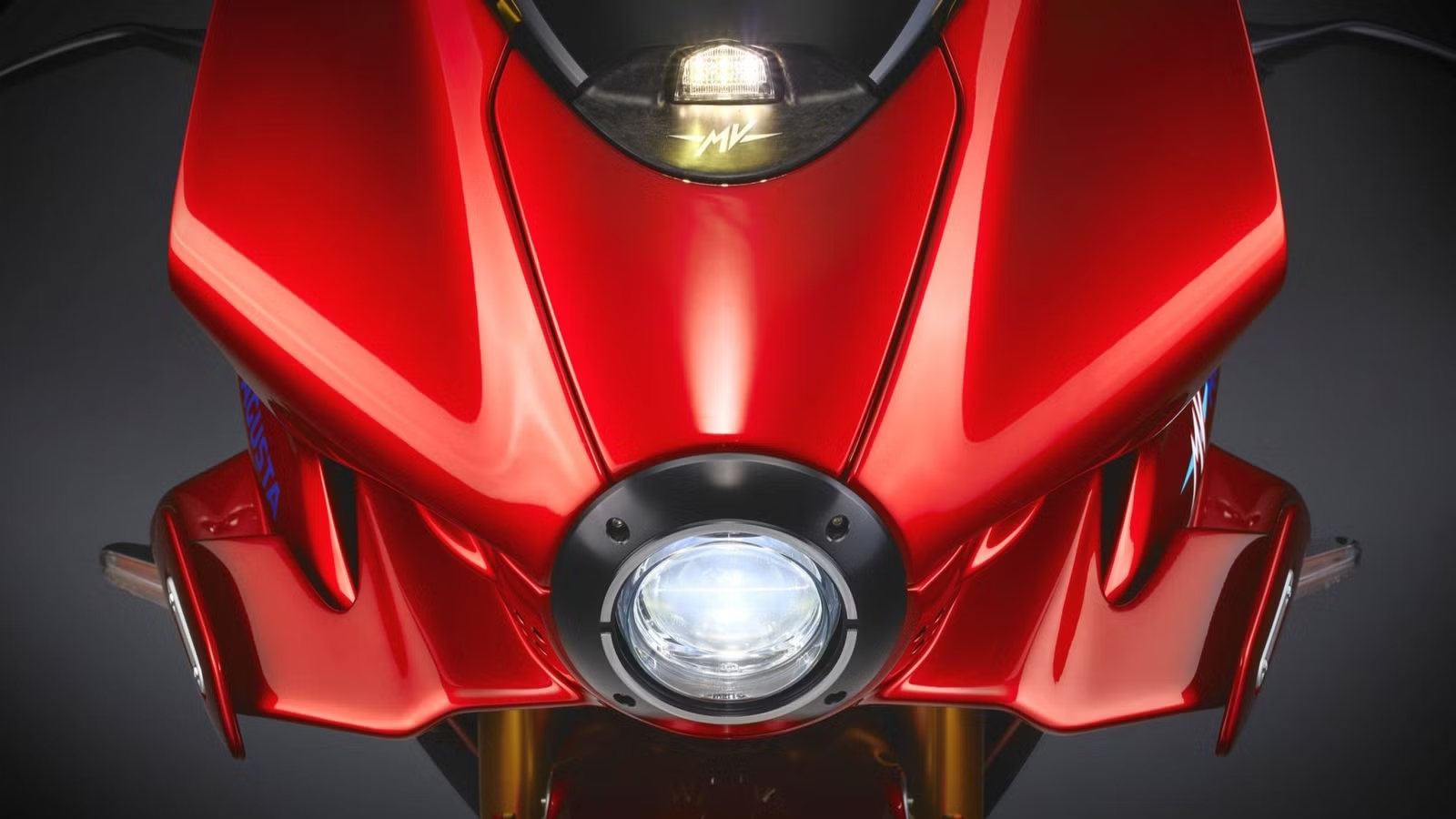
The single LED headlight is a standout feature that is a clear nod to Jet Age design, and it also helps integrate the sleek bodywork with the sharp edges of the aerodynamic winglets. It is a case study in how to blend modern innovation with retro charm. All this attention to detail and those precious materials do not come cheap. But while that price tag might seem eye-watering, there is genuinely nothing else quite like it. Only 500 of these masterpieces will be made, and their value will likely appreciate over time — particularly if the company’s ongoing state of flux takes a turn for the worse. Shudder the thought.
Rivals

Related posts




Latest Post


No Comments