
6 Detroit Sleeper Coupes Hiding NASCAR-Bred V8s From Factory
There are a few rare muscle cars that secretly packed NASCAR power under their hoods. Ford, Chrysler, and General Motors were busy battling each other on the racetrack and proving their dominance as high-performance brands. Due to homologation rules, a certain number of street-friendly models had to be built to meet racing eligibility requirements.

As a result, there are some high-performance cars that quietly contain true racing DNA without being flashy about it. These cars were built for racing, not for public sale. As a result, they weren’t heavily marketed. Someof these models built in the late 1960s and early 1970s also came with a high purchase price and steep insurance premiums.
Now these race cars need no marketing, as collectors battle each other at the auction block for a chance to get behind the wheel. Seriously, these engines and aerodynamic bodies were developed specifically for the track, lending to pure octane-burning lineage and historic racing pride.
6
Boss 429 Mustang
Power and Torque: 370 HP/450 LB-FT
The Ford Mustang Boss 429 posed a serious threat to rivals as it came barreling down the track in 1969 and 1970. It was specifically engineered to outrace Chrysler’s 426 Hemi engine. To achieve this goal, the Boss 429 engine was designed with deep skirt blocks, forged internals, and aluminum semi-hemispherical cylinder heads.
The semi-hemi V8 engine is so large and heavy that it didn’t fit in the engine bay. Kar Kraft was hired to cut and relocate the shock towers to make room. Plus, the suspension was modified with heavy-duty springs and thicker anti-roll bars to handle the extra weight and stress. Options for air conditioning and an automatic transmission were strictly forbidden because of the tight engine packaging. The engine is paired with a close-ratio Toploader four-speed manual transmission.
To offset the front-heavy weight and to improve weight distribution, the battery was relocated to the trunk. Additionally, a smaller brake booster was required to fit under the engine block. The rear end also features a standard heavy-duty nine-inch Traction-Lok differential with a high-performance 3.91:1 gear ratio. Power-assisted front disc brakes and a quicker ratio steering block came standard as well.
10 Rarest Limited-Production Muscle Cars You’ll Probably Never See In Person
Most gearheads will never see these high-powered muscle car legends in the wild.
5
Pontiac Catalina 421 Super Duty
Power and Torque: 405 HP/425 LB-FT

The Pontiac Catalina 421 Super Duty was built as a direct response to the escalating muscle car wars and to dominate the drag strip. It was designed in the “Win on Sunday, Sell on Monday” era because Pontiac wanted a share of the market. But as a massive car, it required a few significant changes to be light enough to dominate drag strips.
It received Swiss cheese modifications to reduce its weight, meaning hundreds of holes were drilled into the frame in an attempt to lighten the load. Also, this race car has lightweight aluminum body panels. The drag-racing variants of this car feature weight-saving exhaust manifolds with aluminum headers.
The Super Duty engine is noted for its forged steel crankshaft, forged connecting rods, and forged aluminum pistons. Its induction is fed by a high-rise aluminum intake manifold with dual Carter AFB 500-CFM four-barrel carburetors. It also uses specialized high-flow NASCAR-style D-port heads, solid lifters, and McKellar mechanical camshafts.
4
Ford Galaxie 7-Litre 427 FE
Power and Torque: 425 HP/480 LB-FT

Race in style with the 1966 Ford Galaxie 7-Litre. This racer includes a luxury sports package to bridge the gap between heavy muscle performance and premium comfort. But it was also specifically built to dominate NASCAR and NHRA drag racing by maxing out the 7.0-liter displacement limits set by racing bodies.
Ford bored out the existing FE block to hit the maximum allowable 7.0-liter displacement cap placed on racing engines. Plus, it was designed as a competition motor with cross-bolted main bearings, forged steel crankshafts, and solid lifters that withstand high RPMs. The side-oiler design routes oil directly to the crankshaft bearings to protect the engine from starvation.
The engine also has high-flow cylinder heads and the famous R-Code dual four-barrel carburetor setup to enhance airflow. To handle the potent torque, the rear ends have a heavy-duty 9.37-inch limited-slip differential with meaty 31-spline axles and six-leaf heavy-duty springs. A heavy-duty front stabilizer bar is used to reduce body roll and improve agility.
3
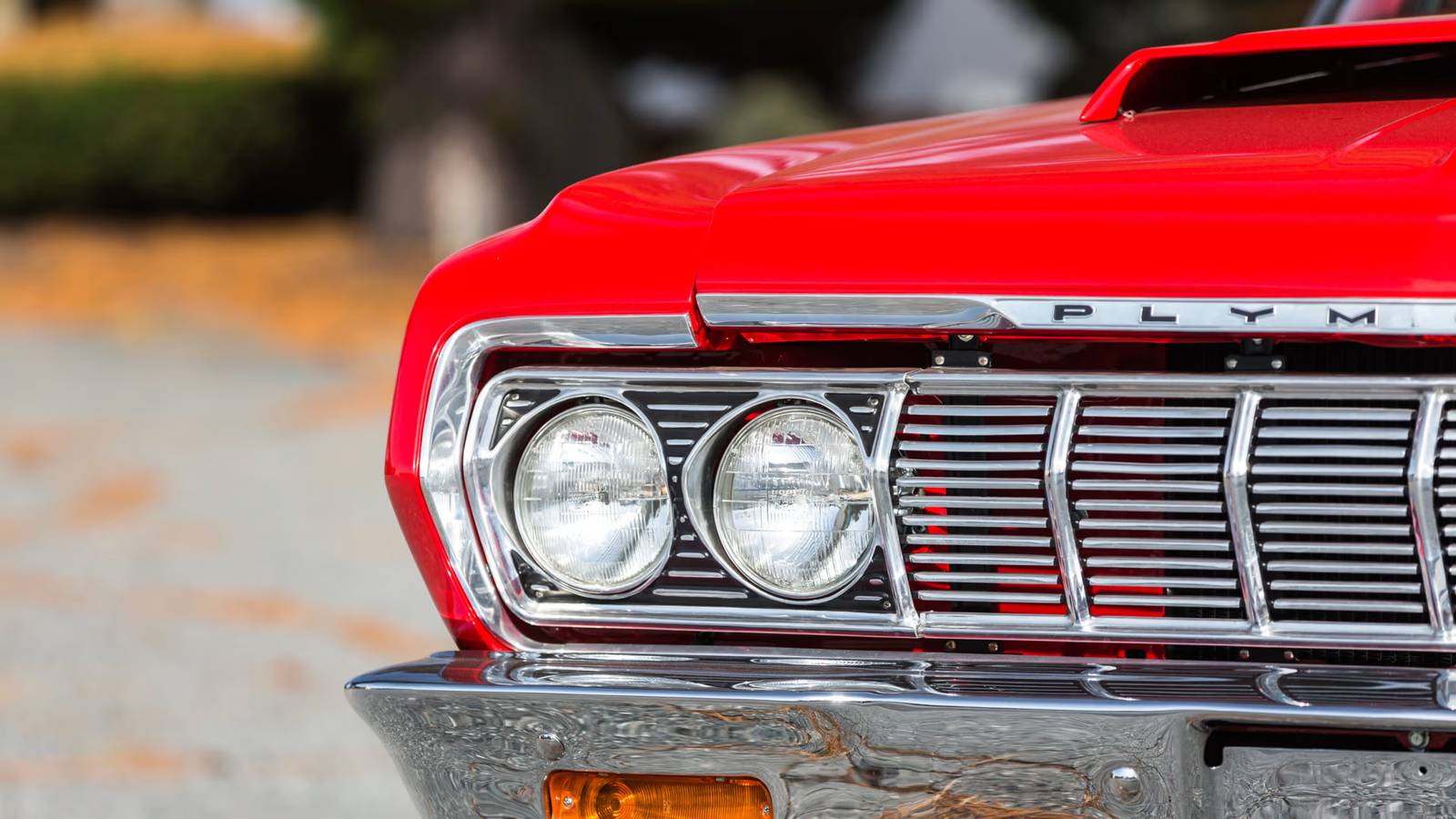
1964 Plymouth Belvedere 426 Hemi
Power and Torque: 425 HP/490 LB-FT

The 1964 Plymouth Belvedere 426 Hemi is a controversial racer. This engine was built to rule NHRA Super Stock classes and proved to be so fast that NASCAR briefly banned it. The engine suddenly became illegal to run when NASCAR mandated homologation rules for 1965, but the engine wasn’t being mass-produced at the time.
Chrysler boycotted NASCAR for the 1965 season as a result. But the car won the Daytona 500 with Richard Petty behind the wheel in 1964. He led the race for 184 out of 200 laps. Features like a fiberglass hood, fenders, and trunk lid with aluminum bumpers helped reduce weight.
But the true engineering spectacle here is related to the Elephant Hemi engine, with its hemispherical-shaped chambers that allow for larger intake and exhaust valves, cross-flow setup, shaft-mounted rocker arms, and dual valve springs. The engine also has a heavy-duty rotating assembly to withstand incredible cylinder pressures.
2
Dodge Charger 500 with 426 Hemi
Power and Torque: 425 HP/490 LB-FT

Chrysler didn’t stay away from NASCAR for long, and continued its historic racing success while fitting massive Hemi engines under the hood. The 1969 Dodge Charger 500 426 Hemi was born with the specific mission of beating Ford around NASCAR’s high-banked ovals.
The engine design features a cast-iron block with a deep-skirt crankcase, forged steel crankshaft, and those classic hemispherical cylinder heads. It also has Dual Carter AFB four-barrel carburetors mounted on an aluminum intake manifold that helped it breathe deep.
To solve severe lift problems at high speeds, the Charger 500 got a flush-mounted grille to force air cleanly over the car. It also features a fiberglass window plug brought flush to the sail panels to avoid drag-inducing rear-window lift. Last but not least, this is the first Dodge model to feature chrome A-pillar covers, which are designed to smooth airflow around the cabin.
10 Legendary ’60s Muscle Cars That Took NASCAR To The Streets
With powerful race-bred V8s, these 1960s muscle cars are veritable street-legal performance machines.
1
Chevy Impala Z11
Power and Torque: 430 HP/575 LB-FT

Chevrolet wanted to compete on the track against Ford and Mopar but needed to get around General Motors’ corporate racing ban. So, it created a loophole by only selling the Chevy Impala Z11 to trusted factory-backed independent racers through a covert dealer network.
To become the new drag racing king, this car used a modified version of the W-series 409 V8. It was bored out to 427 cubic inches. It breathes through a two-piece high-rise aluminum intake manifold paired with dual four-barrel Carter AFB carburetors. Plus, it has an insane 13.5:1 compression ratio to squeeze out as much power as possible.
The car was a bit heavy and went through an intense weight reduction process to shed 300 to 400 pounds. Its hood, fenders, grille filler panel, and bumpers were replaced with aluminum, and an electric motor was used to drive the water pump instead of a belt-driven unit. Also, the setup is paired with a Borg-Warner T-10 four-speed manual transmission with an aluminum case.
Source: How Stuff Works, Hemmings

Related posts



Latest Post


No Comments