
The Forgotten Toyota That Deserves Another Look On The Used Market
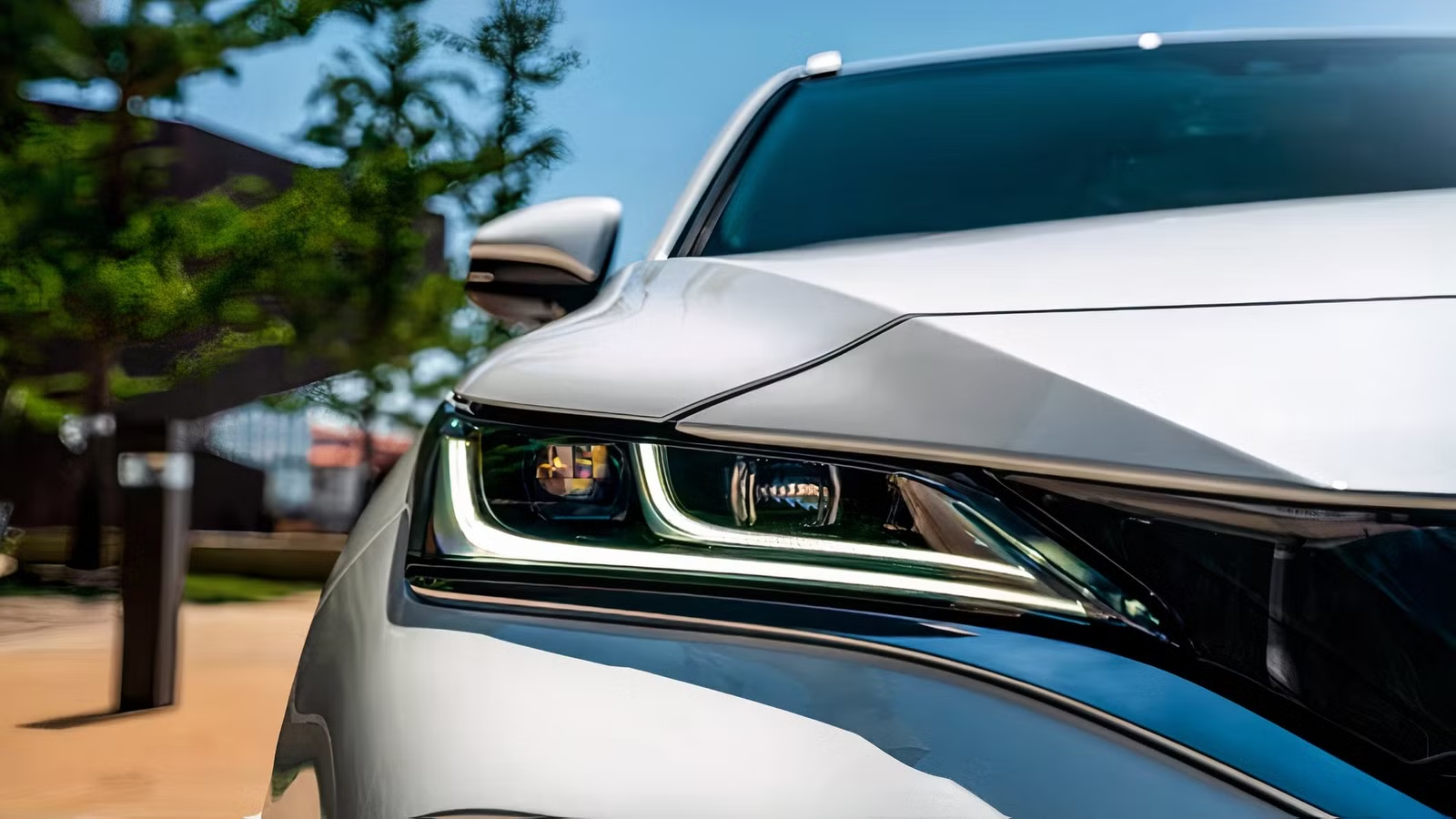
The Toyota Venza was already a footnote once, discontinued in 2015 after a middling run as an oddball wagon-SUV crossover. When it returned for 2021 with a hybrid-only powertrain and a genuinely upscale cabin, it should have been a headline. Instead, the RAV4 next to it in showrooms hogged the attention, and the Venza spent four model years as Toyota’s best-kept secret before disappearing again in 2024. On the used market today, that obscurity has turned into opportunity, and it’s worth understanding why.
The Toyota Venza Was Overlooked When It First Returned To The Market

When Toyota revived the Venza nameplate for 2021, it wasn’t just recycling a name; it was importing a vehicle Toyota already sold overseas as the Harrier and repackaging it as a hybrid-only, RAV4-based crossover with a coupe-like roofline and Lexus-adjacent styling. On paper, that should have made it a standout: a five-seat SUV wearing sculpted sheet metal, standard all-wheel drive, and a battery pack instead of a base four-cylinder.

In practice, it launched into the shadow of its own platform-mate. The RAV4 Hybrid was already established, cheaper to start, and backed by years of buyer familiarity, while the Venza arrived with less name recognition and a narrower, two-row-only footprint that couldn’t compete with three-row family haulers. Reviewers liked it — Kelley Blue Book called it one of the best “boring” cars they’d driven, meaning it did everything well without drama — but “quietly competent” rarely wins showroom traffic. Toyota never gave the Venza its own marketing push, either, treating it more as a RAV4 alternative for a specific buyer than a flagship in its own right. Sales stayed modest throughout its run, and by November 2023, Toyota confirmed the Venza would end production after the 2024 model year, replaced by the pricier Crown Signia. It was a short, unglamorous life for a genuinely well-engineered vehicle, and that mismatch between quality and attention is exactly what makes it interesting now.
A Hybrid Powertrain Gives The Venza An Efficiency Advantage Over Older Rivals


Every second-generation Venza, from 2021 through its final 2024 model year, came standard with a hybrid powertrain and all-wheel drive; no gas-only trim was ever offered. The system pairs a 2.5-liter four-cylinder engine with electric motors for a combined 219 horsepower, using an unconventional layout where a rear-mounted electric motor drives the back wheels independently while the front axle handles gas and primary electric power. EPA estimates land at 40 mpg city, 37 highway, and 39 mpg combined in this all-wheel-drive configuration, figures that undercut even Toyota’s own RAV4 Hybrid by a single mpg in combined driving, and comfortably beat most non-hybrid midsize SUVs from the same era by 10 mpg or more.

Compare that to a typical used SUV shopping alternative from the early 2020s, a V6-powered Ford Edge or a four-cylinder Honda Passport, and the Venza’s real-world fuel savings become obvious over a normal ownership period. Owner-reported averages on fuel-tracking sites tend to land in the mid-to-high 30s, close enough to Toyota’s sticker numbers to trust them. For buyers cross-shopping older three-row or V6 crossovers on the used market, the Venza offers hybrid efficiency without the compromises, no plug to manage, no reduced cargo space for a battery pack, and none of the driving penalty that early hybrid SUVs used to carry.
The Venza Blends Toyota Reliability With A More Upscale Cabin

The Toyota Venza’s interior was always its strongest argument, and it’s aged well. Toyota wrapped the dashboard, door panels, and center console in synthetic leather across every trim, added real leather to the steering wheel and shift knob, and offered a dimmable electrochromic glass roof on Limited models — a feature borrowed from far pricier vehicles. Reviewers repeatedly described the cabin as feeling closer to a Lexus than a mainstream Toyota, both in material quality and in the overall hush at highway speed, where sound insulation and the smooth-shifting CVT keep things notably quiet for the segment.

None of that upscale positioning came at the cost of Toyota’s usual dependability. Owners rate the second-generation Venza at 4.7 out of 5 for reliability, and Toyota’s hybrid system underneath, shared largely with the well-proven RAV4 Hybrid, carries a strong track record for longevity; hybrid components generally reduce wear on the engine and brakes rather than adding failure points. Annual maintenance costs average around $396, in line with other Toyota crossovers rather than inflated by the added electric hardware. That combination — premium-feeling materials sitting on a mechanically simple, well-tested drivetrain — is unusual on the used market, where upscale interiors typically come bundled with upscale repair bills.
Used Venza Prices Make Its Premium Features Easier To Appreciate Today

This is where the Venza’s overlooked status pays off directly for used buyers. Pricing data from Edmunds shows used Venzas currently trading in a broad range of roughly $19,500 to $39,600, with an average transaction price near $28,900 nationally. CarGurus paints a similarly accessible picture. The average used Venza sits around $24,000-$24,400, with well-equipped 2022 models averaging under $29,000. Kelley Blue Book values a 2021 Venza LE with typical mileage at roughly $22,000 to $24,500 in private-party sales, and even loaded Limited trims from that first model year rarely crack the high $20,000s.

Put those numbers next to the Venza’s as-new pricing, $32,470 to $39,800 when the 2021 model launched, and the depreciation curve starts working in a buyer’s favor. A three-to-five-year-old Venza can be had for roughly what a new RAV4 Hybrid costs today, but with the glass roof, synthetic-leather cabin, and quieter ride that the RAV4 doesn’t offer at any price point. Toyota’s own residual-value data shows the Venza retaining about 62% of its value after five years, solid, if not segment-leading, which means there’s still room for prices to soften further as more low-mileage examples hit the market from original three-year lease returns. For a buyer who wants near-luxury features without near-luxury monthly payments, the current used Venza market is close to ideal.
Why The Venza Could Be One Of Toyota’s Smartest Used SUV Buys

Discontinuation is usually where a vehicle’s reputation goes quiet, but for used buyers it often marks the opposite. That is the point where a genuinely good car becomes genuinely good value. The Venza checks the boxes that matter for long-term ownership, standard hybrid efficiency, standard all-wheel drive, Toyota’s reliability record, and a cabin that still looks and feels solid years after it left the factory. Its low profile during production means fewer people are actively hunting for one, which keeps prices softer than they’d be for an equally capable but better-known nameplate.

Parts and service support aren’t a concern either; Toyota continues servicing existing Venza owners through its regular dealer network, and the drivetrain shares enough with the RAV4 Hybrid that technicians and parts suppliers are thoroughly familiar with it. With the Venza gone and its replacement, the Crown Signia, starting nearly $10,000 higher than the old Venza’s base price, there’s now a real gap in Toyota’s lineup for buyers who want this specific formula: comfortable, efficient, upscale-feeling, but not full-luxury-priced. That gap is exactly what the used Venza market fills. It was never going to win on brand recognition, but for a buyer doing the math on efficiency, comfort, and reliability per dollar, the forgotten Venza has quietly become one of the smarter used SUV purchases Toyota has ever built.
Sources: Toyota U.S., Kelley Blue Book & Edmunds

Related posts



Latest Post


No Comments