
The Family SUV That Makes Plugging In Feel Unnecessary
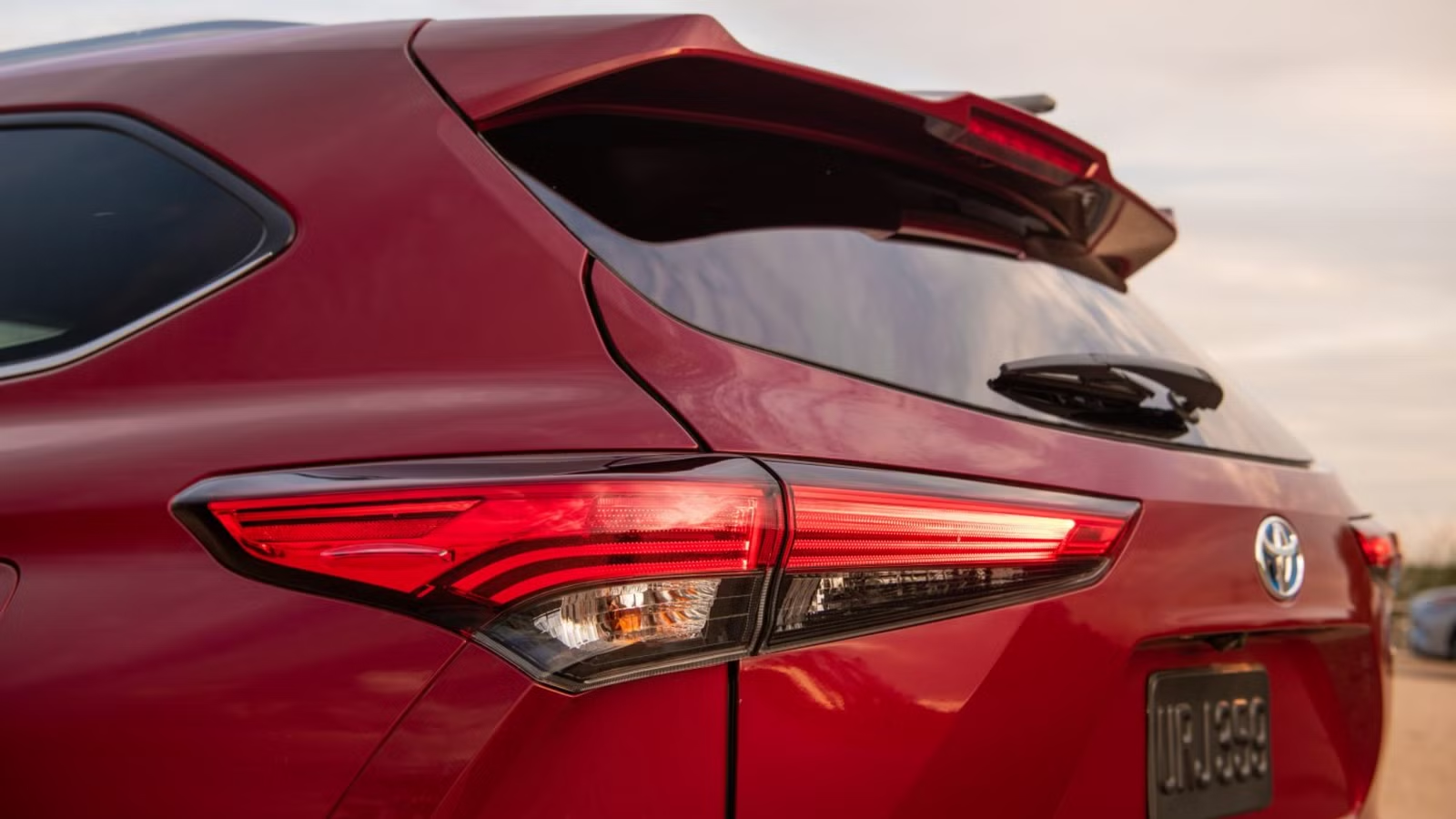
The three-row SUV segment remains a dominant driver of the United States automotive market, propelled by strong consumer demand for versatile, family-oriented transport. Annual sales volumes continue to expand steadily through 2026, with top volume entries generating hundreds of thousands of registrations across midsize and full-size categories.

High profit margins and strong transactional prices make this class vital for automakers funding electric and hybrid transitions. Functioning as modern substitutes for minivans and traditional station wagons, these vehicles provide essential seating capacity, all-weather capability, and substantial towing capacity for suburban households.
Toyota’s Hybrid-First Approach To Modern SUVs
Toyota has systematically integrated hybrid technology across its entire SUV portfolio by engineering scalable gas-electric powertrains alongside electric all-wheel-drive configurations. Instead of treating hybridization as an expensive optional feature, the manufacturer standardized self-charging hybrid systems. In many cases, it makes them the exclusive powertrain option. This is found across its subcompact, compact, midsize, and full-size crossover utility lineups. This unified integration benefits consumers by delivering immediate low-end electric torque for effortless acceleration while substantially lowering overall fuel consumption and tailpipe emissions.

Dual-source power additionally reduces mechanical stress on the internal combustion engine during acceleration and city driving, minimizing long-term wear on major components. Consequently, buyers gain superior fuel economy, enhanced dynamic capability, lower maintenance costs, and strong residual values without undergoing the infrastructure hurdles or range anxiety typically associated with fully electric vehicles.
The Highlander Hybrid Excels At Low Fuel Consumption Figures

The 2026 Toyota Highlander Hybrid isn’t the most fuel-efficient Toyota HEV that you can consider, but it’s not bad for the segment that it operates in, especially when you consider the fact that it is a fully functional three-row SUV. The XLE models benefit from a 35/35/35 MPG fuel consumption estimate on the city/highway/combined cycle, while the Limited and Platinum trims fractionally worsen it to 35/34/35 MPG. Beyond this, their estimates are identical.
With a 17.1-gallon tank and 1.9 kWh battery pack, this Japanese SUV will cover 598 miles. On average, you can expect to save around $2,850 on your fuel bill over five years compared to the average new vehicle (or roughly $3,000 in savings over five years compared to a gas-only SUV). You will spend approximately $1,450 on fuel every year (assuming 15,000 miles driven annually at current national gas price averages). Driving 25 miles will cost around $2.39, while filling up its 17.1-gallon tank sets you back roughly $57.
Toyota’s Trusty HEV Drivetrain

The 2026 Toyota Highlander Hybrid features the brand’s naturally aspirated Atkinson-cycle 2.5-liter four-cylinder engine producing 186 horsepower at 6,000 RPM and 175 pound-feet at 4,400 RPM in isolation. Toyota pairs this system with three permanent-magnet-synchronous electric drive units located at the front and rear axle, increasing the combined output to 243 horsepower. The brand has discontinued the front-wheel-drive variant as of this year, so it is now available exclusively as an all-wheel-drive SUV.
As per the brand’s claims, the Highlander Hybrid covers a 0 to 60 MPH spring in 7.2 seconds and will hit a limited 118 MPH top speed. You can also use it to tow up to 3,500 pounds, which isn’t an amazing figure for an SUV, but it is in-line with what you can expect from other HEV SUVs that compete in this segment.
The Highlander Hybrid’s Proven Long-Term Reliability

Further motivating the Highlander Hybrid as a well-balanced product is its incredible review scores. iSeeCars gives the model a 9.2/10 overall score, which includes 9.5/10 for reliability, 10/10 for safety, and 8.1/10 for retained value. The publication indicates that the model will last for 15 years or 193,330 miles before you encounter any noteworthy issues, with a 46.5-percent probability of surpassing 200,000 miles. It also indicates that it will lose 40.1 percent or $16,440 of its value after five years of regular usage.
J.D. Power backs this with an 82/100 consumer-verified overall score, which includes 81/100 for quality and reliability, 77/100 for the driving experience, and 92/100 for resale. In terms of ownership costs, the Edmunds True Cost To Own calculator reveals that you can expect to spend $59,347 over the first five years when owning an XLE derivative.
Toyota Keeps The Hybrid System Covered

The 2026 Toyota Highlander Hybrid comes standard with a comprehensive factory warranty suite that includes a three-year or 36,000-mile basic coverage plan alongside a five-year or 60,000-mile powertrain warranty. Standard hybrid-related components receive a dedicated eight-year or 100,000-mile warranty, while the high-voltage hybrid battery pack features an extended 10-year/150,000-mile factory guarantee.
Every new purchase includes ToyotaCare, which provides complimentary factory-scheduled maintenance and 24-hour roadside assistance for the first two years or 25,000 miles. Routine service requirements follow 5,000-mile or six-month intervals primarily focused on tire rotations and multipoint vehicle checks, while synthetic oil and filter changes are scheduled every 10,000 miles or 12 months under normal driving conditions. Long-term ownership maintenance averages roughly $400 to $600 annually once complimentary coverage expires, beating segment averages for midsize three-row SUVs.
The NHTSA records highlight specific safety recalls affecting select production runs of the vehicle. Software adjustments were issued regarding the occupant detection control unit for the front passenger seat belt force limiter to ensure proper restraint deployment across varying passenger weights.
A separate safety issue involves front seat trim inspections to confirm proper deployment paths for seat-mounted side airbags during side-impact collisions. Additional regional distributor-level service actions include checking spare tire inflation pressures and verifying correct torque specifications on accessory roof-rail attachment fasteners to prevent hardware detachment. All recall remedies, including ECU re-flashes and hardware inspections, are executed by authorized Toyota dealerships free of charge to vehicle owners.
Competitive Pricing And Comprehensive Specification

The 2026 Toyota Highlander Hybrid spans three distinct trim levels: the baseline Hybrid XLE starting around $48,000, the mid-tier Hybrid Limited at roughly $52,500, and the top-tier Hybrid Platinum priced near $56,000. Comfort and convenience amenities begin strong on the entry-level XLE with synthetic leather upholstery, heated power-adjustable front seats, three-zone automatic climate control, integrated second-row sunshades, and a power sunroof. The trim progression adds genuine leather upholstery, ventilated front seating, ambient cabin lighting, a heated steering wheel, and a panoramic glass roof.
Modern technological equipment features a standard 8-inch infotainment touchscreen with wireless integration for Apple CarPlay and Android Auto, a 7.0-inch driver information display, five USB ports, and a wireless charging pad. Choosing higher trim levels upgrades the display architecture to a pair of dual 12.3-inch digital screens for the instrument panel and central infotainment interface, paired with an 11-speaker JBL premium sound system, a 10-inch color head-up display, and a panoramic surround-view camera network.
A Spacious Three-Row Cabin

The Toyota Highlander Hybrid‘s spacious interior setting is a major reason why we rate it as one of the most practical and balanced HEVs you can consider today. Up front, the driver and passenger get to enjoy 41.2 inches of headroom and 42 inches of legroom. You also get access to 59 inches of shoulder room and 57.2 inches of hip room.
The middle row accommodates 38.4 inches of headroom and 38.7 inches of legroom, together with 58.7 inches of shoulder room and 57 inches of hip room. You’ll find the third row to be quite compact, as it only fits 36.1 inches of headroom, 28 inches of legroom, 55 inches of shoulder room, and 45.6 inches of hip room.
With all the seats in place, you have access to 16 cubic-feet of cargo space, which expands to 84.3 cubic-feet when you fold the third and middle rows down. With just the third row folded, you get access to 48.4 cubic-feet of space.
Sources: Toyota, the EPA, iSeeCars, J.D. Power, and Edmunds.

Related posts



Latest Post


No Comments