
Suzuki Just Brought the GSX-R Back—Here’s What the 2027 Lineup Announcement Means for Buyers
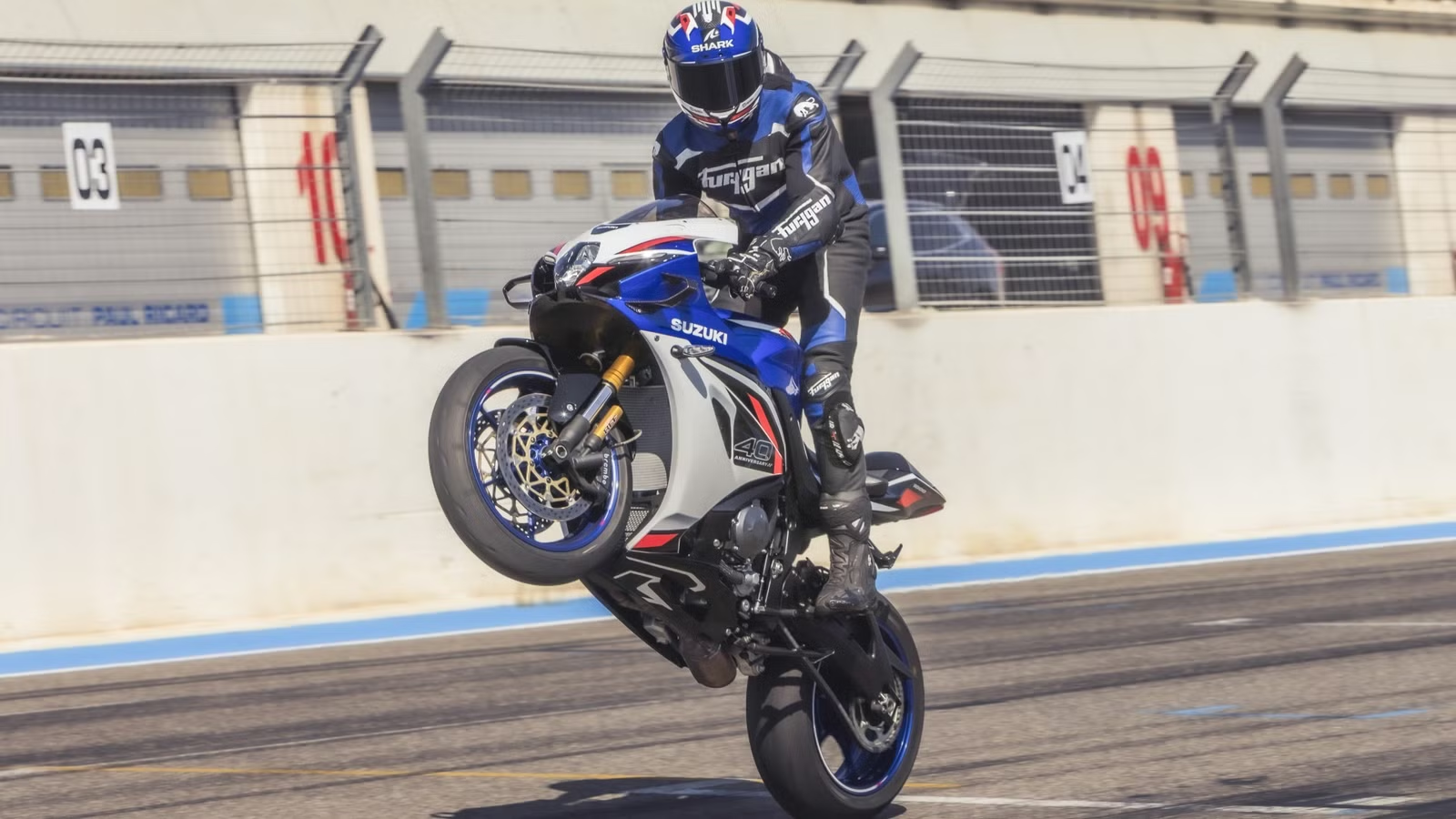
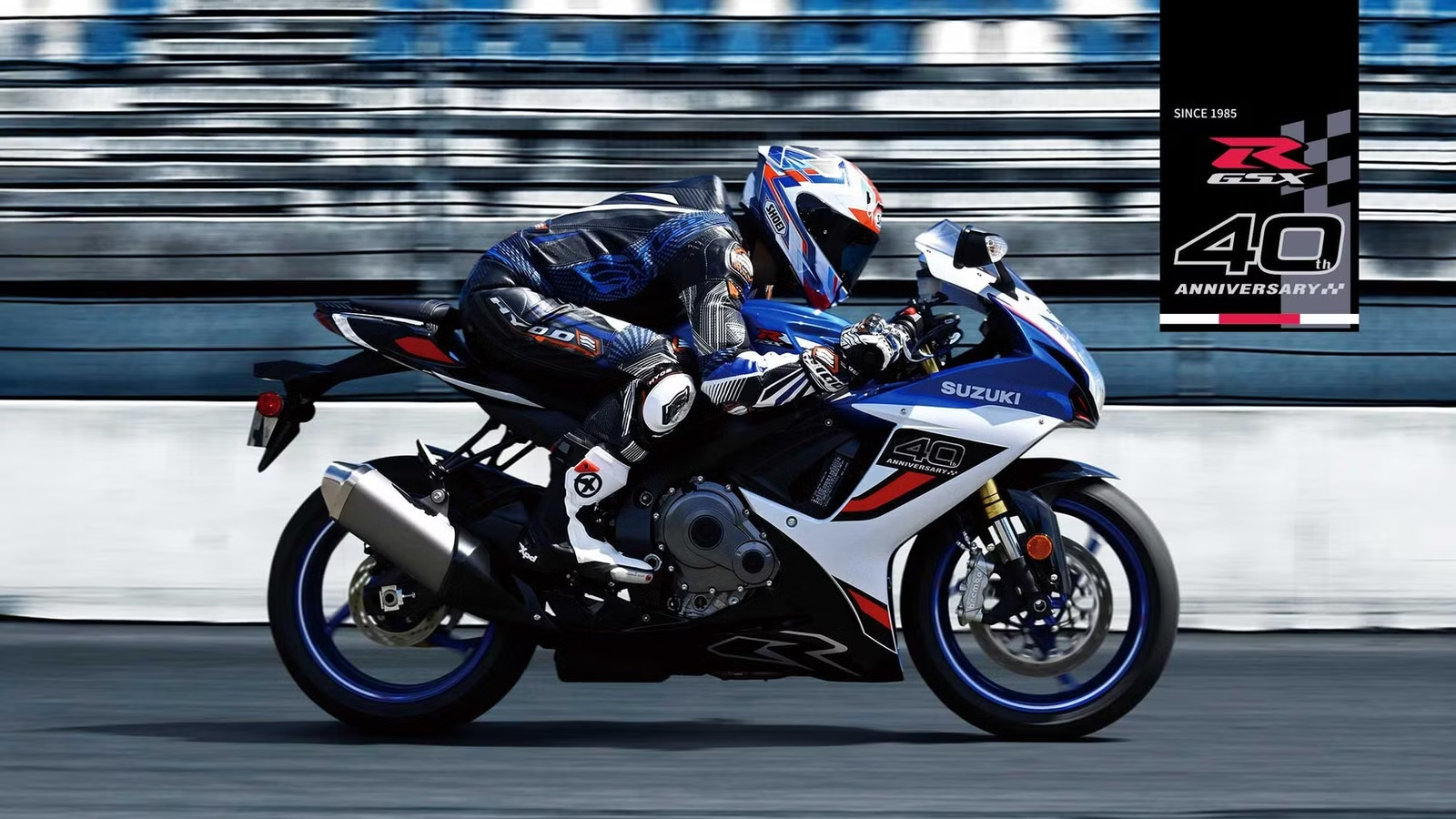
Suzuki confirmed its 2027 model lineup on July 15, and the headline is the one sport-bike riders have been waiting years to read: the GSX-R is back. Not as a carryover trim or a regional holdout, but as a fully refreshed, three-variant family celebrating the nameplate’s 40th anniversary—with new electronics, revised internals, Euro 5+ compliance, and U.S. pricing that lands well below the six-figure territory that defines the Ducati and BMW end of the segment.
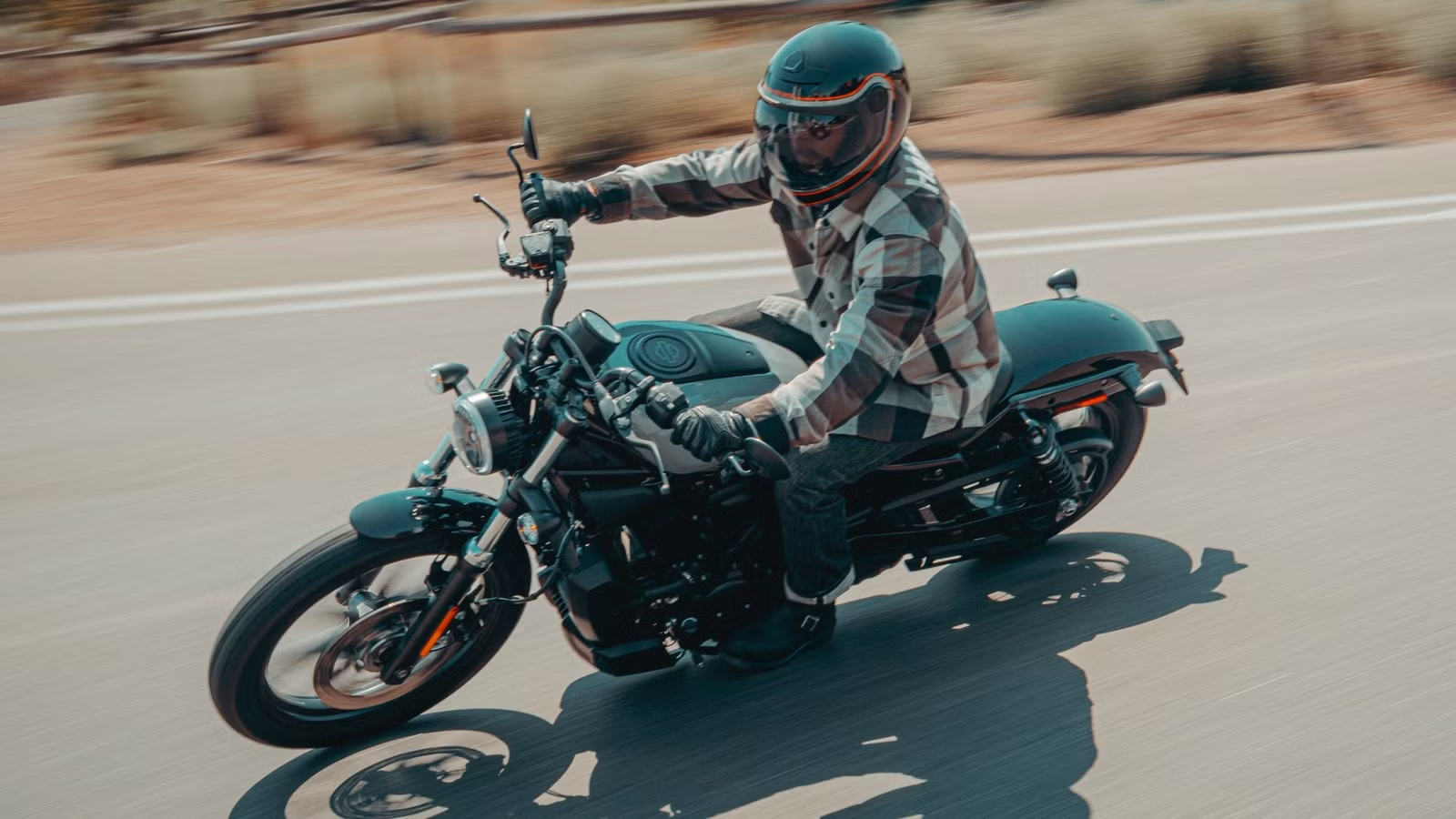
The announcement also introduced the SV-7GX, a new middleweight sport-crossover built around the beloved 645cc V-twin that, by most accounts, quietly stole the show from its liter-class sibling. Together, the two bikes signal a Suzuki that’s done sitting on the sidelines—and give buyers in the middleweight and liter-class segments a serious new set of options to consider.
Three GSX-R1000 Variants, One Familiar Engine With Sharper Internals
The 2027 GSX-R1000 lineup breaks into three 40th Anniversary Edition models: the base GSX-R1000 at $16,399, the GSX-R1000R at $17,939, and the flagship GSX-R1000RS at $18,639. All three are powered by the same 999.8cc liquid-cooled DOHC inline-four, reworked with higher compression (13.8:1) and refined internals for more linear torque delivery. Suzuki hasn’t published a peak horsepower figure, but claims this is the quickest-accelerating GSX-R1000 in the nameplate’s history.

The tiered structure gives buyers a genuine choice rather than a trim-level shuffle. The base model covers the core sport-bike buyer who wants the GSX-R experience without paying for track hardware they may never use. Step up to the R and you get Showa BFF suspension with adjustable swingarm pivots, stainless steel brake lines, and Brembo radial-mount calipers—meaningful upgrades for anyone planning regular track days. The RS adds carbon-fiber winglets drawn from Suzuki’s Suzuka 8-Hour endurance program, pushing the aerodynamic package closer to full superbike territory. All three share the new Bosch six-axis IMU and Suzuki’s Smart TLR Control system, which integrates traction, roll torque, and lift limiting, plus a bi-directional quickshifter.
How The GSX-R Stacks Up Against Yamaha’s R9 And The Ninja H2

The GSX-R’s absence from key global markets since roughly 2024 left a gap that rivals moved into. Yamaha’s R9—which replaced the long-running R6 in the middleweight slot—now anchors that segment, while Kawasaki’s supercharged Ninja H2 occupies the liter-class performance extreme. The returning GSX-R1000 sits between those poles in a way that may actually work in its favor: it’s more track-capable than the R9 by displacement and electronics depth, and considerably more accessible than the H2’s premium pricing.
One area where the GSX-R trails some rivals is display technology. The base and R models retain an LCD instrument cluster rather than a modern TFT unit, and the electronics, while substantially improved, lock traction, wheelie, and roll control into preset combinations rather than allowing independent adjustment—a limitation that more expensive superbikes from Ducati and Aprilia don’t share. For buyers prioritizing value-per-lap over cutting-edge configurability, that’s a reasonable trade. For those who want full independent control, it’s worth knowing before signing.
The SV-7GX: The V-Twin That Quietly Upstaged The Gixxer

While the GSX-R grabbed the headline, the SV-7GX made a strong case for being the more immediately practical announcement. Starting at $8,399 for the SV-7GXV and $8,599 for the standard SV-7GX, it undercuts the Triumph Tiger Sport 660 ($10,445) and Kawasaki Versys 650 LT ($10,399) by a meaningful margin. The engine is the proven 645cc 90-degree V-twin from the SV650, reworked for Euro 5+ compliance and rated at 72.4 horsepower and 47.2 lb-ft of torque.
The spec sheet reads more like a mid-range sport-tourer than a budget commuter: ride-by-wire throttle, three drive modes, three-stage traction control, a bi-directional quickshifter, a 4.2-inch TFT display with smartphone integration via Suzuki Ride Connect+, and USB-C charging. A three-position adjustable windscreen, integrated hand guards, and a rear carrier round out the touring package. At 465 pounds with a 31.3-inch seat height, it’s also approachable for riders stepping up from 500–650cc machines. Suzuki’s online reservation window for both the SV-7GX and GSX-R1000 family runs through July 31, 2026.
For riders who’ve been watching Suzuki’s lineup thin out over the past few years, the 2027 announcement is a meaningful course correction. The GSX-R1000 family’s three-tier pricing gives buyers a clear entry point and a logical upgrade path, while the SV-7GX opens a different door for riders who want V-twin character with modern electronics at a price that doesn’t require a track-day budget to justify. Both models are reservation-eligible now, with deliveries expected to follow the standard fall model-year rollout.

Related posts

Latest Post



No Comments