
The ‘Failed’ British Supercar That Beat Every Ferrari To 212 MPH
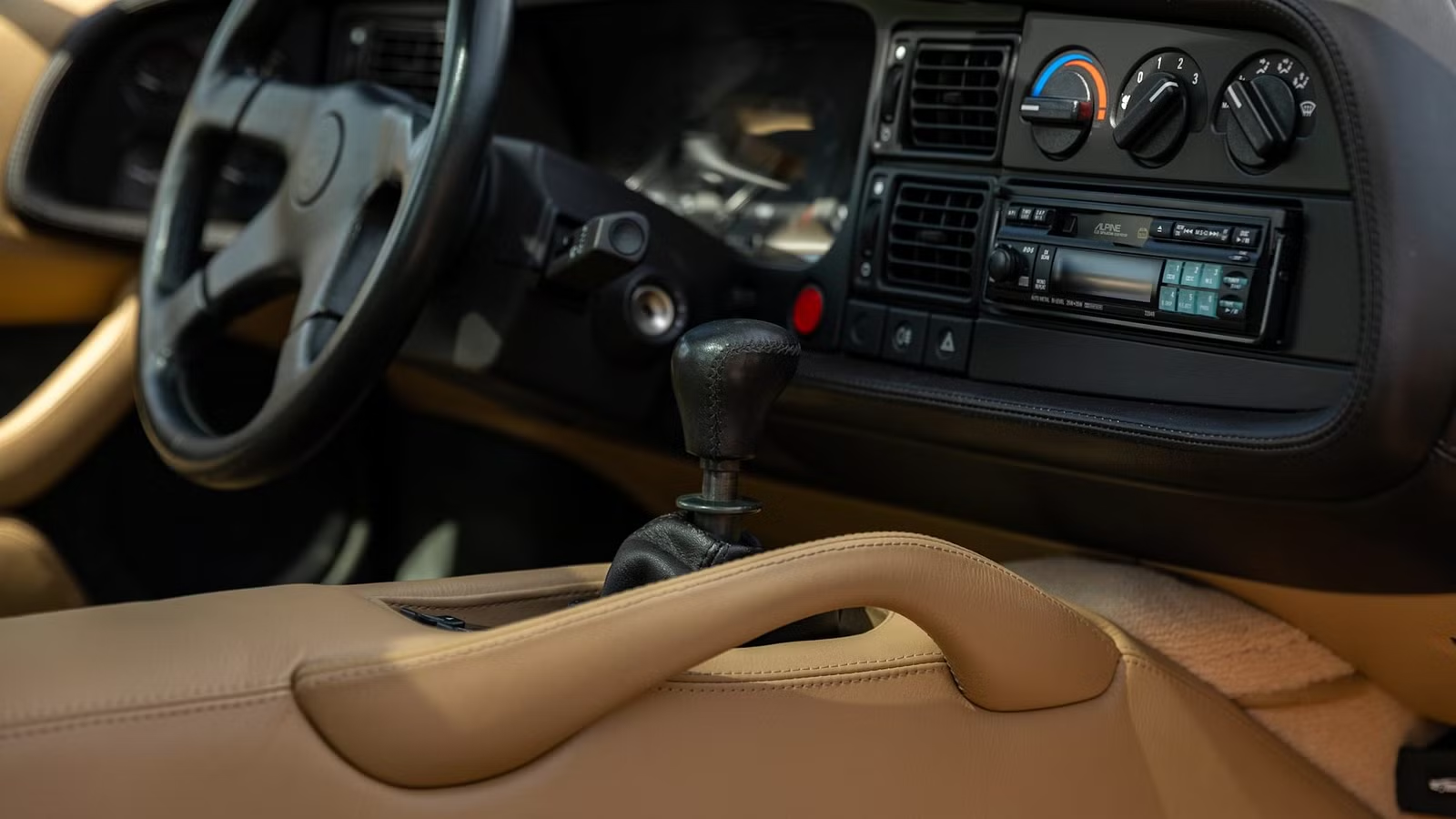
On a sunny June day in 1992, a team of racing technicians, journalists, and British Formula 1 driver Martin Brundle descended on the Nardó Speed Bowl in southern Italy. The team wanted to use the huge, banked, eight-mile track to test the true top speed of an all-new supercar. Brundle clocked a top speed of 217.1 mph, smashing a fast car record that the Italians had dominated for years. But pulling off this incredible stunt in Ferrari’s backyard wouldn’t be enough to save the short-lived British supercar from very public failure.
When Italian Supercars Dominated World Records

The Ferrari 512 Berlinetta Boxer may have been a mid-engine supercar, but it used a traditional 4.9-liter flat-12 engine to make 360 horsepower. In 1980, Ferrari proved this old school configuration was still relevant when the Ferrari 512 BB set a production car speed record of 188 mph. But during the ’80s, Ferrari was developing multiple powerplants. The F40 used a 2.9-liter twin-turbocharged V8 to top the 512’s output with 478 hp. In 1987, the F40 beat the 512 with a 201 mph record.
The Lamborghini Diablo debuted in 1990 with a claimed 202 mph top speed. By 1992, it was starting to look like no one could beat the Italians.

Little did Maranello know, Jaguar engineers had been spending years going to the office on Saturdays to work on a special project. They dreamed of a Jaguar race car that could set records once again.

The Original XJ220 May Have Been Too Complex To Survive

Jaguar’s “Saturday Club” was an informal, covert skunkworks team of about 12 engineers. They were inspired by the Jaguar race cars that had competed in the 24 Hours of Le Mans in the 1950s and 1960s. What they designed was a V12-powered 4WD sports car with supercar looks, intended to dominate FIA Group B rally racing.
The FIA canceled Group B at the end of 1986. But Jaguar went ahead with a V12-powered 4WD XJ220 prototype. The automaker debuted the mid-engine supercar at the British International Motor Show in 1988. The low, sleek car took the show by storm.

The concept car had scissor doors. It boasted a quad-cam V12 engine targeting 500 hp and a 220 mph top speed. It even retained AWD from its inception as a rally-dominating sports car. The XJ220 looked the part of a British car that could finally beat the Italians. And the response was overwhelming.
Jaguar immediately announced a 350-vehicle production run. When it opened up a waitlist with a $66,000 USD deposit, the cash rolled in. Jaguar took 281 deposits and announced that deliveries would begin in 1992.
A Racing Team Built The Supercar Of The Future

|
Displacement |
Power |
Torque |
|
3.5 Liters |
542 HP |
475 LB-FT |
Jaguar might have been in a bit over its head. Enthusiastic engineers working nights and weekends had cobbled together the prototype. But they hadn’t even managed to finish its paint job until 3 a.m. the day of its car show debut. Jaguar turned to Tom Walkinshaw Racing for help building the production car.
TWR was a natural choice for a record-breaking car. Though a privateer team, it had a close relationship with Jaguar, having first campaigned the XJS in the European Touring Car Championship in 1982. TWR-Jaguar had even won the 1988 24 Hours of Le Mans in a V12-powered XJR-9.
TWR had several tough decisions to make when designing the final XJ220. On one hand, there was pressure to stick with the V12-powered, AWD supercar on display at the auto show. On the other hand, it wanted to hit the 220 mph top speed promised to buyers. Finally, it wanted to build a true supercar at a competitive price point. Of course, TWR had ample experience with Jaguar V12s. But the final XJ220 design it settled on was a turbocharged V6 in a RWD supercar.

When the final production XJ220 tackled the Nardó Speed Bowl, journalist Gavin Green and photographer Ian Dawson both took turns riding shotgun at over 200 mph. Green remembered watching the final record run: “The sight of that car streaking by us, screaming like a tormented monster, whoooooooshing by like a low-flying jet, waves of disturbed air and dust trailing in its wake, will live with me till the day I die…we all cheered and wowed in awe at the sight of that green Jaguar which quickly disappeared from sight.”
Green observed that it was a surprisingly casual day, with no Guinness World Record officials standing by with stopwatches. Instead, the car carried an officially calibrated telemetric speedometer. The XJ220 set a top speed of 212 mph with its stock exhaust, handily beating every Ferrari and Lamborghini in production. Then the mechanics removed its catalytic converters—which weren’t yet required in Europe—and the still road-legal car clocked a 217.1 mph top speed. Green pointed out that many teams add 1% to Nardó Speed Bowl times to estimate a car’s true straight-line top speed. Such a calculation would put the XJ220’s theoretical straight-line top speed around 223 mph.
Jaguar Built Only 1,855 V12 Coupés Then Quietly Killed The Project
One of the rarest Jaguars ever made had a secret hiding under its roof.
The Greatest Failed Supercar In History

Setting a world record wasn’t enough to redeem the XJ220’s twin-turbocharged V6 in the eyes of potential buyers. They had paid a hefty deposit on a V12-powered AWD supercar, and a couple of years later Jaguar offered them a V6 RWD car instead. It didn’t help that the final 1992 MSRP of over $624,000 made it one of the most expensive cars of all time. The icing on the cake: a recession was rocking much of the Western world.

Jaguar—which Ford had acquired for $2.5 billion in 1989—never built its promised 350 cars. It originally collected 281 deposits, but many potential buyers changed their minds. The result was an ugly legal battle in which Jaguar demanded that depositors buy a car, and ended up requiring a high “kill fee” to cancel said contracts. It wasn’t the automaker’s best PR moment.
Jaguar ended up assembling 282 V6-powered XJ220s. It canceled the model altogether in 1994.
10 Fastest Cars In The World In The ’90s
The ’90s gave us a whole slew of cars that could hit speeds the supercar pioneers of the ’70s and ’80s could only dream of.
The Legacy Of The Jaguar XJ220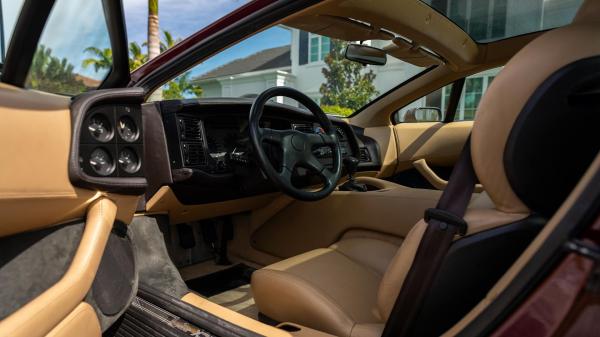
Jaguar would never again build a car as fast as the XJ220. The closest it ever came to another mid-engine supercar was its 2010 C-X75 concept. That project never even went into production. But the XJ220 proved that the world could get excited about a British supercar. On March 31, 1998, the XJ220 finally lost its speed record to the McLaren F1. Test driver Andy Wallace hit 240.1 mph in the XP5 prototype on a track in Germany. It used a naturally-aspirated V12 to do so.
According to the classic.com website, seven Jaguar XJ220s have sold in the past year. The average resale price was $543,556, and the lowest sale was $421,234. Considering these are record-holding supercars that represent a major chapter in automotive history, it’s surprising their prices aren’t closer to the multiple millions collectors now pay for a Ferrari F40 or McLaren F1. This is, after all, the British supercar that beat every Ferrari to 212 mph.
Sources: Jaguar, Classic.com, and Car Magazine

Related posts
Latest Post



No Comments