
Watch: Lowdown on Toyota GR GT – 641bhp V8 supercar lands in UK
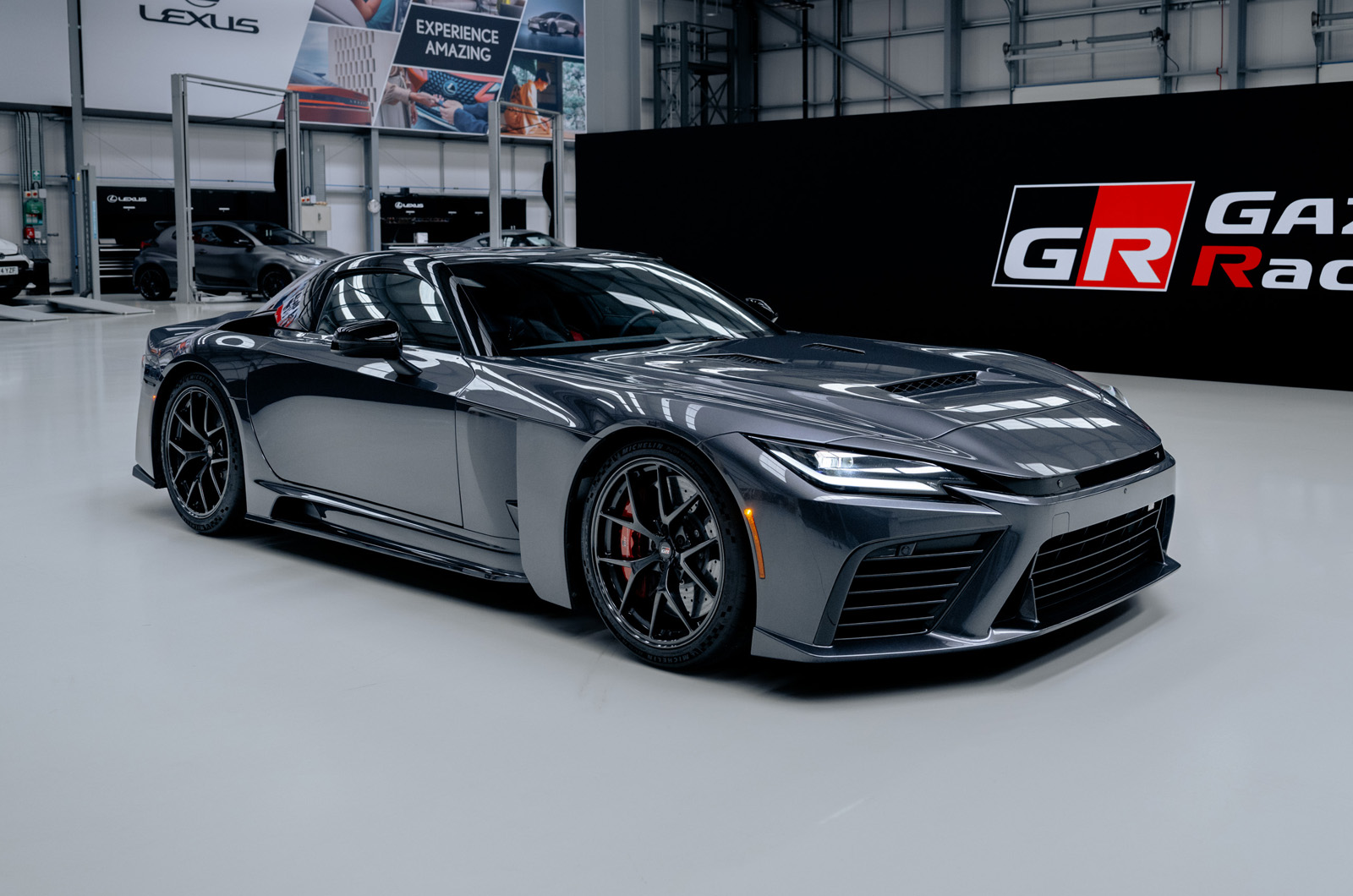
Notably, neither version of the GR GT features a Toyota badge anywhere on its exterior or interior, in line with the carving out of GR as its own dedicated brand within the Toyota group, like Lexus or Century.
Priorities for the cabin were to maximise visibility, enhance the sense of protection and offer “the ideal driving position”. Special focus has been placed on ensuring all switches are suitably shaped and easy to reach, with a view to achieving “excellent operability”.

Keeping weight down and maximising rigidity are the other core pillars of the GR GT’s development, with Toyota aiming for the GR GT to offer “a linear response and a high level of controllability” whether on track or in town.
It is the first Toyota with an aluminium body-in-white, and the panels on top are partly aluminium too, as are the main suspension components – while the brake discs are carbon units from Brembo.

The end result is that the GR GT will tip the scales at less than 1750kg, Toyota said, which will make it around 300kg lighter than the four-wheel-drive AMG and almost exactly the same kerb weight as the rear-driven Aston Martin Vantage.
That low kerb weight, split 45% front and 55% rear – in conjunction with a specially developed stability control system based on Toyota’s Le Mans racer – will help the GR GT achieve its objective for “the driver to interact seamlessly with the car on circuits, as well as on winding roads and other public highways”.

Related posts




Latest Post


No Comments