
The High-Compression V8 That Would Be Banned Today
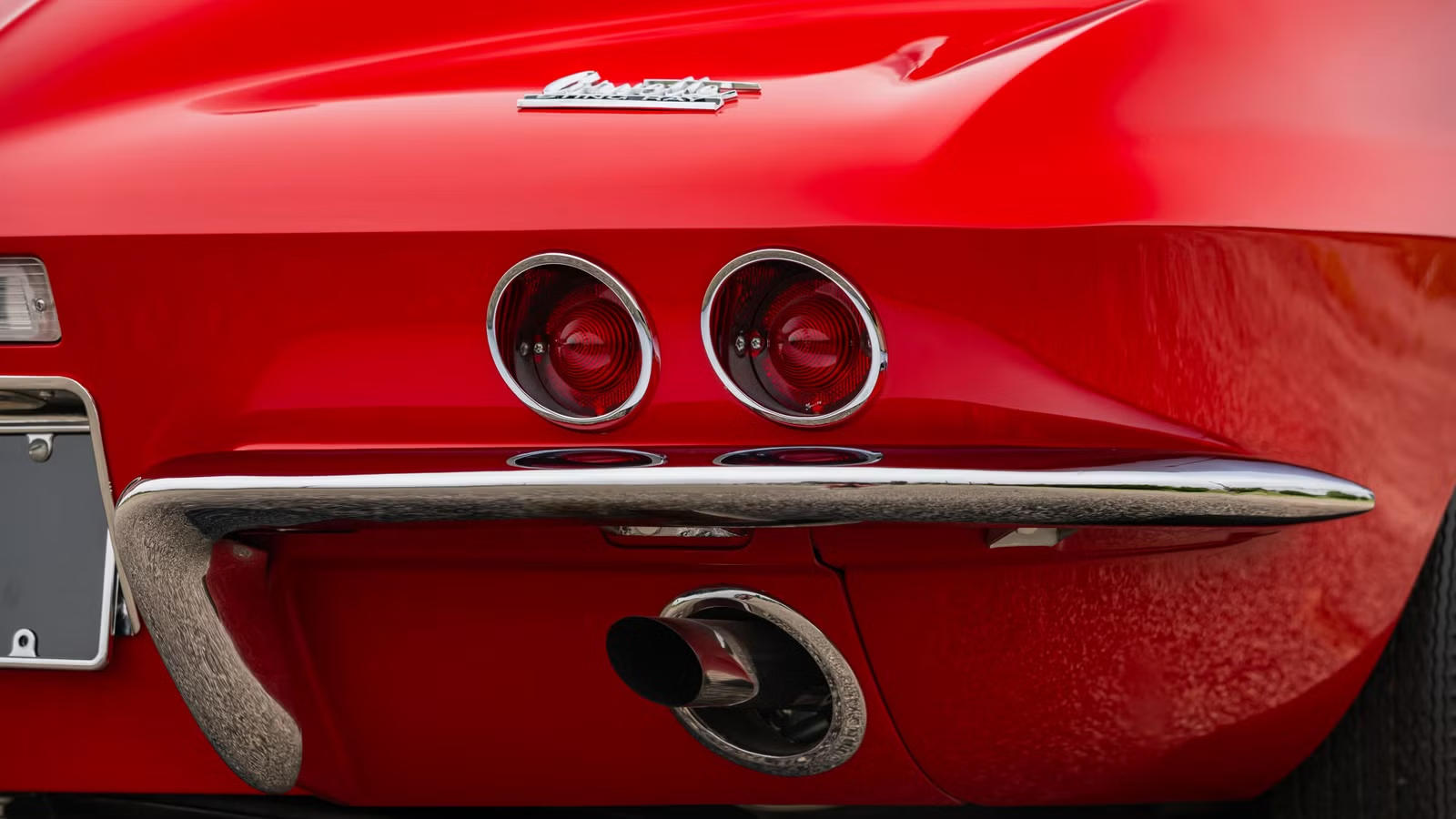
In 1967, anyone with enough money could walk into a Chevrolet dealership and order a factory-built race engine wrapped in a street-legal body. It was one of the most extreme machines Detroit ever sold to the public, and nearly everything about it is now illegal, obsolete, or both.

Its compression ratio is too high for any fuel sold at a modern pump. The gasoline it demanded has been outlawed for decades, and even its horsepower rating was a lie the manufacturer told on purpose.
Strangest of all, the company that built it didn’t want most customers to know it existed.
When Detroit Built Engines The Government Hadn’t Caught Up With

The late 1960s were the peak of the horsepower wars. Chrysler had the Race Hemi, Ford had the 427 SOHC, and every automaker in Detroit was chasing power figures that would have seemed impossible a decade earlier. General Motors was officially on the sidelines. The company had publicly walked away from factory-backed racing, but that ban created a gray area, and Corvette chief engineer Zora Arkus-Duntov exploited it by quietly supporting drivers instead of teams.
The rules of the road were different, too. Leaded high-octane fuel still flowed from ordinary gas pumps, catalytic converters were still years away, and no federal mandate required unleaded gasoline. Insurance companies were cracking down on high-performance cars, and government regulators had started scrutinizing automakers for selling machines they considered too powerful for public streets.
GM felt that heat more than anyone and responded by policing itself. The corporation limited its passenger cars to one gross horsepower for every 10 pounds of curb weight, a self-imposed cap designed to keep the government off its back.
Into that nervous, rule-bending moment came one engine that embodied everything the era permitted, and everything the modern world forbids.
The Chevrolet L88 427 Came With A Factory Warning Label

Mecum
|
Engine |
Transmission |
Power |
Torque |
|
7.0-liter V8 |
4-speed manual |
430 hp |
460 lb-ft |
That engine was the Chevrolet L88, a 7.0-liter (427 cubic-inch) big-block V8 offered in the Corvette from 1967 to 1969. On paper it was a regular production option, but the hardware told a different story.
Forged pistons pushed the compression ratio to a towering 12.5:1, backed by forged steel connecting rods and a hardened crankshaft. From 1967 through early 1969, the L88 ran closed-chamber heads at that full 12.5:1 squeeze, before late-1969 open-chamber heads eased it slightly to 12.0:1.

Feeding it all was an 850-cfm Holley four-barrel, the largest carburetor GM had ever bolted to an engine, working with a race-spec solid-lifter camshaft with 0.562/0.584-inch lift. The cylinder heads were all-aluminum, nearly unheard of on a street-legal American V8 at the time, and roughly 70 lbs lighter than comparable iron castings.
Chevrolet made no secret of how serious this combination was. Every L88 carried a factory label mounted behind the shifter, warning that the car required fuel with a minimum of 103 research octane or engine damage could result.

The rest of the car pushed buyers away just as hard. In 1967, ordering the L88 meant the heater and defroster were deleted, and a radio couldn’t be ordered at any price.
What buyers did get was mandatory race hardware. The package required F41 heavy-duty suspension, a Positraction differential, J56 heavy-duty brakes, an aluminum radiator, and the legendary Muncie M22 four-speed manual.
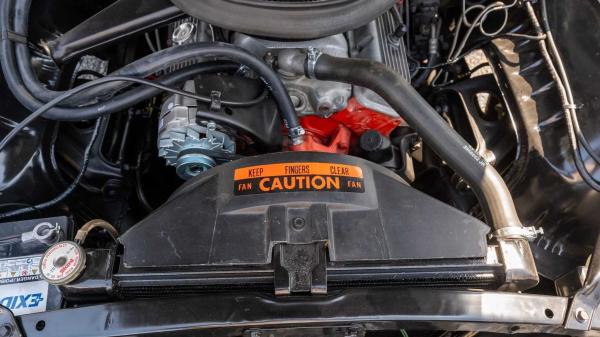
The Chevy Small-Block That Revved Like A Japanese Superbike
One American V8 was engineered to behave nothing like the muscle cars surrounding it, and almost nobody outside the paddock understood why.
Chevrolet Rated The L88 At 430 HP And Knew It Was A Lie

On paper, the L88 made 430 hp and 460 lb-ft of torque. Modern dyno testing tells a very different story, with near-stock examples consistently producing well over 500 hp and documented pulls approaching 575 hp.
The corporation’s self-imposed cap of one horsepower per 10 lbs of curb weight produced open fictions across its lineup, like the Firebird 400 rated 35 hp below the nearly identical engine in the heavier GTO.
Nobody inside the company pretended otherwise. Pontiac executives openly admitted to Car Life magazine that the Ram Air IV’s advertised rating was political fiction.

Here’s the twist, though: the Corvette was exempt from that corporate cap, yet Chevrolet deliberately underrated the one car it didn’t have to.
The real motives were more calculated. Insurance companies and regulators were watching high-performance cars closely, and a modest paper rating kept the L88 off their radar while the engine kept winning races.
The second motive played out on the showroom floor. Chevrolet pegged the L88 at 430 hp, exactly 5 hp below the cheaper tri-power L71’s 435 hp rating, steering casual buyers toward what looked like the more powerful engine.
The truth leaked out at the drag strip anyway. Period road tests recorded quarter-mile times that a genuine 430-hp car simply couldn’t produce, and anyone paying attention could do the math.
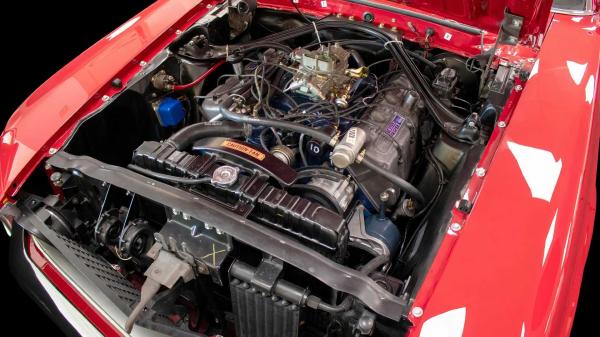
8 Of The Rarest Big-Block V8 Engines Ever Made
The coolest and most elusive big blocks that ever made it onto American roads.
The L88 Won At Sebring And Hit 171.5 MPH At Le Mans

The L88 proved its purpose almost immediately. Don Yenko secured the very first L88 Corvette off the line for his Sunray DX race team, and the car debuted at the 1967 12 Hours of Sebring with a stunning 10th-place overall finish and first in class.
Le Mans came next: Dick Guldstrand, Bob Bondurant, and Yenko took a 1967 L88 coupe to France, where it hit a record 171.5 mph on the Mulsanne straight before the engine let go in the 13th hour.
That car remains the only mid-year Corvette ever to compete in the 24 Hours of Le Mans. Back home, L88s campaigned successfully in SCCA competition throughout the late 1960s.

Racing success created demand that Chevrolet never advertised for. Word spread through the motorsports community, and production multiplied roughly sixfold for the engine’s final year.
Even then, the totals stayed tiny. Chevrolet built just 20 L88 Corvettes in 1967, 80 in 1968, and 116 in 1969, for a total of roughly 216 cars (some sources count 118 for 1969, putting the total at 218).
Either way, the math is brutal for collectors. Across three model years, Chevrolet built fewer L88s than it sold regular Corvettes in a single average week.
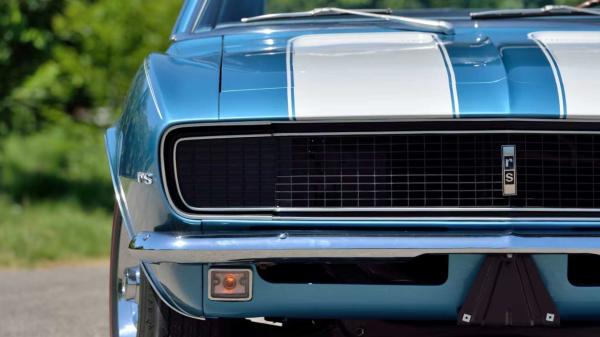
Here’s What The 1967 Chevy Camaro Z/28 Is Worth Today
The ’67 Chevy Camaro Z/28 is the rarest to ever wear the badge and left its competitors in the dust. Expect a price tag to match.
Why The L88 Could Never Be Sold Today

At 12.5:1, the L88 demanded leaded fuel rated at 103 octane, a specification that no longer exists at any American pump, since leaded gasoline for road vehicles has been banned in the US since 1996.
Today’s premium pump gas tops out at 91–93 octane. Running 12.5:1 compression through a carburetor on that fuel is a recipe for detonation, which is exactly what the factory warning label behind the shifter was there to prevent.
Emissions rules close the door completely. The 1967 cars carried no emissions equipment whatsoever, and while the 1968–69 cars added period hardware, nothing about the engine could approach modern standards.

Even the horsepower lie would be impossible now. Under today’s SAE certified-power rules, a deliberate 100-plus hp underrating would never survive scrutiny.
None of that has hurt the L88’s value — it built it. Hagerty pegs a top-condition 1967 example at $3.45 million, and the all-time Corvette auction record remains the $3.85 million paid for a 1967 L88 coupe at Barrett-Jackson Scottsdale in 2014.
The specs that would ban this engine from the road today are the same ones that made it priceless.
Sources: Hagerty, Mecum, Curbside Classic

Related posts



Latest Post


No Comments