
The Dealer-Only Camaro Is the Ultimate Muscle Car Unicorn
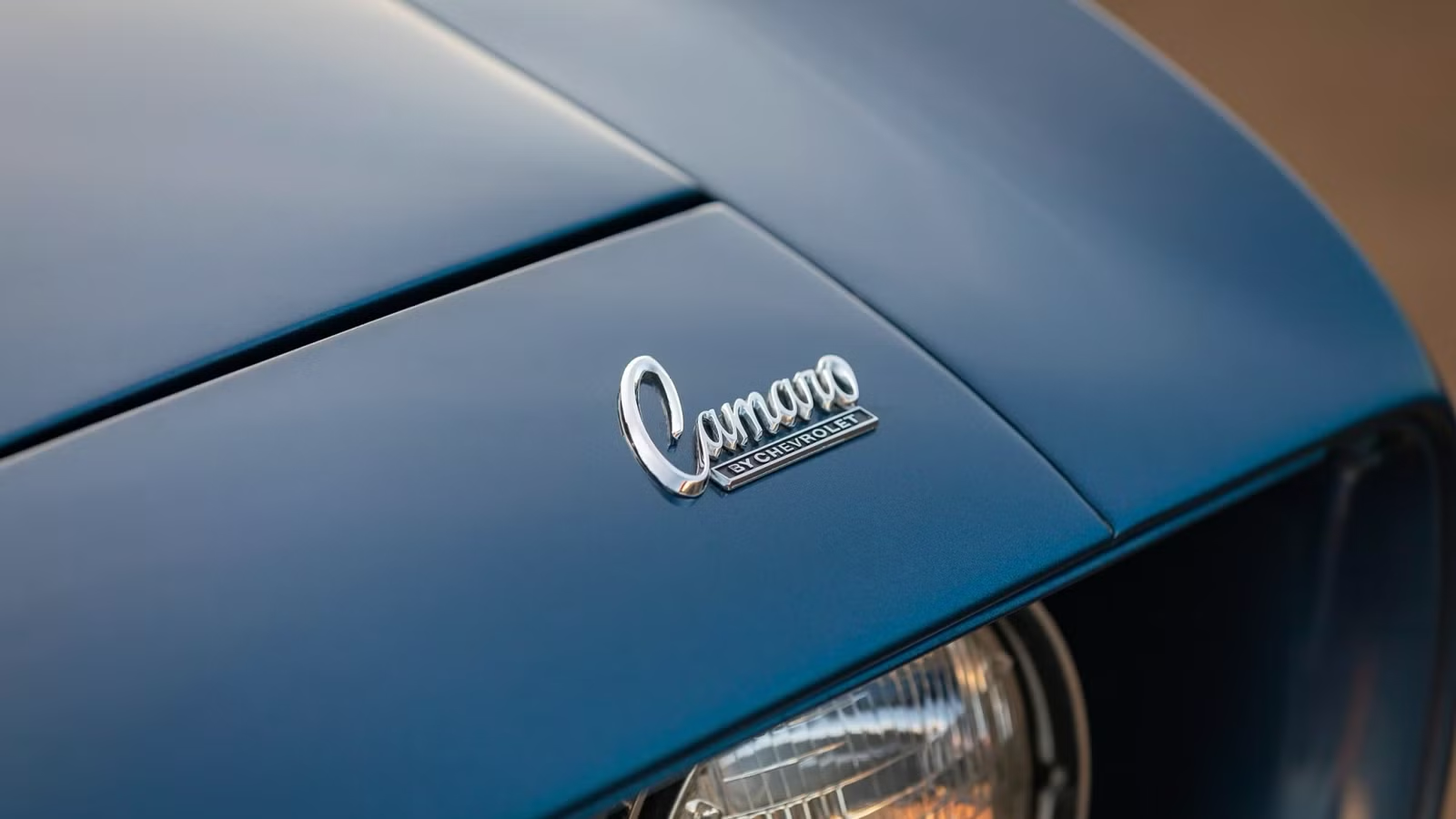
The relationship between car dealers and manufacturers can sometimes be complicated and occasionally downright antagonistic.

The vehicles that carmakers want to sell might not be the ones the public is looking to buy, and some of the most desirable products can be the hardest to bring to the lot.
Occasionally, in this ongoing tug-of-war between dealership demand and manufacturer availability, enterprising dealers came up with some inventory-related tricks and nonsense that resulted in tiny batches of unique cars that corporate management would never otherwise have approved.
GM Had Rules About Where Its Biggest Engines Could Go

By the late 1960s, Detroit’s horsepower wars were on, and American automakers were in an arms race to see who could offer the most outrageous performance in otherwise unremarkable passenger cars.
But you have to draw the line somewhere, at least in theory, and General Motors had established an internal policy limiting the engines available in its smaller passenger cars to 400 cubic inches, with an obvious exception for the Chevy Corvette. So for something like the Camaro, a 396-cubic-inch big block was on the table, but the 427 was forbidden.
Performance-minded dealerships landed on the solution of swapping in the larger engines themselves, demonstrating an appetite for smaller cars with bigger engines installed at the factory.
An Ordering Loophole Made Mischief Possible
Chevrolet had a process called a Central Office Production Order (COPO for short) that allowed dealers to order vehicles with equipment and configurations that weren’t available through the standard options sheet. It was supposed to be for fleet and commercial customers, allowing unique setups for things like police cruisers or utility trucks.
The COPO system was not at all intended to open the door for hopped-up configurations for retail customers, but that doesn’t mean it was never used that way. With a little help from the right people inside Chevrolet, dealers could use it to get their hands on vehicles that Chevy never intended to exist.
Fred Gibb Ordered 50 Camaros With An Aluminum 427

Fred Gibb was a Chevrolet dealer and drag racing enthusiast operating out of La Harpe, Illinois. He’d already tested the waters of COPO shenanigans by successfully ordering a batch of specially equipped Novas in 1968.
The following year, Gibb decided to push his luck further. Working with Chevrolet performance executive Vince Piggins as something of a man on the inside, he pursued a COPO Camaro equipped with the all-aluminum ZL1 427 V8, an engine with its roots in Chevy’s Can-Am racing program.
This wasn’t just about enhancing inventory with some hopped-up Camaros that weren’t available anywhere else in the country. Gibb wanted the car to be eligible for NHRA Super Stock competition, which required not only that the car exist, but that at least 50 factory examples be produced. Rather than attempting to persuade GM management to approve the engine as a regular production option, Gibb used the COPO system to homologate the car, committing his dealership to purchase all 50 examples.
The first two arrived in La Harpe on December 31, 1968, setting the stage for one of the most remarkable chapters in Camaro history.
The ZL1 Was A Race Engine With License Plates

The result was the 1969 Camaro ZL1. Officially designated as COPO 9560, it was a relatively ordinary Camaro on the outside, but the hardware underneath was anything but.
The car’s centerpiece was, of course, the all-aluminum 427-cubic-inch V8. It weighed roughly 150 pounds less than comparable iron-block engines, creating an immediate advantage on the drag strip. Chevy officially rated the engine at 430 hp and 450 lb-ft of torque, though those figures probably understate its real-world output. MotorTrend has estimated that production-spec ZL1 engines were putting out between 525 and 550 hp.
The rest of the COPO package supported the performance ethos, with heavy-duty cooling, an upgraded suspension, power front disc brakes, and a 12-bolt rear axle with 4.10 gearing. Gibb chose a mix of four-speed manuals and three-speed automatics.
Gibb’s first ZL1 Camaro knocked Ronnie Sox and his Hemi Barracuda out of the 1969 AHRA Winternationals, and the car went on to compete successfully in both AHRA and NHRA drag racing. The plan had come together.
A $4,160 Option Nearly Killed The ZL1 Before It Became A Legend

Drag strip glory notwithstanding, Gibb was still left with the lion’s share of ZL1s in existence sitting unsold on his lot. Other dealerships had followed his lead, but the rest of the country combined had only generated another 19 orders, bringing total production to just 69 examples.
To make matters worse, a change in Chevrolet’s COPO accounting practices passed development costs along to buyers, meaning that the ZL1 engine package that Gibb allegedly expected to cost about $400 had become an eye-popping $4,160.50. Together with the car itself and the rest of the specifications, we’re now talking about a car costing in excess of $7,200 in 1969.
The cars weren’t flying off the lot. Gibb would ultimately negotiate to return 37 of his 50 ZL1s to Chevrolet, which were then shuffled around to other parts of the country. The whole project certainly wasn’t a retail success, but selling cars was never really the intent. (It wasn’t intended to be a $7,000+ boondoggle, either.)
What began as a cheeky end run around GM’s engine size restrictions ended up creating one of Chevrolet’s most enduring performance nameplates.
Fast-forward a bit more than 50 years to 2024, and Chevy would end the Camaro’s run with a ZL1 Collector’s Edition right from the factory, no COPO backdoor required.
Sources: Chevrolet, Mecum

Related posts


Latest Post


No Comments