
The Japanese Inline-Four Engine Riders Trust To Last For Decades
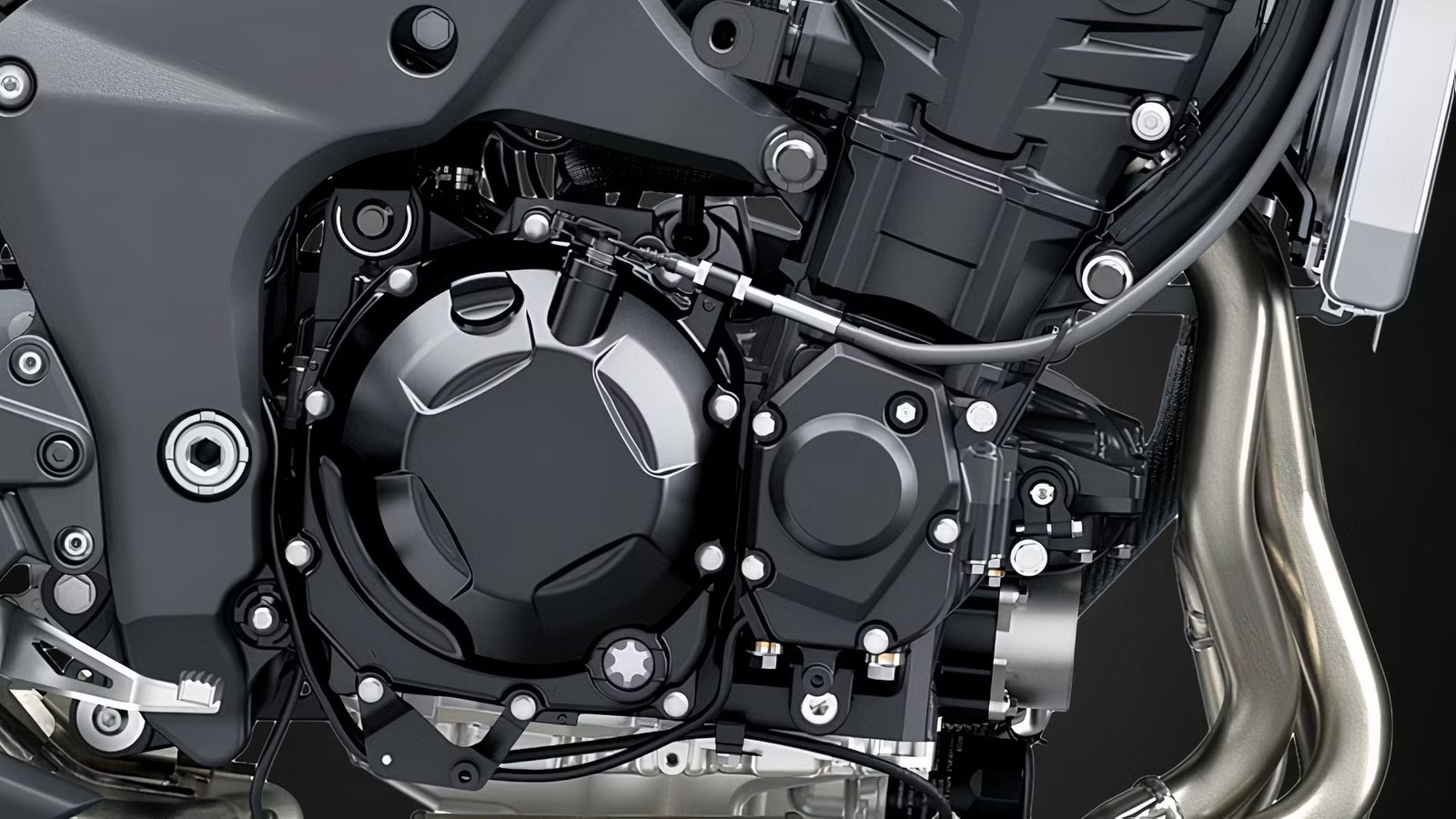
When it comes to reliability, nothing comes close to what Japanese motorcycles deliver. Years of research and development, and most importantly, resilience, have granted them this reputation, which is highly respected in the motorcycling world. By focusing on real-world problems and easy ownership over impressive spec sheets, they applied kaizen, refining their engines over and over until they engineered out all known flaws.

As impressive as Japanese craftsmanship is, a select few exceed general expectations, withstanding years of use without losing any appeal. One such mill comes from Kawasaki, and the versatility it provides by powering multiple bikes of completely different characters is the paragon of Japanese engineering.
Kawasaki’s 1,099cc Inline-Four Has Built A Reputation That Outlasts Owners
Born as a 1,043cc mill, it was introduced with the Z1000 in 2010. Its street-usable torque and durability paved the way for Kawasaki to expand the range with the Ninja 1000 and Versys 1000. Unlike its liter-class track-bike counterparts, this engine uses a dedicated crank, head, and cylinder design focused on everyday usability. The 77mm bore and 56mm stroke produce predictable thrust at low RPMs, delivering power right from the start.

Kawasaki has also fitted a secondary, gear-driven balancer shaft that cancels out high-frequency vibrations from the liquid-cooled, DOHC, 16-valve inline-four, delivering remarkably smooth touring comfort. Furthermore, running a low compression ratio of 11.8:1 (10.3:1 for the Versys 1000) puts less mechanical and thermal stress on the engine. This, in turn, reduces peak pressure on the cylinders.
Its Long Production Run Has Given Kawasaki Plenty Of Time To Refine The Package

Like every Japanese engine that has earned its reputation for reliability, this powerplant has also done the same by evolving over the years. The 1,043cc engine received revised intake cams, longer top gears, mechanical hardware updates including an assist and slipper clutch and ride modes, and IMU integration. Its final update in 2020 added ride-by-wire throttle valves and a three-way catalytic converter meeting the Euro5 norm, before the biggest transformation in 2025 in the 1100.
The Versys 1100 was Kawasaki’s first public announcement of its upgraded engine, which is also the biggest winner. While the reliable setup worked for the Versys before, this update gave the adventure tourer a noticeable real-world upgrade for touring. In the US, it’s available only as the fully loaded adventure-touring model, the SE LT.
A Flexible Power Delivery Helps It Avoid Being A One-Dimensional Performance Engine

The engine, now bored out, produces 1,099cc and features a three mm longer stroke, strengthening the power band even further down for better cruising and overtaking power. The 11.8:1 compression ratio is now uniform across all models. With updates that emphasize more low- and mid-range torque and smoother throttle response, this mill features narrower intake ports, revised cam profiles, longer center intake funnels, and a heavier flywheel. The upgraded 1,099cc engine now produces 133 horsepower and 82.5 pound-feet of torque — up from 118 horsepower and 75.23 lb-ft. With the upgraded bore and updated compression ratio, the mid-range punch can be felt from 4,000rpm onward.

The SE LT variant adds several quality upgrades. The most notable is its semi-active electronic suspension: the 43mm inverted Showa fork with KECS-controlled rebound and compression damping works up front, while the Showa BFRC Lite gas-charged shock with a piggyback reservoir works the rear, complemented by the Skyhook EERA technology. With improved braking, loaded rider aids, and plenty of touring amenities, the Kawasaki Versys 1100 SE LT delivers everything for the long run, both distance and years.
The Z1100 SE ABS Gives The Engine A More Aggressive Streetfighter Personality

Like the Versys, the Kawasaki offers only the top variant, the Z1100 SE ABS, in the US. The bored-out engine surprisingly drops six ponies to 134 horsepower over the Z1000, although it compensates with an improved 83.3 pound-feet of torque. Moving on from the raw analog era, the modern Z1100 also showers in tech.
It upgrades to an electronic throttle and features a five-axis IMU, which includes lean-sensitive traction control, a corner management function, intelligent ABS, ride modes, and electronic cruise control. The 22mm-wider, 13mm-forward handlebar provides improved steering leverage and better bike control. With a gas-charged Ohlins S46 rear shock and Brembo M4.32 front brakes with 310mm discs and a larger 260mm rear rotor, it completes what the Z1000 started.
The Ninja 1100SX Combines Its Performance With Sport-Touring Practicality

Surprisingly, Kawasaki gives an option for their sport-tourer! Although it’s an upgrade, the manufacturer hasn’t gone radical with this one. The power spec is identical to the naked brother, but Kawasaki has added a taller fifth and sixth gear, along with a heavier flywheel, for calmer highway cruising and improved fuel economy. The bidirectional quickshifter has been optimized for low-rpm performance, with the threshold dropping to 1,500 rpm from the previous 2,500 rpm.
The Ninja 1100SX still sits on the same twin-tube aluminum frame as its siblings, with no ergonomic tweaks, and uses the same IMU electronics. Although the rear brakes have seen an upgrade like the rest, from 250mm petal discs to 260mm round rotors, it retains the 1000SX’s suspension hardware.
Kawasaki Got The Formula Right With This Long-Running Inline-Four

Keeping an engine running and alive for over 15 years, across three different models, is no stroke of luck. It simply proves Kawasaki has got their formula right with this inline-four. The 1,043cc engine that debuted in 2010 was overwhelmingly praised for its bulletproof powerplant and street-focused tuning over track. This flexibility further strengthened their reputation because, despite being tuned separately for the adventure tourer, streetfighter, and sports tourer, they all showed clean pulling power at low RPMs.
The emission norm was a factor that forced the 2025 upgrade. However, Kawasaki met it and even improved on the previous model by increasing displacement by 56cc and the stroke by 3mm. With enhanced components, this engine does everything it did before, but better. Kawasaki’s mill has proven its masterclass, and this inline-four has quietly become one of the greatest all-rounders.
Source: Kawasaki

Related posts


Latest Post


No Comments