
Used Car Prices Are Officially Getting Out Of Hand
Buying used carswas once the easier and more responsible financial move. You let somebody else absorb the painful first years of depreciation, then you scoop up a relatively fresh car at a much friendlier price. That strategy still works in theory, but the numbers are starting to look downright ugly.

A $20,000 budget that once opened the door to an enormous selection of three-year-old vehicles now barely gets buyers through the entrance. Some of America’s most ordinary cars have experienced the biggest increases, turning models once recommended to students, families, and budget-conscious buyers into surprisingly expensive purchases. According to a massive new iSeeCars study, the affordable used-car market has not merely shrunk. It’s almost non-existent.
A $20,000 Budget Does Not Buy What It Used To
iSeeCars analyzed more than 11.4 million used vehicles sold in 2019 and 2026, focusing on models between three and 15 years old. The results illustrate just how dramatically the used-car market has changed since the final full year before the pandemic.

In 2019, nearly half of all three-year-old used vehicles cost less than $20,000. Today, only 11.4 percent qualify, meaning buyers have gone from choosing among nearly one in every two vehicles to roughly one in nine.
The situation does not improve much by shopping slightly older. In 2019, 69.2 percent of five-year-old vehicles were priced below $20,000, but that figure has collapsed to 26.6 percent. Buyers who need to stay below that budget are now being pushed toward much older cars, potentially bringing more miles, worn components, outdated technology, and repair bills into the equation.
“Today’s used car prices are among the most powerful examples of the affordability challenge facing consumers,” said iSeeCars Executive Analyst Karl Brauer. He noted that the average price of a three-year-old vehicle has risen by approximately $1,300 for every year since 2019.
America’s Best-Selling Used Cars Are More Expensive Than Ever

The average three-year-old used vehicle now costs $32,651, up from $23,624 in 2019. That is an increase of $9,027, or 38.2 percent, despite the buyer still receiving a vehicle with three years of somebody else’s mileage on it.
The Hyundai Elantra recorded the largest increase among the 21 best-selling models studied. Its average price jumped 56 percent, climbing from just $12,295 in 2019 to $19,178 in 2026.
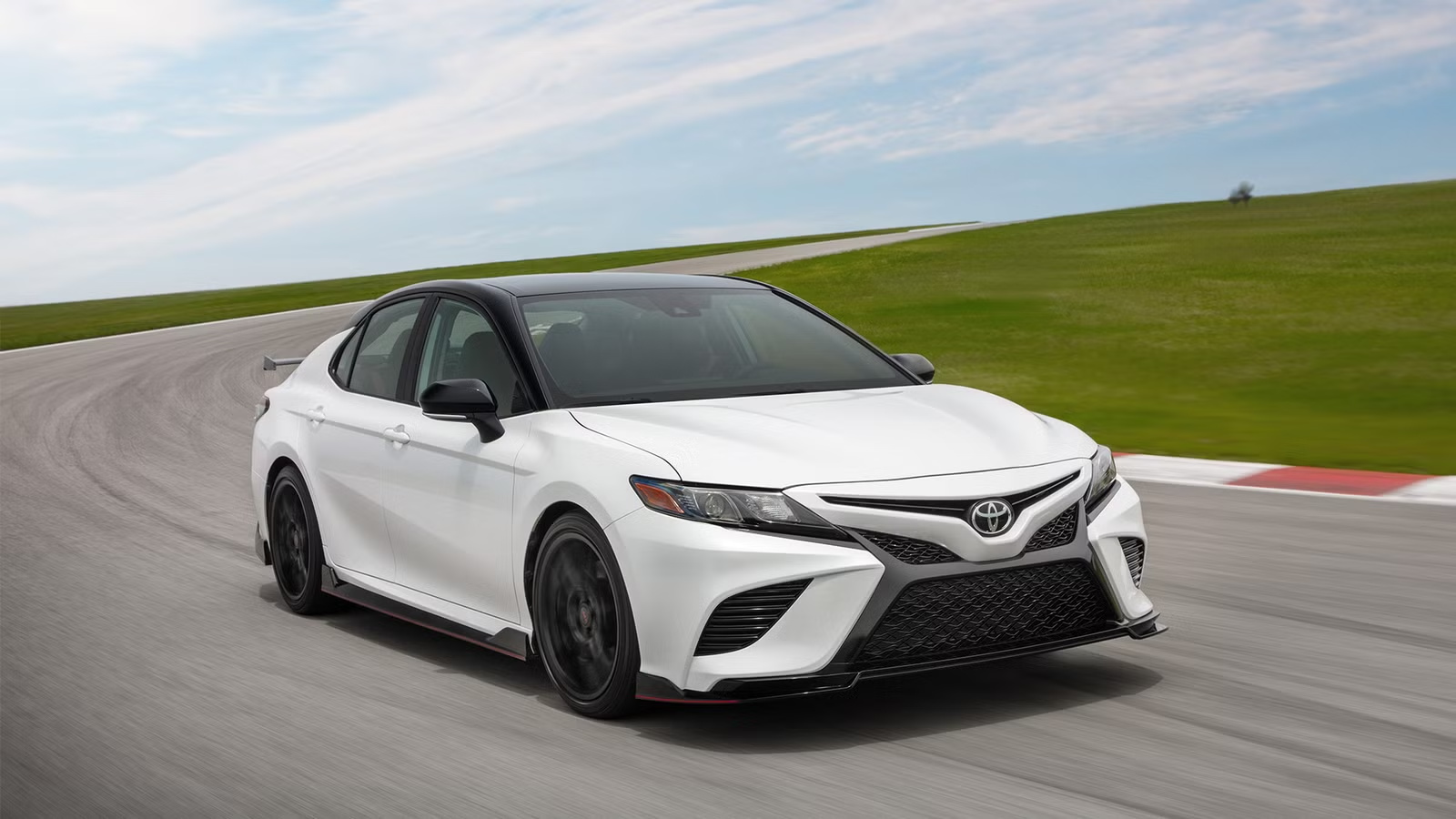
The Kia Sportage followed with a 50.5 percent increase, while the Toyota Camry rose 49.9 percent to $24,829. The Honda Civic climbed 44.7 percent to $23,771, which is a painful number for a compact car traditionally treated as the sensible choice for buyers watching every dollar.
Trucks are playing an entirely different financial sport. A three-year-old Ram 1500 now averages $40,060, while the Ford F-150 costs $43,121 and the GMC Sierra 1500 reaches $45,785. Those prices represent increases of 42.5, 36.9, and 36.5 percent, respectively.
Even the family-friendly Honda CR-V and Toyota RAV4 now average more than $29,000. Both have become more than 40 percent more expensive since 2019, proving that escaping into the crossover market will not rescue anyone’s bank account.
Affordable Used Cars Are Becoming An Endangered Species

Only four three-year-old models in the rankings average less than $20,000. They are the Nissan Versa at $15,718, Chevrolet Malibu at $17,275, Hyundai Elantra at $19,178, and Toyota Corolla at $19,971. The Corolla slides under the limit with just $29 to spare, so perhaps buyers can celebrate with a small coffee afterward.
Across every three-year-old vehicle examined, prices declined for only two models. The Tesla Model X dropped 17 percent, while the Land Rover Discovery Sport slipped by 2.4 percent. Every other model either became more expensive or remained essentially unchanged.
At the opposite end, eight models experienced increases of at least 60 percent. The Porsche Cayenne led the entire study with a staggering 75.7 percent jump, although luxury SUV shoppers are unlikely to receive much sympathy from somebody desperately searching for an affordable Corolla.
Used cars are still cheaper than comparable new ones, but that comforting old advice to “just buy used” is becoming increasingly disconnected from reality. Shoppers are now paying more money, accepting older vehicles, or taking on larger loans simply to access the same basic transportation that was comfortably within reach seven years ago.
The used-car market was once where buyers escaped high new-car prices. Now it looks like the high prices followed them there.

Related posts


Latest Post


No Comments