
The Cheapest Way To Get Z06 Power In 2026
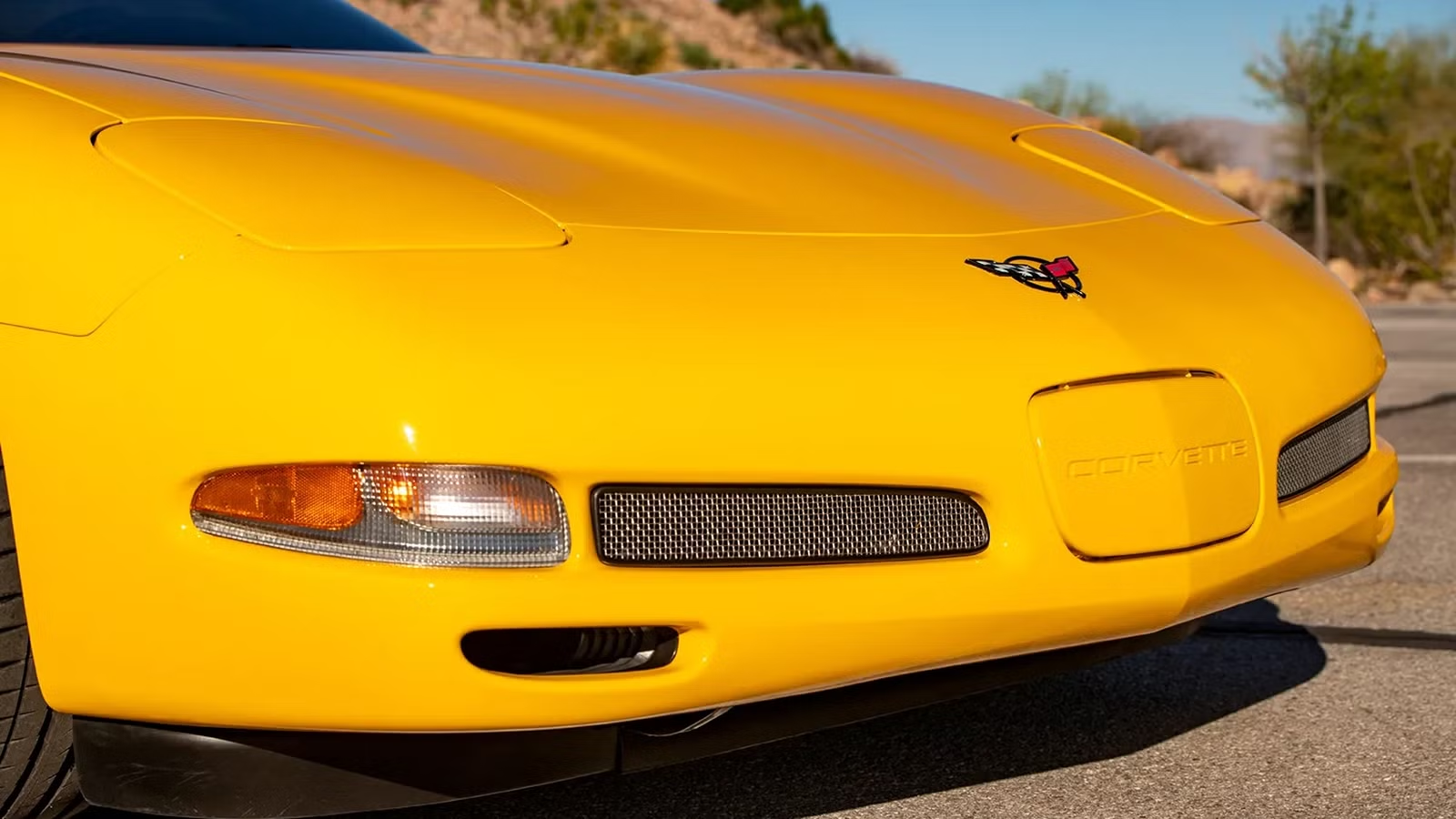
For decades, the Corvette Z06 badge has been a heavyweight in the American automotive culture. It represents Chevrolet uncompromised approach to performance, turning a standard sports car into a high-revving, track-carving supercar killer. And for many enthusiasts, owning the Z06 is the ultimate aspiration, but chasing that dream in 2026 is way out in the distance for the everyday enthusiasts, with the brand-new C8 Z06 price soaring above the six-figure mark. But a Z06 still lurks in the shadows, offering modern performance at an affordable price.
Why Six-Figure Z06 Has Left The Everyday Enthusiast Behind

Despite the Z06’s modern six-figure price tag, it was the cheaper alternative to expensive European supercars that was built with the approachability, simplicity, lightweight platform, and an analog feel as its core identity, that you can work on, modify to your taste even in your driveway, before turning into the heavy, hyper-complex computer on wheels it is today.
The current C8 Z06, while being an engineering marvel in its own right, tips the scales at over 3,600 lbs. To achieve its brutal speed, GM traded simplicity for complexity, with a flat-plane V8 and dual overhead-cam setup, 32 valves, twin throttle bodies, and a six-stage dry-sump oil system.
Any attempt to wrench on the modern Z06 on your own means you’ll need specialized diagnostic scanners and proprietary GM shop tools; even if you get those tools, the car is locked behind GM’s Global B cybersecurity protocols. Even if you get yourself a new Z06, you can’t customize it to your taste like cars from the past. With that said, Chevy’s performance flagship at the dawn of the 21st century had a different philosophy than what it is now.

How Chevrolet Turned a Budget Hardtop into an Exotic Killer

At the turn of the millennium, General Motors created an accidental masterpiece in their assembly plant. Corvette engineers, led by chief engineer Dave Hill, launched a budget, entry-level variant with a permanent fixed roof rather than the standard removable Targa roof. They marketed it internally as the Fixed Roof Coupe (RFC), originally intended as a stripped-back, more affordable model. The engineering team discovered something extraordinary during track testing: as the solid roof was permanently bonded to the hydroformed steel frame, it made the body shell 12 percent stiffer and almost 80 lbs lighter than the base coupe.
GM realized they had the perfect lightweight chassis on their hands, so they dropped the budget strategy and went all out. They tasked the powertrain team with rebuilding the small-block architecture from the ground up, re-engineering it for high-rpm performance. By installing hollow-stem valves and a high-lift camshaft and dropped in a lightweight titanium exhaust system. This bespoke engine was mated to a heavy-duty M12 6-speed manual trans axle with shorter gear ratios. The result was a pure, stripped-down road racer that could take on European rivals that cost three times as much.
The C5 Corvette Z06: Big Performance At Less Price

The Corvette C5 Z06 was produced from 2001 to the 2004 model year, and a clean, maintained example can be had for under $30,000, making it considerably more affordable for the performance and badge it offers. Under the hood is a 5.7-liter LS6 naturally aspirated V8 that puts out 405 horsepower at 6,000 rpm and 400 lb-ft of torque at 4,800 rpm in the 2002-2004 models. Combined with its weight of 3,118 lb, it’s a featherweight rocket ship.
If you opt for the 2001 model year, you can enter the Z06 ownership experience at the lowest cost, with a higher-mileage driver-condition example under $20,000. The 2001 model made 385 horsepower compared to later models; you essentially get a 20 percent discount by trading a few horses, since the internals, chassis, and 6-speed gearbox remain the same.
The C5 Z06 is now a 25-year-old performance car. It does have good reliability compared to the newer cars on the market today, but it is useful to know that early production 2001 LS6 engines were prone to piston ring flutter under high-rpm driving, which led to higher oil consumption, so you have to be on top of it and check the oil level or verify the factory technical service bulletin ring replacement was completed.
Mid-year 2002 and 2003 LS6s used yellow factory valve springs which were known to crack under heavy track load, but upgrading to GM blue LS2/LS6 springs is a straightforward, cheap fix. Crucially, unlike the base C5s from 1997 to 2000 whose Electronic Brake Modules were obsolete and unrepairable, all the C5s from 2001 onward had a rebuildable Bosch EBCM, making DIY electrical fixes affordable and hassle-free.
What Makes The C5 Z06 Special To Drive

The C5 Z06 is a pure mechanical feedback monster, free of modern electronics and drive-by-wire systems, forced-induction engines, and the turbo lag that comes with them. It weighs hundreds of pounds less than a modern Mustangor an M3. With the 6-speed manual in the rear, the chassis achieves an almost perfect 50-50 weight distribution that translates to instantaneous turn-in the moment you move the steering wheel.
Under the hood, the naturally aspirated 5.7-liter LS6 V8 delivers immediate response across the rev range as you tap on the throttle. The dynamic chassis pairs a track-tuned FE4 suspension with stiffer transverse leaf springs and re-valved shocks, giving the car supreme grip when you throw it around sharp, fast corners.
The best part is that, because the architecture is GM’s simple pushrod engine, you can do maintenance and quick fixes with basic tools rather than an expensive trip to the dealership, giving you one of the most track-capable, affordable sports car experiences on the market.
The Ultimate V8 Experience For The Money

The used market for the C5 Z06 shows a price split based on mileage, maintenance, and factory originality. An ultra-low-mileage car on Bring a Trailer with 11,000 miles sold for $65,000, and another example of a 1,500-mile 2003 model sold for $53,000. While these are a couple of examples of a highly sorted car, if you want a car in driver’s condition and not a garage queen, you can find examples of cars with around 30,000 miles for almost half the price or sometimes even more.
For example, a 32,000-mile car sold for $26,000; another 2003 Z06 sold for an absolute bargain at $17,000, making it cheaper than a new compact economy hatch. So there are multiple levels of entry points for you to enter the C5 Z06 as an enthusiast, from expensive low-mile garage queens to cars that are ready to take on the track with just a new pair of sticky tires.
The Chevrolet Corvette C5 Z06 remains one of the most affordable yet modern classic American performance cars, delivering raw, analog, old-school performance without breaking the bank. And one of the best-kept secrets in today’s performance market.
Source: GM, Bring a Trailer.

Related posts





Latest Post


No Comments