
The British Diesel Workhorse That Returned 165 mpg
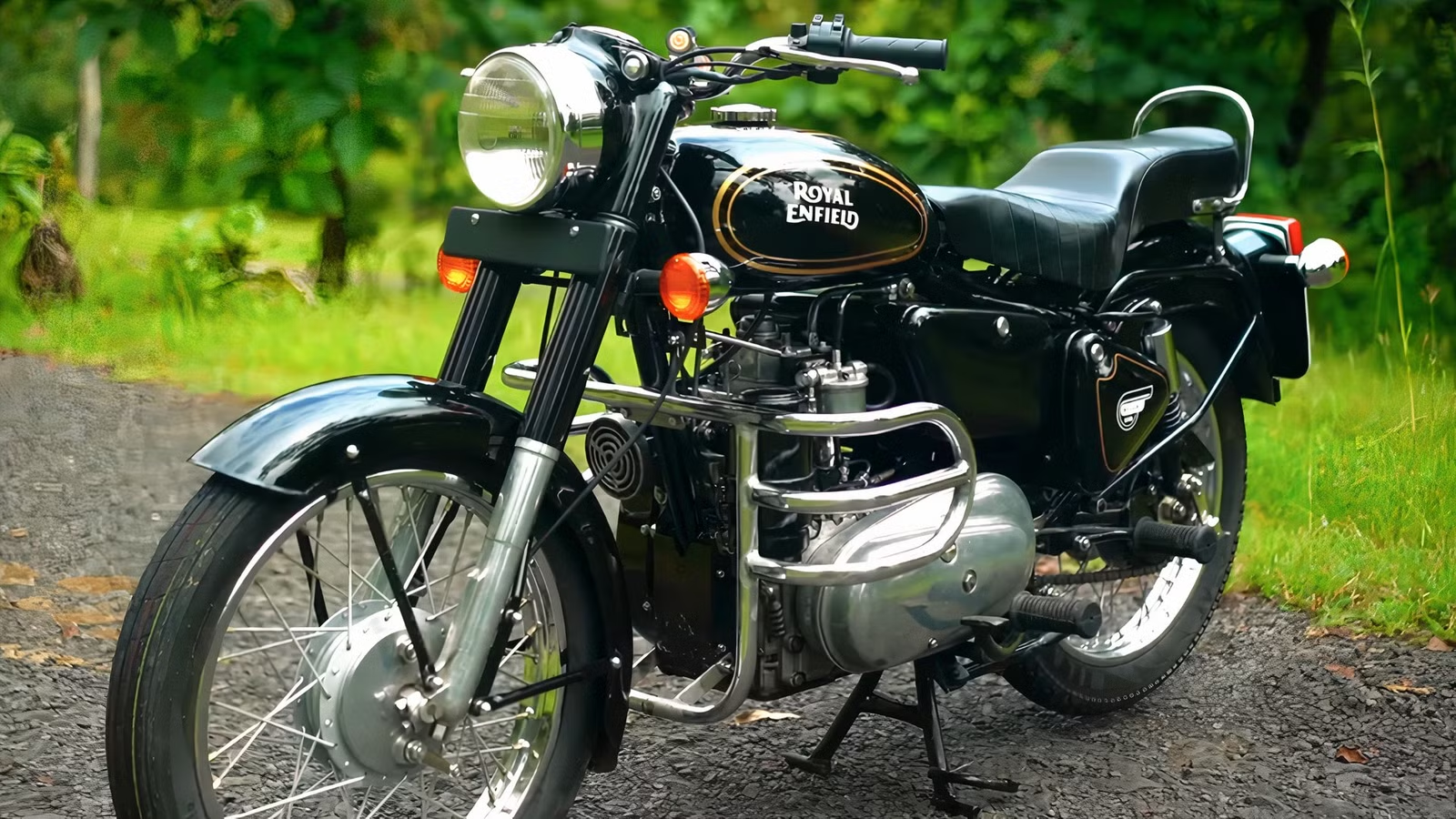
Imagine owning a motorcycle that struggled to keep up with ordinary traffic but was so fuel efficient that it put most of its rivals to shame. Sounds like an unusual compromise, doesn’t it? Yet that was precisely the strongest selling point of one of Royal Enfield’s strangest creations. In early-1990s India, where fuel costs mattered a lot more than horsepower, the British-origin motorcycle manufacturer found an unlikely use for an industrial diesel engine.
The Unlikely Marriage Of A Motorcycle And An Industrial Diesel Engine

Diesel-powered motorcycles weren’t an entirely new idea. Long before Royal Enfield developed its own version, independent workshops in India had experimented with installing small diesel engines into conventional motorcycle frames. One of the earliest motorcycles to be born from this frugal innovation, or ‘Jugaad’, as they call it in India, was the ‘Sooraj 325’. Put a Sooraj sticker on an Enfield, and an untrained eye couldn’t tell the difference because they shared a lot of cycle parts. The Royal Enfield Bullet was a natural candidate for this conversion. Its sturdy chassis, separate gearbox, and straightforward mechanical construction made it relatively easy to accommodate an unconventional engine.
The engine came from Greaves Lombardini, which produced small diesel engines for agricultural and industrial applications. These engines were designed to operate for long periods under demanding conditions, with durability and fuel efficiency taking priority over outright performance.
For Indians, that was an attractive proposition. Farmers, traders, and small business owners often depended on motorcycles for their livelihoods, sometimes covering considerable distances every day. So, having an efficient motorcycle meant a significant portion of your income was saved. And Royal Enfield saw an opportunity to turn those savings into a factory-built motorcycle.

Meet The Royal Enfield Taurus

The motorcycle in consideration was the Royal Enfield Taurus, which followed the brand’s original Enfield Diesel, introduced in 1993. The Taurus was the agriculture-focused, heavy-load-carrying iteration of the Enfield Diesel.
At its heart sat a 325 cc, air-cooled, single-cylinder diesel motor producing approximately 6–6.5 horsepower. A four-speed gearbox transferred that modest output to the rear wheel through a chain.
Visually, the Taurus retained much of the familiar Bullet’s character. There was the unmistakable teardrop-style fuel tank, iconic round headlamp, metal fenders, and the upright riding position. However, the engine underneath looked more suited to powering agricultural machinery than a motorcycle. Its exposed mechanical components and utilitarian appearance gave the Taurus an identity quite unlike its gasoline-powered siblings. It wasn’t built to impress anyone at a traffic light but was designed to work, and its biggest selling point became apparent whenever its owner visited a fuel bunk.
The Motorcycle That Could Return 165 mpg

The Taurus’s fuel economy was extraordinary, even by commuter motorcycle standards. Royal Enfield’s OEM archives quote approximately 70 kilometers per liter, equivalent to around 165 mpg using US gallons, or nearly 197 mpg using UK (Imperial) gallons.
Those figures aren’t directly comparable without accounting for riding conditions, vehicle weight, and engine performance. The Taurus sacrificed considerable performance to achieve its impressive fuel economy.
Its low-revving diesel engine was optimized for steady operation rather than acceleration. There was another financial advantage. Diesel fuel was half the price of gasoline in India in the 90s, so for someone riding substantial distances every day, the potential savings were difficult to ignore.
Six Horsepower, Heavy Vibrations, And A Lot Of Smoke

Unfortunately, exceptional fuel economy came with some rather noticeable compromises. With barely six horsepower available, the Taurus wasn’t particularly enthusiastic. Its top speed was approximately 40 mph (65 kph), which made the task of overtaking even a slow vehicle something that required careful planning.
The engine’s high compression ratio and industrial origins also meant substantial vibrations. Unlike the familiar thump of a gasoline-powered Bullet, the Taurus produced a harsh diesel clatter accompanied by noticeable shaking through the handlebars and foot pegs.
Then there was the exhaust. Under acceleration, the motorcycle could produce visible black smoke, which was quite an unappealing sight when environmental concerns were just starting to get noticed. Yet these shortcomings mattered less to buyers who viewed the motorcycle primarily as a tool. If the Taurus could transport people or goods while keeping fuel expenses low, its lack of refinement was a compromise its buyers were willing to accept.
Why Royal Enfield’s Diesel Experiment Eventually Ended

The Taurus’s excellent economy wasn’t enough to guarantee its survival. India began introducing increasingly stringent emissions regulations around the late 90s. The motorcycle’s older diesel engine, with its basic fuel-injection system and limited emissions controls, faced an increasingly difficult regulatory environment.
Gasoline-powered commuters were becoming lighter, more efficient, and easier to live with. Buyers could enjoy respectable mileage without enduring the Taurus’s vibrations, smoke, or limited top speed.
Royal Enfield eventually discontinued its diesel motorcycle program around the early 2000s. The brand would subsequently concentrate on developing its conventional motorcycle range, which included the Royal Enfield Bullet, leaving the Taurus as an unusual chapter in its history.
The Diesel Motorcycle That Became A Piece Of Royal Enfield History

The Taurus was never built to win performance comparisons. It was slower, noisier, and quite unrefined than conventional motorcycles. But that wasn’t what made it special. At a time when diesel-powered motorcycles were largely experimental projects or aftermarket conversions, Royal Enfield managed to put one onto the production line.
Today, Royal Enfield builds motorcycles that are faster, more refined, and considerably more sophisticated. Yet few are as unusual as Taurus. It remains a fascinating reminder that sometimes the most memorable motorcycles aren’t the fastest or most technologically advanced. They’re the ones built to solve a particular problem, however unconventional the answer might be.

Related posts

Latest Post


No Comments