
The American Cruiser That Quietly Became A Long-Term Favorite
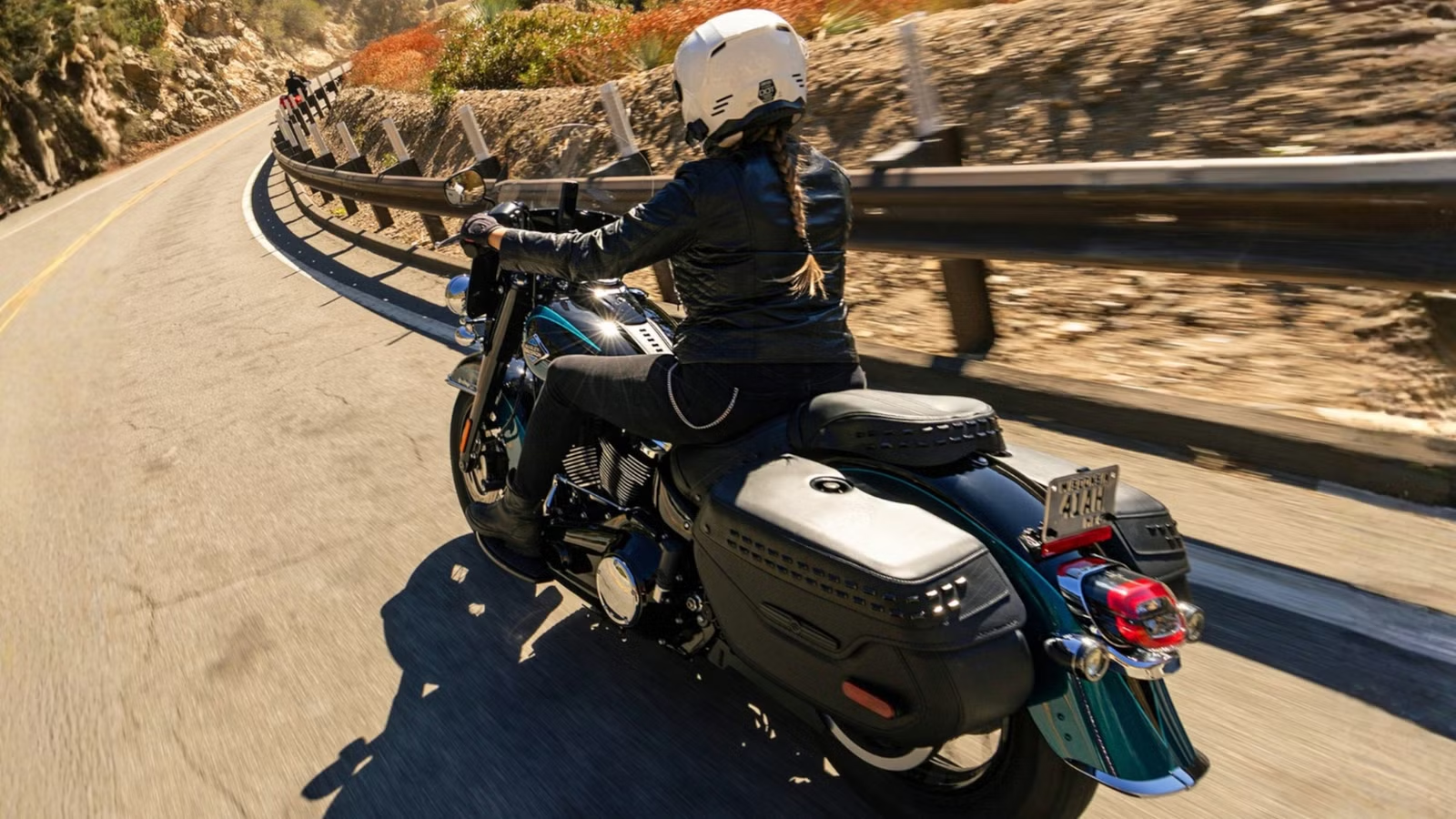
American cruiser motorcycles are often purchased with the heart, but keeping one for years requires more than chrome, noise, and nostalgia. Excessive weight can become tiring, complicated electronics can age poorly, and a motorcycle built only for short Sunday rides may spend more time being admired than ridden. The best long-term cruiser must preserve the emotional appeal that attracted you while remaining comfortable, useful, and easy to adapt. One familiar motorcycle has quietly mastered that balance. It looks like it belongs in a black-and-white photograph, yet its modern chassis, muscular V-Twin, and expanding collection of rider aids make it considerably more capable than its appearance suggests.
A Lasting Cruiser Must Do More Than Look Good

A cruiser’s styling may create the initial attraction, but appearance alone cannot carry a motorcycle through years of ownership. Long-term favorites tend to be the machines that continue meeting their owners’ needs as their riding habits change. The traditional American cruiser formula emphasizes a low seat, relaxed riding position, broad fenders, and a large V-Twin engine. Those ingredients create presence, but they do not automatically produce an easy motorcycle to live with.
Style Gets A Motorcycle Sold, But Versatility Keeps It In The Garage

A lasting cruiser also needs reliable wind protection, secure storage, passenger accommodations, and enough fuel capacity to leave town without having to plan the ride around gas stations. It should feel appropriate during an evening cruise but remain comfortable when that short ride turns into an entire day. That versatility becomes especially valuable if you only want to own one motorcycle. A machine that can handle commuting, weekend trips, local rides, and two-up travel has fewer reasons to be replaced. It earns its garage space by doing more than looking good under the lights.
Simplicity Can Age Better Than Expensive Touring Technology

A full-dress touring motorcycle can provide superior weather protection, infotainment, audio, and luggage capacity. It can also bring more weight, higher prices, and electronic equipment that may eventually look as dated as an old navigation system. A traditional cruiser equipped with a removable windshield and saddlebags takes a simpler approach. You receive meaningful wind protection and storage without permanently surrounding the motorcycle with a large fairing, speakers, and displays.

That simplicity also lets you change the motorcycle’s personality. Remove the windshield, and the machine returns to being a clean, traditional cruiser. Reinstall it before a long trip, and you gain protection from sustained highway wind. The motorcycle does not force you to choose between cruising and traveling.
The Harley-Davidson Heritage Classic Became The Quiet Favorite

The Harley-Davidson Heritage Classic has spent decades occupying the space between a stripped-down cruiser and a full-sized touring motorcycle. It does not receive the performance attention directed toward the Low Rider S or the touring recognition given to the Street Glide. But its balanced personality may explain why it has endured. Harley lists the 2026 Heritage Classic from $19,999 in its entry Solo configuration. That version uses a solo seat and cast wheels, so buyers planning regular two-up travel must pay attention to the selected equipment rather than assuming every configuration is identical.
Survived Nearly Four Decades Of Change While Being Relevant

The Heritage Softail lineage reaches back to the 1980s, yet its basic visual identity remains recognizable. The wide front fender, deeply valanced rear fender, windshield, saddlebags, floorboards, and low stance continue to evoke postwar American motorcycles. That could have trapped the Heritage Classic in the past. Instead, Harley-Davidson repeatedly updated what riders could not immediately see.
Different generations brought fuel injection, larger engines, six-speed transmissions, improved brakes, revised suspension, stronger frames, and increasingly sophisticated electronics. The result is not a replica that asks you to tolerate antique behavior. It is a modern motorcycle wearing a familiar shape. Harley-Davidson has preserved the design carefully enough that the Heritage still looks timeless, but not so rigidly that the motorcycle becomes irrelevant.
Its Identity Never Depended On Chasing Performance Numbers

The Heritage Classic was never intended to dominate a horsepower comparison. Its character comes from accessible torque, a relaxed riding position, a low seat, and the rhythmic feel of a large-displacement Harley-Davidson V-Twin. That focus matters because impressive peak output does not necessarily improve normal cruiser riding. You spend more time rolling away from traffic lights, passing slower vehicles, climbing hills, and accelerating with a passenger than chasing redline.
Strong torque delivered low in the rev range makes those situations feel effortless. The Heritage Classic’s appeal also survives specification changes. Engines become larger, and electronics become smarter, but the motorcycle’s purpose remains consistent: to provide the traditional Harley experience without limiting you to short rides.
Not Every Heritage Classic Is An Equally Strong Long-Term Buy

Longevity does not mean every version delivers the same experience. Earlier Heritage models preserved the classic style, but chassis behavior, braking, vibration control, suspension performance, and engine response evolved considerably over time. That distinction matters even when the discussion centers on the current motorcycle. The Heritage Classic’s long-standing reputation helps buyers recognize it, but the current model’s engineering ensures it remains relevant.
Nostalgia alone would not make the 2026 version competitive against newer American cruisers. The most important turning point came when Harley redesigned its Softail family. That change allowed the Heritage Classic to retain its vintage presentation while moving away from much of the behavior associated with older heavyweight cruisers.
The 2018-And-Newer Milwaukee-Eight Models Offer The Best All-Around Package

The redesigned 2018 Heritage Classic combined Harley’s Milwaukee-Eight engine with a lighter, stiffer Softail chassis. A hidden monoshock replaced the old twin-shock arrangement while preserving the appearance of a rigid-frame motorcycle. That platform improved handling, suspension control, and overall refinement without erasing the qualities that made the Heritage recognizable.
The Milwaukee-Eight also provided stronger power, four-valve cylinder heads, better heat management, and less intrusive vibration than previous Harley Big Twins. The 2026 motorcycle represents the most developed version of that formula. It retains the Softail proportions and traditional bodywork, but the engine, suspension, lighting, brakes, and electronics now operate at an entirely modern level.
The 2026 Heritage Classic Can Adapt As Its Owners’ Needs Change

The 2026 Heritage Classic is not simply a cruiser with decorative saddlebags. Its equipment allows you to configure it around the ride. The detachable windshield reduces upper-body fatigue on the highway, while the lockable, weather-resistant saddlebags provide practical storage without the need for a large rear trunk.
Remove the windshield, and the Heritage becomes a cleaner local cruiser. Install it for a road trip, load the saddlebags, and the same motorcycle becomes a credible light tourer. A five-gallon fuel tank and a claimed 47 MPG provide a theoretical range of about 250 miles, although speed, wind, load, and riding style will affect the actual distance between stops.
The Softail Chassis Keeps It More Approachable Than A Full Bagger

A 26.3-inch laden seat height helps make the Heritage Classic accessible despite its physical size. The low seating position allows more riders to plant their feet securely, while the motorcycle carries much of its weight low in the chassis. The 64.2-inch wheelbase provides the stability expected from a large American cruiser, but the Softail platform avoids the sheer bulk of Harley’s full Touring chassis.
That distinction becomes noticeable during parking-lot maneuvers, garage movement, and tight turns. There are still compromises. The Heritage is not light, and its 4.7-inch ground clearance discourages aggressive cornering. However, it offers touring usefulness without crossing into the 800-pound territory occupied by some fully equipped baggers.
Harley’s New Milwaukee-Eight Brings Mighty Performance

The 2026 Heritage Classic uses the Milwaukee-Eight 117 Classic, a 1,923cc V-Twin producing a claimed 98 horsepower and 120 lb-ft of torque. More importantly, peak torque arrives at only 2,500 RPM. That low-end output fits the motorcycle better than a dramatic peak-horsepower figure. This helps accelerate decisively without repeated downshifts, and the six-speed transmission keeps the engine relaxed at highway speeds.
A performance-tuned two-into-one exhaust supports the stronger engine while giving the motorcycle a cleaner right-side profile. The engine does not transform the Heritage into a sport cruiser, but it gives you more than enough power for passing, two-up travel, and loaded highway riding. This is the most powerful factory Heritage Classic yet, and its performance finally feels as substantial as its appearance.
It’s All Thoroughly Modern Under The Retro Design

The traditional bodywork hides an extensive collection of contemporary equipment. The 2026 Heritage Classic offers selectable Road, Rain, and Sport riding modes that adjust throttle response and electronic intervention to suit conditions. Cornering-enhanced ABS and traction control consider the motorcycle’s lean angle rather than reacting only to a straight-line condition, whereas drag-torque slip control helps prevent excessive rear-wheel slip during abrupt deceleration.
Full LED lighting, cruise control, a USB-C charging port, and electronic fuel injection further separate the 2026 model from the vintage motorcycle it resembles. The technology supports the ride without dominating the visual experience, which may be the Heritage Classic’s smartest trick. Lastly, a tire-pressure monitoring system warns you before pressure loss becomes a larger safety concern.
Indian’s Super Chief Comes Close To Matching The Heritage Classic’s Appeal

The 2026 Indian Super Chief Limited is the Heritage Classic’s most natural American rival. It combines a windshield, leather saddlebags, floorboards, a low seat, and an air-cooled Thunderstroke 116 V-Twin producing 120 lb-ft at 2,900 RPM. Indian also gives you a four-inch Ride Command touchscreen with navigation, Bluetooth connectivity, ride information, selectable modes, keyless ignition, cruise control, rear-cylinder deactivation, and ABS.
Starting around $22,499, the Super Chief Limited provides more visible technology than the Harley and makes a strong case if integrated navigation matters to you. The Indian carries only four gallons of fuel, however, compared with the Harley’s five. It’s approximately 739-pound wet weight, making it a substantial motorcycle, while the Heritage’s Softail chassis and lower-positioned mass can feel more manageable. So the Super Chief comes remarkably close and may appeal more to riders who want a touchscreen-centered cockpit.

The Heritage Classic counters with greater fuel capacity, cornering-enhanced rider aids, the stronger 117 Classic engine, and a design that remains useful without being trapped by its history. That is why the Heritage Classic quietly became a long-term favorite. It was never the fastest Harley, the most luxurious tourer, or the cheapest cruiser. It simply continued evolving without forgetting why riders wanted one in the first place.
Sources: Harley-Davidson

Related posts


Latest Post


No Comments