
This €370,000 Zagato Is Secretly a BMW M4 With 602 HP – First Drive
Article Summary
- Only 99 units of the Bovensiepen Zagato will be built, priced from €310,000 (around €370,000 with VAT) and capped at 30 cars a year.
- Zagato wrapped the BMW M4 in a hand-built carbon-fiber body and boosted the S58 engine to 602 bhp and 516 lb-ft.
- A carbon-fiber hardtop and the removal of the particulate filter cut weight by 110 lbs and gave the exhaust its full voice back.
The Bovensiepen Zagato is not exactly what you’d call attainable. Only 99 will ever be built, and Bovensiepen says production will be capped at 30 cars per year. In Europe, they will cost €310,000; when you factor in VAT, which in Germany is currently 20%, the price rises to around €370,000.
That is a significant amount of money for something that still has a BMW M4 hiding somewhere underneath. But that’s also the wrong way to look at it. Bovensiepen has changed so much of the car that the M4 becomes less of an identity and more of an organ donor. You can still obviously tell what it is when you drive it, but it has more power, more noise, and more comfort. It feels different.

You’re also cocooned in the hyper-premium Lavalina leather that ALPINA and now Bovensiepen are known for, and you’re driving a Zagato-designed, full carbon-body, pillarless coupe.
If you judge it purely as “an expensive BMW,” it’s absurd. If you judge it as a limited-run Zagato coupe, hand-built in tiny numbers, with Bavarian engineering and the ability to make you feel like a minor aristocrat every time you go for a drive, it starts to look almost sensible. Almost.
The Story Behind the Design

While I was in Austria to drive the Zagato coupe, Andreas Bovensiepen, the owner and CEO of Bovensiepen Automobile, told the story of the car’s inception. He said that when they first approached Zagato to design this coupe, the nearly century-old Italian coachbuilder and automotive design house was hesitant to take on the project simply because the resulting car was deemed too affordable.
Then Zagato’s chief designer, Norihiko Harada, explained what he wanted to achieve with this car’s design philosophy. He said the goal was to blend the typical Italian design charm with the almost architectural look of German cars — a “beautiful fusion of two automotive cultures,” as he put it.
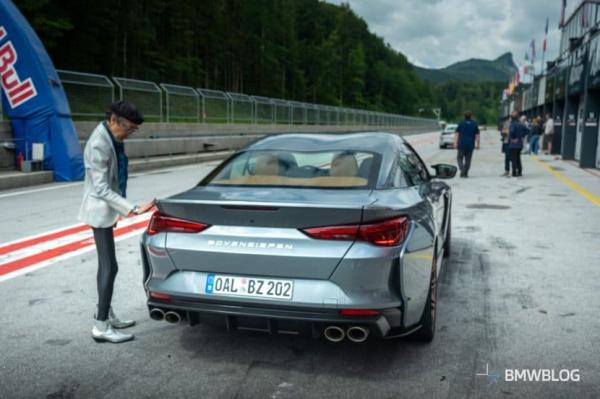
That sounds like typical designer-speak, but only if you haven’t seen the car in person. Throughout the event, I kept seeing Harada studying the coupe from different angles, walking around it slowly, stroking his chin, and touching the body as if a sculptor were checking the final details of a statue. It felt as though the way the exterior looked really mattered to him, and the result of this dedication is genuinely spectacular in the metal. Or carbon, rather.
Good
- More power, lighter, real GT character
- Hand-built Zagato carbon body feels special
- Smart weight savings from carbon hardtop
Bad
- Nearly 4x the price of a regular M4
- Interior barely differs inside
- Cars driven weren’t finalized yet
Carbon Fiber, Inside and Out
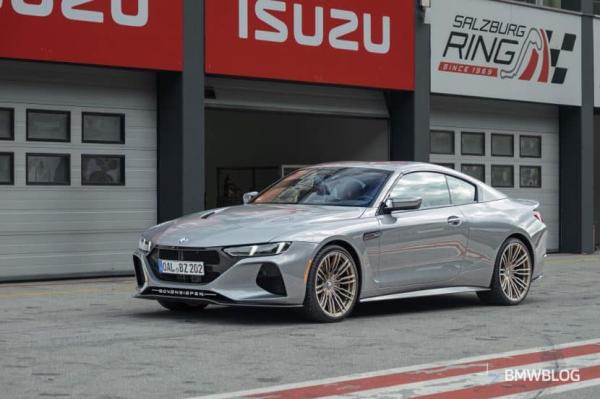
So the entire car’s body is new and made of carbon fiber. The hood, the front fenders, the doors, and the bumpers. The rear quarters are Zagato-shaped carbon too, but the M4’s original steel skin is still underneath because it’s part of the vehicle’s structure, so it can’t be removed for safety and homologation reasons.
The car looks great from the side, but it’s the rear three-quarter view that I just couldn’t get enough of. It has an integrated decklid spoiler that is slightly upturned, and the flanks of the car stretch far back, creating two buttress-type structures that hide where the rear bumper meets the body. It’s a gorgeous piece of design and the signature Bovensiepen wheels suit it perfectly.
Inside the Cabin
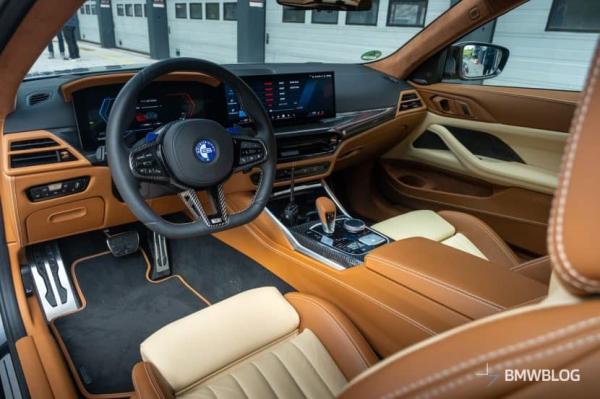
The interior isn’t as special as the exterior. However, there is so much leather everywhere, and it’s so satisfying to the touch that you instantly know you’re not in a regular BMW. Bovensiepen is still working things out, changing things here and there. The cars we saw and drove weren’t, let’s say, final — there were subtle differences between them.
For instance, one car had a thinner-rimmed steering wheel that was harder to the touch and covered in Alcantara. This had a big positive impact on the driving experience, and it really made the standard M steering wheel feel a bit too thick and squishy.
Behind the Wheel
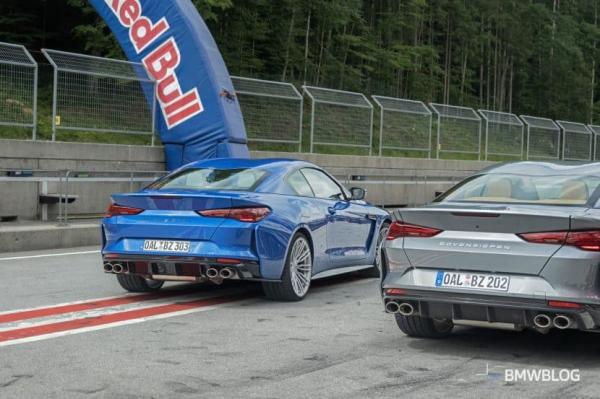
Walking around the Bovensiepen Zagato, taking in all of its subtle shapes, and then enjoying the tactile delight of its interior could take a lot more time — but it was the driving experience that really sealed the deal for me and made me pat my pockets for a spare €370,000. Unfortunately, I didn’t find it.
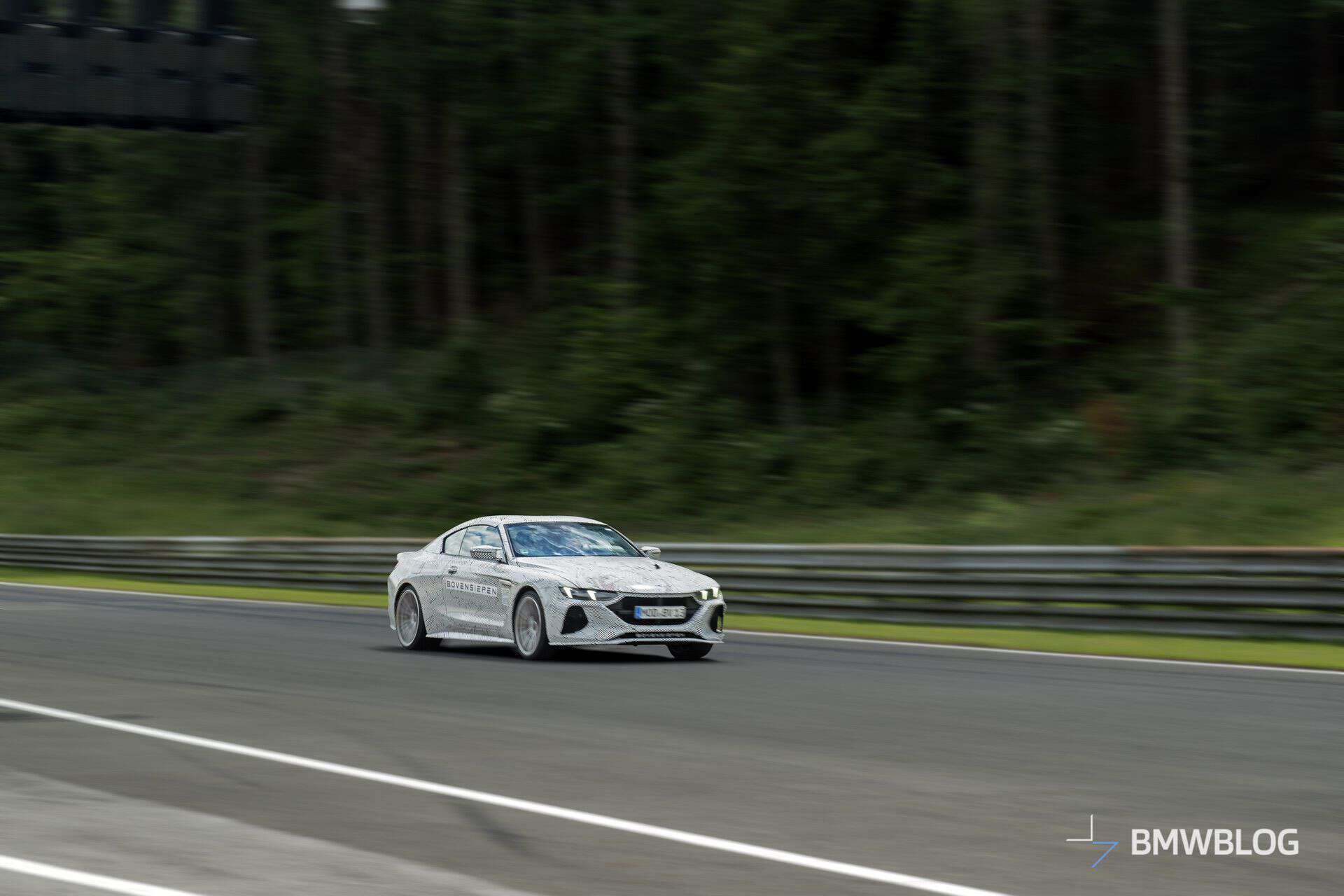
Bovensiepen has fettled the S58 engine, extracting 602 bhp and 516 lb-ft (700 Nm), and it feels quicker than a standard M4 Competition. By removing the heavy folding roof mechanism and installing a carbon-fiber hardtop in its place, they were able to reduce the vehicle’s weight by around 110 lbs (50 kg), bringing it down to 4,134 lbs (1,875 kg), further helping it feel athletic.
On the Track
The original plan was to drive the car on road and track, but the street drive didn’t materialize. That was a shame, because a car like this needs real bumps, cambers, and broken tarmac to properly explain itself. I wanted at least one photograph of it with an Alp looming in the background. Instead, I drove it only around the Salzburgring. Still, even just on track, I learned plenty about what it feels like to drive.
The first thing I noticed was the sound. Because the European Union mandates that all cars now have to have a particulate filter, the M4 you can buy here today has one and it muffles the S58’s savage roar to a degree. However, because Bovensiepen is only making 99 of these cars, it was able to circumvent the requirement, so the OPF is gone.
It also has a complete titanium exhaust from Akrapovic, which makes the engine sound surprisingly different from a standard M4. It sounds less rough and angry and more like a gentleman’s grand tourer that still screams as you approach the top end of the rev range. It sounds absolutely glorious — even more different than I would have expected.
Suspension and Handling
The suspension is heavily revised too, in keeping with its GT character. It’s softer and more compliant, but still very much in its element on the track. It gets different adaptive dampers with specific top mounts, new springs, and what feels like softer anti-roll bars. All of these changes came together to produce a vehicle that soaks up bumps that would have made an M4 bounce.
I Would Buy One. If Money No Object
I drove to Austria skeptical that any company, even one with Bovensiepen’s history, could justify selling an M4-based coupe for nearly four times the price of the car underneath. I drove back wanting one badly enough to reconsider several major life decisions, beginning with why I had wasted so many years not becoming a millionaire.
Exterior Appeal – 8
Interior Quality – 9
Steering Feedback – 8
Performance – 9
Handling – 8.5
BMWness/Ultimate Driving Machine – 8.5
Price Point – 6
8.1
The Bovensiepen Zagato takes a BMW M4 and reworks it into a hand-built, carbon-bodied coupe with a Zagato-designed body, 602 HP, a titanium Akrapovic exhaust, and revised suspension for true GT character. Limited to 99 units and priced from €310,000, it trades affordability for exclusivity and a genuinely transformed driving experience, even if the interior and final development details still need polishing.

Related posts





Latest Post


No Comments