
The Sport Bike You Should Ride Before Buying Something With 150 Horsepower
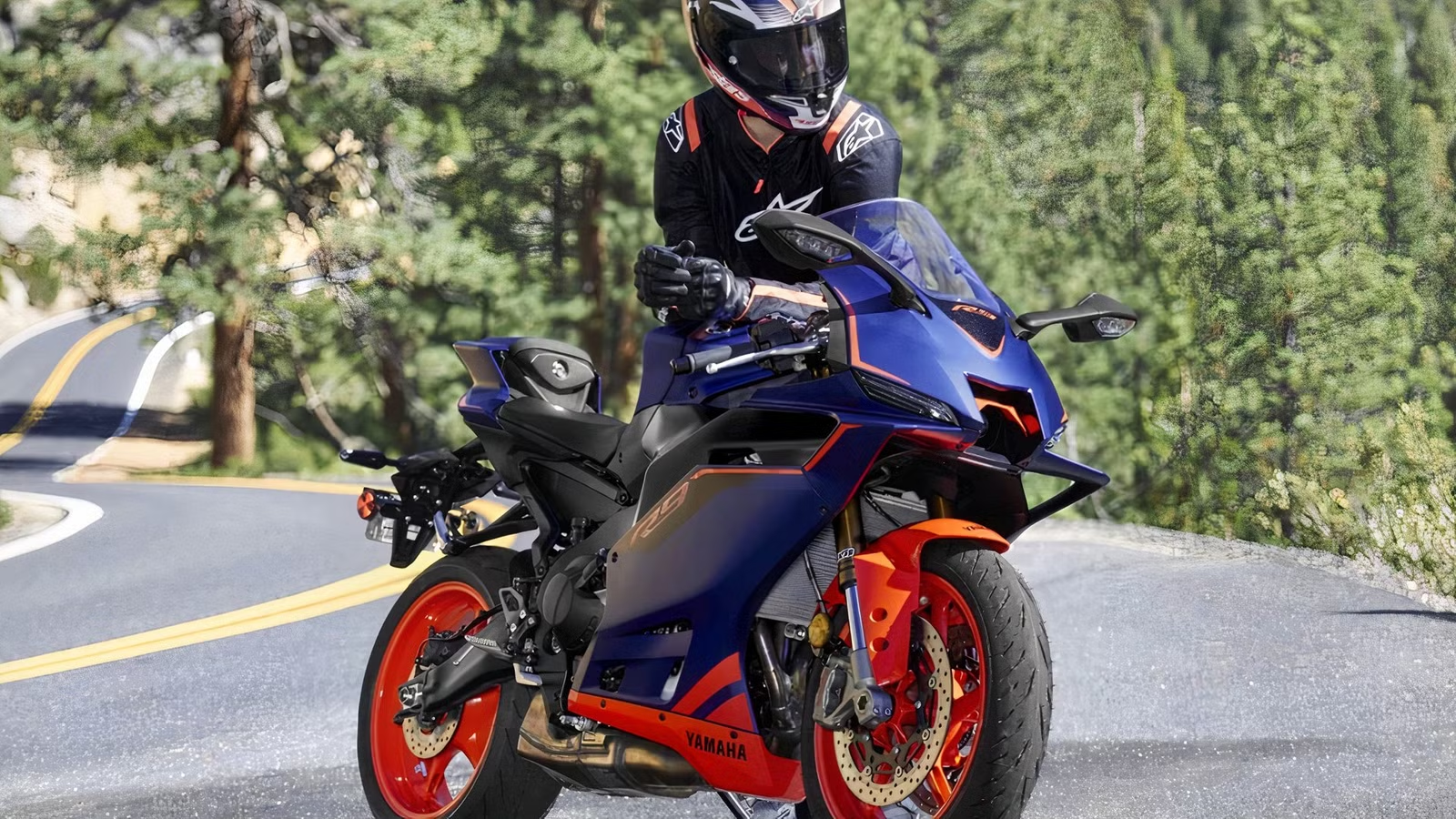
Buying a sport bike could easily become an overwhelming task, especially with the options the market has to offer. Whatever the budget allows, most of us gravitate toward the biggest horsepower number on the board. However, anything from 150 horsepower and beyond is a serious amount of motorcycle, more than most roads, most riders and most track days can honestly use. So here’s a better question: is there a sport bike that gives you the real supersport experience first, so you can figure out how much power you actually need? There is one that sits well below that 150 hp line, yet it never feels like a compromise.
150 Horsepower Is More Motorcycle Than Most Riders Can Use
The Pull Of Big Power Numbers

There is a reason superbikes command so much attention. Modern liter-class motorcycles can produce around 200 horsepower, and their acceleration, sophisticated electronics, and racing-derived engineering make them extraordinary machines. Even the middleweight category has become increasingly serious, with some motorcycles approaching or exceeding 150 horsepower.
For buyers, those numbers can become a shortcut for judging a motorcycle’s worth. More horsepower must mean more excitement, better performance, and greater room to grow. That reasoning sounds convincing until you consider where most motorcycles actually spend their time.
What A Middleweight Supersport Can Teach You First

Here’s something seasoned riders figure out eventually: a bike with less peak power and a broad torque curve lets you ride closer to its limit. You use more of it, more often, and you learn more because of it. The old 600cc inline-fours weren’t built for that. They were fantastic track tools, sure, but all their power lived way up the rev range. Around town or in traffic, they could feel frustrating, a bit like a light switch: off down low, on up top.

A newer breed of larger-displacement middleweights is trying to fix that. They aim for real rideability on the street without giving up track credibility. If you’re shopping in this space, the checklist is short: usable torque, a proper chassis, modern electronics, and a price that leaves money for tires and track days. Hold that thought, because one bike on sale in the USA ticks all four.
The Yamaha YZF-R9 Is The Sport Bike To Try First
Base Price: $12,499

That bike is the Yamaha YZF-R9. It’s Yamaha’s middleweight supersport, slotted between the R7 and the R1, and it starts at $12,499 plus a $700 destination charge. That price carried over unchanged from 2026 to the 2027 model year, and demand has been strong enough that Yamaha boosted frame output to keep dealers stocked.
Value Is About More Than Horsepower Per Dollar

Prices get interesting when you line up the rivals. The Ducati Panigale V2 makes 120 horsepower and costs $16,995 plus $995 destination. Honda’s CBR600RR runs $11,499 plus $600 destination; Honda doesn’t publish a US horsepower figure, but the European-spec bike is rated around 117 horsepower. The Triumph Daytona 660 starts at $9,395 and claims 94 horsepower.
Run the math strictly in dollars per horsepower and the Honda edges the R9 on paper, at roughly $96 versus $107, with the Triumph close behind at about $100. The Ducati lands near $142. But raw horsepower per dollar misses the bigger picture. The R9 packs an R1-derived IMU, fully adjustable KYB suspension, and Brembo Stylema brakes into that price, wrapped around a torquey triple instead of a high-strung four. Against the Ducati, you keep roughly $4,500 for similar power. For 2027, Yamaha is offering the R9 in three shades, including Team Yamaha Blue, Raven, and Matte Phantom Blue/Fluo Red.
Yamaha Has Built A Supersport That Doesn’t Intimidate
A Triple That Delivers Power Early

The 890cc inline-three is the heart of the thing. Yamaha’s European specs list 117 horsepower and 68.6 pound-feet of torque, with peak power arriving at 10,000 rpm and peak torque at 7,000. Not superbike numbers, and that’s exactly the point. They’re the kind of numbers that let you open the throttle without bracing yourself.
There’s real engineering under there, too: forged pistons, forged connecting rods, and ceramic-composite cylinder bores. Yamaha’s own ECU tune and gear ratios set the R9 apart from the MT-09, and the assist-and-slipper clutch keeps lever pull light and the rear tire settled on hard downshifts.
Chassis, Suspension And Brakes

A capable engine needs a chassis that allows riders to use its performance confidently. The frame is a gravity-cast aluminum Deltabox, the lightest Yamaha has ever fitted to a supersport, and Yamaha claims a near-perfect 50/50 weight distribution. Wet weight is 430 pounds, seat height is 32.7 inches, and the wheelbase is 55.9 inches. The goal is light, agile handling that doesn’t punish less experienced riders.
Suspension is serious for the money. A 43mm KYB fork adjusts for preload, high- and low-speed compression, and rebound, and the KYB shock matches that. Up front, Brembo Stylema monoblock calipers and a radial master cylinder grip 320mm dual discs. A 220mm rear disc handles braking duties at the back. These are not budget components chosen simply to hit a price point; they are serious hardware designed to cope with repeated hard braking.
R1-Derived Electronics

This is where the R9 punches above its weight. Its six-axis IMU is derived from the R1, and it feeds a rider-aid suite that wouldn’t look out of place on a bike costing twice as much. Lean-sensitive traction control offers nine levels. Slide control and lift control get three each. Then there’s lean-sensitive brake control, two-level engine brake management, a back-slip regulator, and even launch control for track starts. Yamaha Ride Control bundles it all into preset or custom modes, and a four-level power setting changes how sharply the engine responds.
A five-inch TFT display offers selectable street themes plus a dedicated track theme, and Y-Connect pairs your phone. A third-generation bi-directional quick-shifter comes standard. So is cruise control, which Yamaha says can be set in third gear or higher above 25 mph. Up front, you’ll spot MotoGP-inspired winglets. Yamaha calls them functional and says the R9 is its most aerodynamic bike ever.
A Supersport That’s Easy To Live With

The Yamaha YZF-R9 makes a strong case for getting the overall package right. For a rider stepping up from a 600cc or a smaller twin, it’s a real step up without the cliff edge. Riders who tested it on track described the R9 as a forgiving bike with a power curve far easier to use than that of the old R6.
At $12,499 before destination and other charges, it is not a cheap motorcycle, nor is it appropriate for every new rider. It is, however, a convincing option for someone who wants to develop sport-riding skills before moving into the 150-horsepower class. Ride it first, learn to use what it offers, and the next horsepower upgrade may become a choice rather than an assumption.
Source: Yamaha

Related posts

Latest Post


No Comments