
The 428-HP Mercedes Sedan That Nearly Won Spa Then Became An Aircraft Test Mule
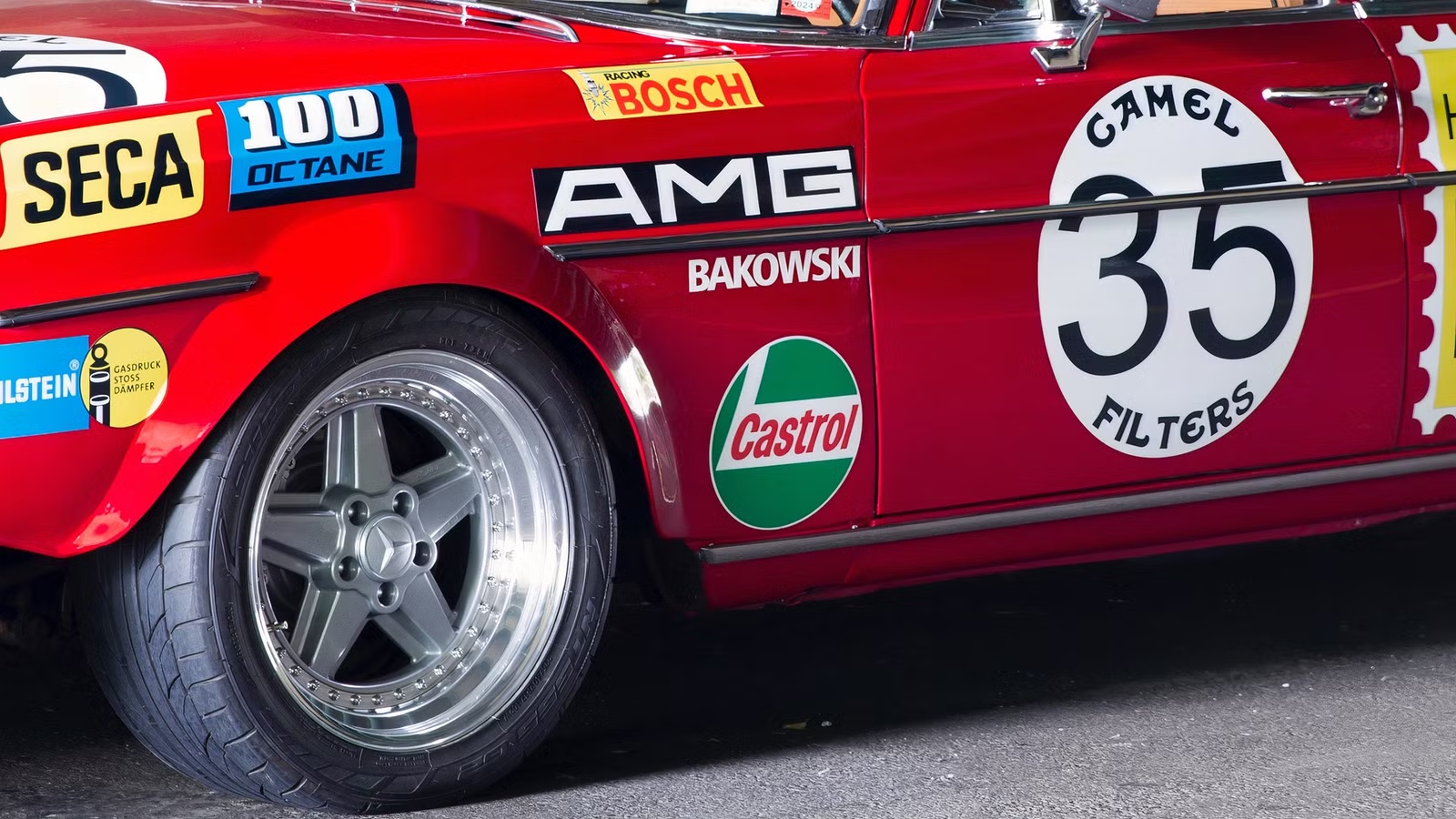
An aircraft wheel was reportedly lowered through a hole in the floor of a Mercedes sedan during a high-speed run. Matra was using the former race car to test aircraft tires. That was its second ordeal. The first had been Spa.

There, an independent team spent 24 hours feeding its thirsty engine, changing its worn tires, and chasing lighter rivals. It finished just three laps behind the winning Ford Capri. After surviving that punishment, the same heavy sedan had to prove itself again, this time for aircraft engineers.
A Heavy Luxury Sedan Had No Business Chasing Spa Glory
At the 1971 Spa 24 Hours, Hans Heyer and Clemens Schickentanz brought a luxury sedan to a fight against leaner, race-prepared rivals. It was a heavyweight boxer lining up against sprinters. A Chevrolet Camaro took pole position. Niki Lauda, a future three-time Formula 1 champion, qualified second in a BMW 2800 CS. Their oversized challenger qualified fifth overall. That should have turned a few heads.


Spa’s 14.1-kilometer road circuit gave the sedan room to fight back. On its long straights, more than 265 km/h (165 mph) made up for the time it lost in slower bends. The works-backed Ford Capri RS 2600 driven by Dieter Glemser and Alex Soler-Roig was quicker overall, but the Mercedes could stay in the fight. Keeping that up for 24 hours was another matter.
At 1,635 kg (3,605 pounds), every corner made the car’s tires work harder, and every braking zone demanded more from the brakes. The fuel-hungry V8 brought its own bill: extra stops meant minutes spent standing still while lighter rivals kept moving. The tires wore quickly, adding yet more pit time. But Heyer and Schickentanz held on for 308 laps, just three fewer than the winning Capri. Second overall. First in class.
The Red Pig Turned A Crashed Mercedes Into A Contender

The beast finally had a name: the Mercedes-Benz 300 SEL 6.8 AMG, better known as the Red Pig, or Rote Sau. Hans Werner Aufrecht and Erhard Melcher, founders of the fledgling AMG, had rebuilt a crashed 300 SEL 6.3 into a racing contender, with help from Mercedes engineer Erich Waxenberger. This wasn’t a Mercedes works racer. It came from AMG’s small workshop.

Under its long hood, the M100 V8 swelled from 6.3 to 6.8 liters. It produced 315 kW and 620 Nm (457 lb-ft), or 428 metric hp—roughly 422 mechanical hp. The road-going 6.3 managed 250 metric hp. Picture that extra muscle pulling a full-sized luxury sedan onto Spa’s long straights, where Heyer and Schickentanz could use speed to claw back time lost in the corners.
AMG stripped 195 kg (430 pounds), installed aluminum doors and lighter windows, and widened the arches to fit bigger racing wheels. Reworked suspension helped control the weight, but the car still tipped the scales at 1,635 kg (3,605 pounds). Racing rules even left the rear seat and wood trim inside. Mercedes’ historical specifications record a 6.1-second sprint to 100 km/h (62 mph). For something this big, that was serious pace.
Its Unexpected Second Career Was Testing Aircraft Tires
After Spa, the Red Pig had some racing left in it. In 1972, it entered the Nürburgring 24 Hours, then won its class at the Norisring with Hans Heyer. Rule changes ended its European touring-car prospects. A normal retirement might have meant a museum display. Instead, the Mercedes found a job testing aircraft tires.
French company Matra needed a car fast enough for aircraft-tire tests and substantial enough to carry the required equipment. At Spa, the Red Pig weighed 1,635 kg (3,605 pounds) and could top 265 km/h (165 mph). It had spent its racing career making tires miserable; now tires were the entire assignment. A lightweight sports car might have matched its pace, but finding one with the same size and heft was another problem.
The sedan reportedly had holes cut into its floor so aircraft landing gear could be lowered during high-speed runs. The arrangement is difficult to picture. Mercedes confirms Matra used the car for aircraft-tire testing, but doesn’t describe that floor mechanism. The job was real; how the wheel reached the road remains less firmly documented.
AMG Keeps The Legend Alive After The Original Vanished

At Spa in 2026, a Red Pig stood beside the new S-Class during Mercedes’ “140 Years. 140 Places” tour. One was the latest flagship; the other a recreation of the racer that stunned Spa in 1971. The reunion had one painful catch: the original wasn’t there.
The tour ended in Stuttgart on October 17 after crossing six continents. Earlier in 2026, former Mercedes design chief Gorden Wagener shared a modern Red Pig interpretation with a chrome grille and star-shaped headlights. It was a tribute, not a production preview.
The Replicas Leave One Car Missing

The Mercedes-Benz Museum displayed a detailed reconstruction for the car’s fiftieth anniversary in 2021. You can copy the paint, body, and engine specifications. But replacement parts are not the original chassis and components that completed 308 laps at Spa, three behind the winning Ford Capri. These replicas never became Matra’s aircraft-tire test mule.
The original was reportedly destroyed after Matra’s testing, though its exact fate remains uncertain. You can build another Red Pig. You cannot build another 1971 Spa.
Sources: Autosport, GoClassic, Mercedes-Benz, Mercedes-AMG Petronas F1 Team, Racing Sports Cars, Classic & Sports Car.

Related posts

Latest Post


No Comments