
Mercury Built A Stripped Fiberglass Comet With A 427 To Hunt Mopar’s Hemi
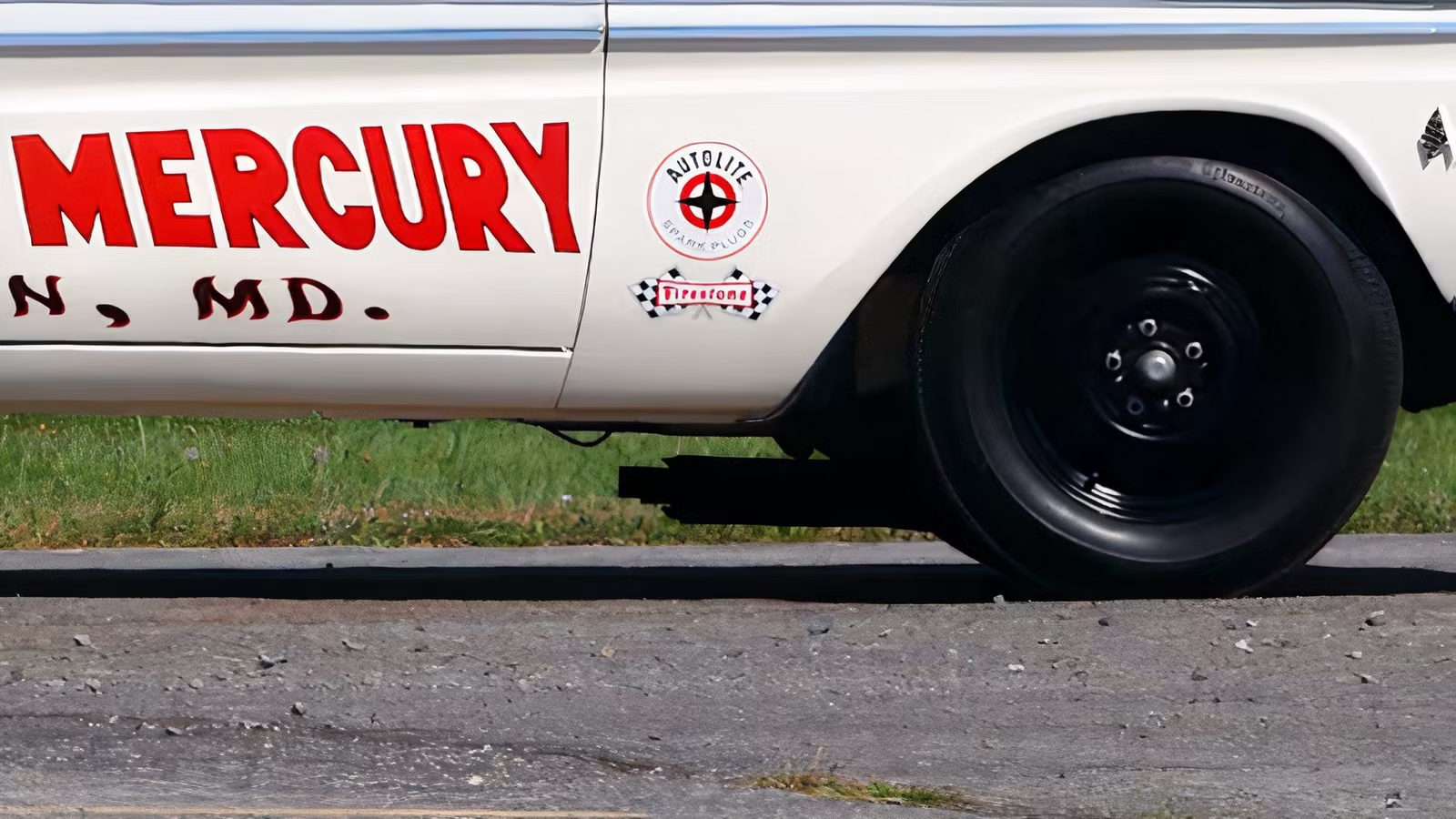
You couldn’t buy this Mercury, even if you had the money. In 1964, it was a 427-powered, fiberglass-bodied factory racer built for selected drivers, and it could tear through the quarter-mile in the 11-second range. Its target was Mopar’s Hemi-powered opposition.
Ford was pouring its publicity into the new Mustang. Mercury needed a way to grab headlines without matching that spending. So it sent a stripped-down race car to do the talking. And its rivals weren’t all wearing Mopar badges.
Mercury Had To Win Attention While Ford Sold Mustangs
Ford had the Mustang launch and the billboards. Mercury had to beat somebody. The dragstrip offered another route: put a car across the finish line first, and fans would talk about the badge on its nose.

Fran Hernandez, Lincoln-Mercury’s racing director, understood the calculation. Money for racing came from sales and advertising, his son Randy later told Hot Rod. A winning pass could travel beyond the grandstands: race coverage gave dealers something to boast about when customers walked in. Ford Division had its own performance goals, but Mercury needed victories to make its badge matter.
The people behind that push could move fast, too. NHRA’s history identifies Hernandez as Mercury’s racing boss and Al Turner as his right-hand man, a longtime dragster racer who helped shape Mercury’s later racing program. Randy described a nimble two-man operation that upgraded Ford 427s with Crane camshafts and Jardine headers, improving how the engines breathed. That annoyed Ford’s Thunderbolt teams, he recalled. Mercury was chasing Mopar’s Hemi and, inside its own company, refusing to remain Ford’s “weak sister.”
Mercury’s Answer Was The 1964 Comet A/FX Factory Racer

Picture yourself at the starting line, one hand on a four-speed shifter, a Hemi in the next lane and a 427 High Riser under the hood. You’re in Mercury’s 1964 Comet A/FX, a Caliente-based race car prepared by Dearborn Steel Tubing for NHRA’s Factory Experimental class. This wasn’t a showroom Cyclone with a 289, and it wasn’t the flip-top Funny Car Mercury introduced in 1966.
Mercury cut weight everywhere it could. Fiberglass replaced the hood, doors, front fenders and bumper. Lightweight plastic windows took the place of glass, while the teardrop hood cleared the tall engine intake. Less weight meant the 427 had less to haul off the line. At a 1964 invitational, Dyno Don Nicholson’s 427 Comet covered the quarter-mile in 10.75 seconds at 127.65 mph, according to Hot Rod.

The cabin was just as serious. Mecum documented radio, heater and sealer deletes on Paul Vanderly’s surviving A/FX Comet, along with factory rear traction bars. Those bars helped control axle movement under power so the rear tires could grip. Comfort could wait until after the finish line.

The 10.75-second pass showed the car’s potential. Against Mopar’s Hemis, the driver still needed traction from the rear slicks and clean shifts from the four-speed.
Under the hood, Ford’s FE-family 427 High Riser was advertised at 425 hp, although racing estimates put it nearer 500 hp. That higher figure isn’t a verified output for every car. Its raised intake and larger cylinder-head ports and valves helped the engine take in more air. Two Holley four-barrel carburetors fed it, while high-dome pistons brought compression to a reported 14:1.
A Ford 9-inch rear axle took the punishment. Paul Vanderly’s documented car had an aluminum-case Borg-Warner T-10, a Detroit Locker and 4.56 gears, equipment built to get power to the strip. The A/FX class also allowed 10-inch slicks, against the Thunderbolt’s seven-inch Super Stock limit. That’s more rubber to grip the starting line. Dyno Don Nicholson and Ronnie Sox drove these Comets; Sox won A/FX at the 1964 NHRA Winternationals.
Beyond The Dragstrip, Rarity Claims Need Better Proof

Rare isn’t a license to believe every auction placard. CarThrottle says 50 dragstrip Comet Cyclones were built; Conceptcarz and Dragzine put the 1964 A/FX figure at 21. Conceptcarz estimates that 15 survive. Impressive, but don’t pay for a production claim that the paperwork can’t support.

Here’s the catch. Evidence shows the 1965 program produced roughly eight 427 A/FX cars and at least 15 documented B/FX examples, and Ford paperwork refers to 50 broader Comet drag units. That’s a different year and different categories, not proof that the 1964 disagreement has been solved. If a seller claims “one of 50,” ask which year, engine and racing class they mean.
Paul Vanderly’s surviving car shows why documentation matters. Mecum offered it with an original build sheet and restoration photographs that help connect its hardware to its racing history. Later modifications can muddy that trail. Even the Ford FE 427’s use in Cobras doesn’t prove the Comet shared an identical engine installation. You want the genuine machine, not just the right-looking parts. The Mustang owned the billboards. With the right paperwork, you could own the Mercury that made the dragstrip do its advertising.
Sources: Ford Motor Company, NHRA, Mecum Auctions,

Related posts


Latest Post


No Comments