
The $30,000 Six-Cylinder Honda That Harley Baggers Quietly Retire Into
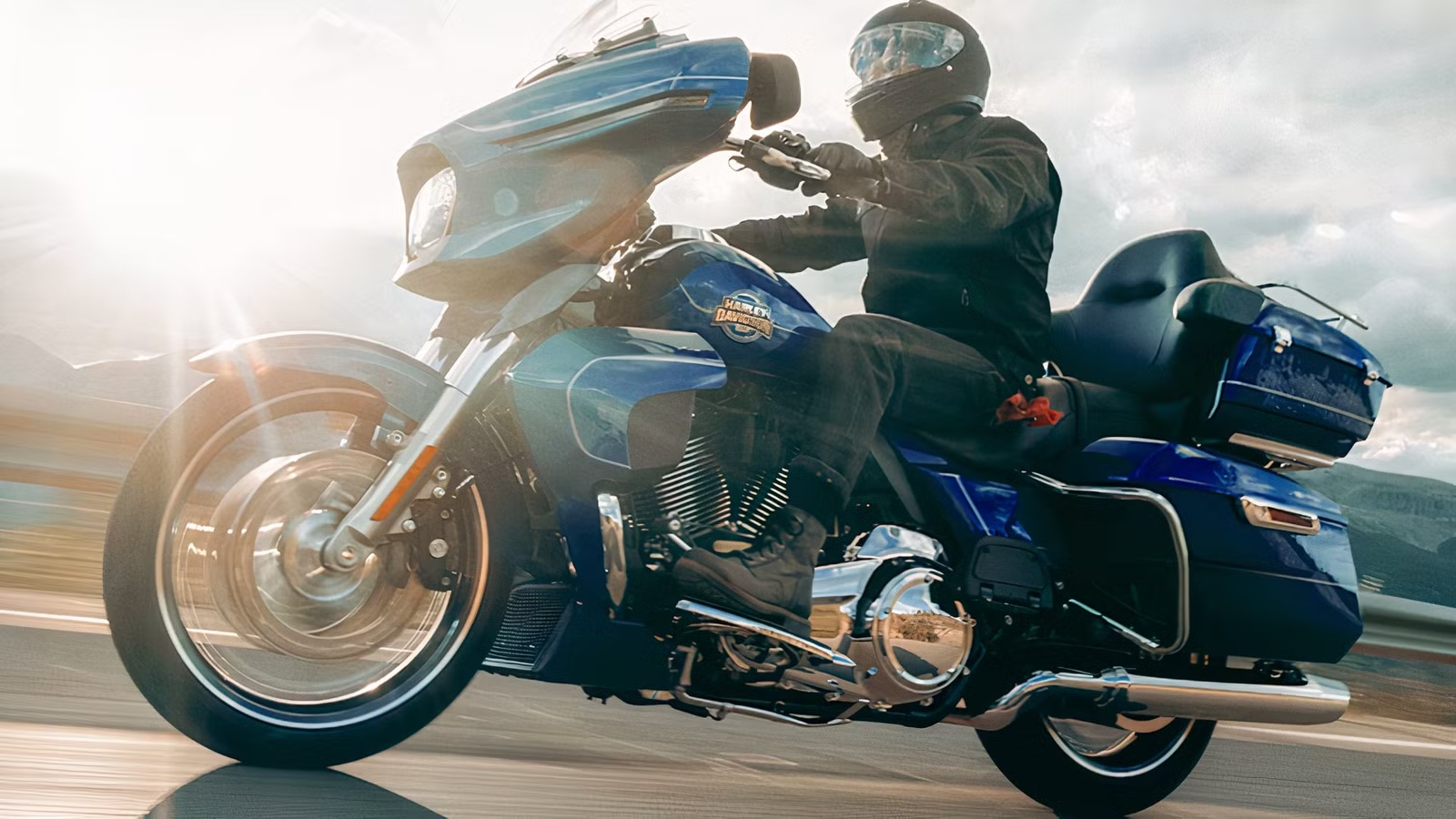
At some point, a heavyweight touring motorcycle can start asking more from its rider than the next thousand miles are worth. Parking lot gymnastics suddenly become part of every fuel stop.

But contrary to what you might think, the smartest upgrade isn’t another cubic inch. Rather, it’s a motorcycle that lets experienced riders keep crossing America without making every low-speed maneuver feel like a strength test.
When A Big Bagger Starts Asking Too Much
Big American baggers have earned their place on highways from California to Maine. The V-twin soundtrack and unmistakable road presence are part of the appeal, especially for riders who’ve spent decades around Harley-Davidson touring motorcycles. Long-distance riding, however, has a habit of exposing every bit of effort a motorcycle asks from you.

The problem often appears when the speedometer barely moves. Fuel stops and sloped parking spaces turn curb weight into something you can feel immediately. A motorcycle that feels planted at 70 mph can seem considerably less charming when you’re paddling it backward with both feet down after a full day on the interstate.
Comfort also starts meaning something different after years in the saddle. A luxury touring motorcycle has to reduce fatigue while keeping the rider interested, because a soft seat can only do so much. Once low-speed usability becomes as important as highway comfort, the traditional American bagger suddenly has competition from a very different school of touring-bike engineering.
Harley’s Flagship Leaves The Door Open

The Harley-Davidson Street Glide Ultra sits right in the middle of the full-dress touring conversation in the USA. For plenty of riders, that familiar silhouette and V-twin identity are the whole point. Brand loyalty runs deep in American motorcycling, and nobody buys a big Harley because they accidentally wandered into the dealership while looking for a scooter.
But once the budget climbs to around $30,000, people are choosing a motorcycle they expect to use for serious miles. That changes the calculation. Features that seem unexciting on a showroom floor can become invaluable halfway across the country.
Making You Want To Ride More

Automatic shifting can make stop-and-go traffic easier, while powered reverse can turn an awkward parking space into a non-event. Neither feature is likely to win an argument at bike night, but both start sounding brilliant after a 500-mile day when the hotel has helpfully placed its motorcycle parking on a slope.
That’s the opening for a touring motorcycle engineered around reducing rider workload. Experienced riders eventually learn which features they’ll actually use every day on the road. The spec sheet stops looking like bench-racing material and starts looking more like a list of reasons you’ll still want to ride tomorrow morning.
The $30,500 Honda Gold Wing Tour DCT Is The Answer

That motorcycle is the 2026 Honda Gold Wing Tour Automatic DCT, and its base MSRP is $30,500. Honda adds a $775 destination charge, taking the listed total to $31,275. The standard Gold Wing Tour with a six-speed manual starts at $29,500 before destination, so the seven-speed Dual-Clutch Transmission costs another $1,000 at base MSRP.
At its center sits Honda’s 1,833cc liquid-cooled horizontally opposed six-cylinder engine. The flat-six layout is a huge part of the Honda Gold Wing’s identity, and its smooth character suits a motorcycle expected to chew through interstate miles for hours at a time. Power reaches the rear wheel through shaft final drive, another sensible choice for a serious long-distance touring motorcycle.
The seven-speed DCT is where the 2026 Honda Gold Wing Tour starts sounding especially persuasive for riders coming from conventional baggers. It can handle gear changes automatically, removing clutch work from crawling traffic, while manual control is still available when the rider wants it. Seventh gear is an overdrive ratio aimed squarely at highway cruising.
All in, it’s a six-cylinder touring motorcycle that approaches luxury through reduced effort. For someone moving over from a large Harley-Davidson touring bike, that difference may matter more than any argument about badges. Chrome can make a motorcycle prettier, but cartilage has never shown much respect for brand loyalty.
An 845-Pound Bike That Hides Its Weight

Here’s the number that should, in theory, ruin the whole argument: 845 pounds. That’s Honda’s listed curb weight for the Gold Wing Tour with standard equipment and a full tank. It’s a seriously heavy motorcycle, yet the 29.3-inch seat height and low-mounted flat-six help make that mass feel way less intimidating once there’s a rider aboard.
Honda’s double-wishbone front suspension plays an important role as well. Its layout lets the engine and occupants sit closer to the front wheel, helping the Gold Wing carry its substantial mass in a way that feels more manageable than the curb-weight figure suggests.
A Helping Hand Or Three

Then there’s Walking Mode on the Gold Wing Tour DCT. It lets the motorcycle creep forward or backward under power at walking pace, which is the sort of feature that sounds unnecessary until you’re staring at 845 pounds of motorcycle in a cramped parking space. Reverse is also part of the package, so backing out doesn’t have to become an impromptu lower-body workout (although no harm in getting those in every now and then).
Hill Start Assist tackles another small annoyance that becomes much bigger on a heavyweight touring bike. It briefly holds the motorcycle on an incline after the brakes are released, giving the rider time to get moving without rolling backward. No doubting that these features aren’t flashy, but they’re precisely the kind of thoughtful engineering that can keep a big touring motorcycle enjoyable as its owner gets on in years.
The Bike That Keeps Riders Touring Longer

The 2026 Honda Gold Wing Tour backs up its long-distance credentials with 121 liters of integrated luggage capacity. Its saddlebags offer 60 liters, while the trunk adds another 61 liters. That gives the Gold Wing enough storage to make multi-day American road trips part of its normal job description rather than an exercise in creative packing.
Wireless Apple CarPlay and Android Auto compatibility handle navigation and phone integration, while the electric windscreen moves through a 4.9-inch range. Honda also offers a separate 2026 Gold Wing Tour Airbag Automatic DCT at $33,800 before the $775 destination charge, so people who specifically want the airbag need to step above the $30,500 DCT.
That’s why the Honda Gold Wing Tour DCT makes such a convincing landing spot for a longtime bagger rider. There’s no requirement to stop liking Harley-Davidson motorcycles or the sound of an American V-twin. The Gold Wing simply makes a strong case for choosing the bike that asks less of its rider while keeping the horizon wide open. If the goal is to keep touring America for years longer, it’s not a stretch to assume that that may be the feature that matters most.
Source: Honda.

Related posts



Latest Post


No Comments