The 315-HP Hot Hatch That Survives Track Days While Rivals Rebuild Turbos
8 minutes reading
Friday, 31 Jul 2026 14:00 0 79 autotech
There was a time when cars could only do certain things, not many. You either got performance or practicality, but not both. Though not the first of its kind, the Volkswagen Golf GTI is credited with popularizing the hot hatch genre. It was sporty and fun to drive, but also practical and, as a bonus, relatively affordable.
But not all hot hatches are created equal. Some are faster or more practical than others. For the hot hatch in today’s topic, this model proves that practicality and performance can also be served with an equal measure of reliability. Take it out on the track day, and this hot hatch will still happily cruise back home. Confidence in its ease of ownership and performance is its key selling point, and that’s why this hot hatch can truly do it all.
Hot hatches blend practicality and performance at a relatively affordable price, but how did this idea start? We’ll have to go back to the 1970s to see how it began.
Europe Turns Up The Heat
3/4 view of the 2024 VW Golf GTI and a the Golf GTI Mk1VW
Specifically, it is the French who claim they were the first to release a hot hatch. This would be the 1974 Simca 1100 Ti, whose 82 horsepower is 40 percent more than the standard model’s 58 horsepower. That may sound minuscule by 2026 standards, but its 0–60 mph time of 12 seconds was already considered fast for a family hatchback at its time. There was also the Autobianchi A112 Abarth around that time, which, as the Abarth name suggests, was tuned by Fiat’s performance division. It produced 70 horsepower, and it was matched with fun and sporty handling.
In 1976, the French would once again create another hot hatch with the Renault 5 Alpine. Its four-cylinder engine produces 93 horsepower, and it offers a 0–60 mph time of under 10 seconds. But the model that truly made hot hatches mainstream came a couple of months later: the German Volkswagen Golf GTI. It is credited with making hot hatches mainstream, primarily due to its popularity. It was sold in numerous markets, and its popularity was reflected in how many units were sold—462,000. The Golf GTI was fun, practical, and more importantly, affordable enough to become mainstream.
And, Then The World Followed
Front and side view of a Hyundai i30 NHyundai N
Other automakers from outside Europe would then follow suit to replicate this successful idea. The Ford Fiesta XR2, though made by an American company, was primarily developed with Europe in mind. The 1990s eventually led to Japan trying to prove to the world that it could also create a proper hot hatch. Influenced by Group A rallying, the Japanese-market Mazda 323 GT-X came with AWD and a 1.8-liter turbocharged four-cylinder. This was followed by the 323 GT-R, which came with further enhancements. But it wouldn’t be until 1997, when the Honda Civic Type R debuted, that Japanese hot hatches would truly become mainstream.
Korea also wanted to join in, and by 2013, Pro Cee’d GT and Cee’d GT were a sign of things to come. These were still warm hatches at best, but they were a precursor to what was to come in 2017. Hyundai’s N division would finally release the i30 N, which came with all the attitude and performance already demonstrated by its peers from Japan and Europe.
Honda Civic Type R – The Most Reliable Modern-Day Hot Hatch
Front action shot of 2025 Honda Civic Type R in red driving on race trackHonda
But the appeal of a hot hatch shouldn’t just center around practicality and performance. Rather, it should go full circle by offering reliability and peace of mind as well. This is exactly what the Honda Civic Type R has been proving to the world since its birth in 1997.
Easily Lasts Beyond 200,000 Miles
2025 Honda Civic Type R engineHonda
The K20C1 2.0-liter VTEC Turbo four-cylinder engine powering the past three generations (FK2, FK8, and FL5) of the Civic Type R has developed a solid reputation for reliability. Our friends from HotCars have determined from their own research that this is the most reliable turbo four-cylinder ever built. This engine can easily last beyond 200,000 miles, retaining its original turbocharger, with just routine maintenance, as demonstrated by JDM For All. With this engine already proving its reliability for 10 years worldwide, the parts support is strong, the tuning ecosystem is mature, and mechanics outside dealerships already know how to service this engine.
The good news is that there are no major issues with this engine. Perhaps the only significant concern is head gasket failure, but that is common for any engine at high mileage. Beyond the engine, what you’ll probably notice earlier on is the 1-to-2 shift grind, which is fairly common at around 30,000–50,000 miles. ThreePiece.us says owners try to address this by deleting the clutch delay valve (CDV), switching to ACDelco or Motul Multi ATF transmission fluid, adjusting the clutch master cylinder plunger, and upgrading engine mounts to reduce drivetrain movement. The website also recommends shifting more slowly, especially when the transmission is cold.
It Self-Manages Its Drivetrain After Hard Track Sessions
Front 3/4 action shot of 2025 Honda Civic Type R in red driving on roadHonda
Driving any performance car beyond its absolute limits will always introduce more heat to the system, and this is what you call heat soak. When this happens, the ECU protects the drivetrain via a software-managed timing pull. Simply letting the Civic Type R rest, or driving it calmly to feed the engine with fresh, cool air, will reduce temperatures and bring drivetrain performance back to normal. So yes, even after a punishing track day, you can still be assured that the Civic Type R will be there to bring you home comfortably and safely.
Subsequent updates to the Civic Type R have improved its endurance during sustained and repeated hot-weather track driving. The facelifted FK8 introduced a larger grille opening and a more capable radiator core, while the current FL5 generation came with even more updates to the cooling and thermal management. ThreePiece.us says that owners upgraded the intercooler and radiator to make the Civic Type R more enduring on repeated track runs.
Mechanical Simplicity Is Always A Good Thing
Honda Civic Type R front, left exterior photoHonda Newsroom
I’ve always emphasized here at TopSpeed that the more mechanically simple a vehicle is, the more reliable it usually is. Indeed, the Civic Type R is mechanically simpler, especially compared to its more complex rival from Germany.
Simple To Own And Maintain
2024 Honda Civic Type R dashChase Bierenkoven | TopSpeed
2024 Honda Civic Type R trunk spaceChase Bierenkoven | TopSpeed
In typical Honda fashion, a lot of the frequently-changed parts are easy to replace, while key components are easily accessible and long-lasting. Meanwhile, in the Volkswagen Golf R, the thermostat and water pump are frequent failure points because they are made of plastic. To make matters complicated, the water pump isn’t easily accessible because it’s positioned under the engine. It is unclear why the water pump was positioned there, especially since, as The Car Care Nut highlighted, there is still plenty of space around the Golf R’s engine bay.
The Golf R also presents additional complications to be aware of. The previous Mk. 7 Golf R’s Haldex AWD system and the current Mk. 8 Golf R’s AWD with torque vectoring supplied by Magna add complexity, and both should also be part of your maintenance routine. The seven-speed DSG dual-clutch is capable, but it is also considerably more complex than a manual gearbox. DCTs tend to wear out their clutch packs more easily when driven in stop-and-go traffic. In general, though, if we’re just sticking to Volkswagen’s EA888 2.0-liter turbo four-cylinder, this engine also has a good reliability record, but not as stellar as Honda’s K20C1. Early models, primarily pre-2015 models, exhibited early turbo failures due to shaft play as a result of an imbalanced shaft.
No Unreliable Generation
2023 Honda Civic Type R interior shot showing front seatsHonda Newsroom
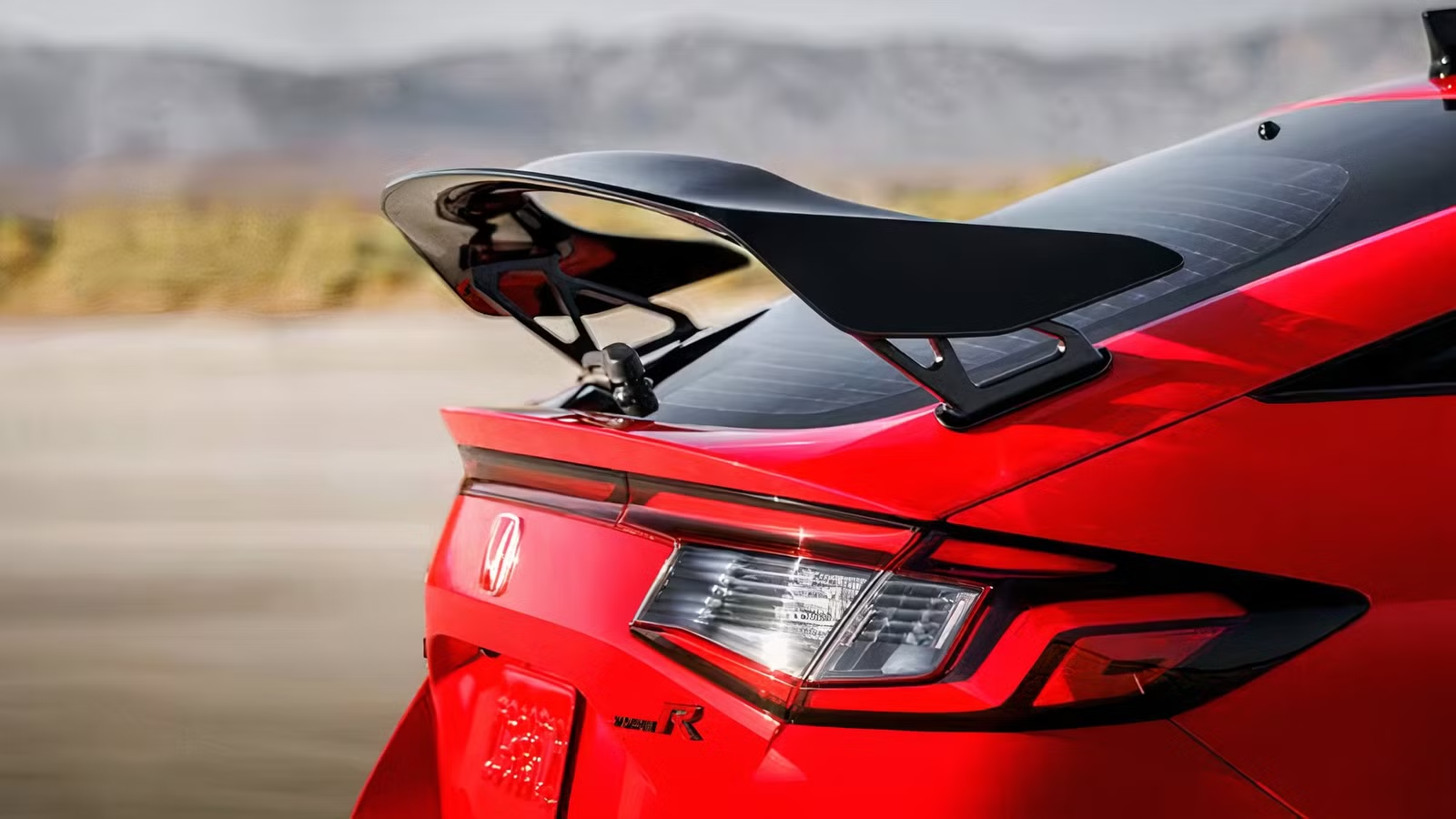
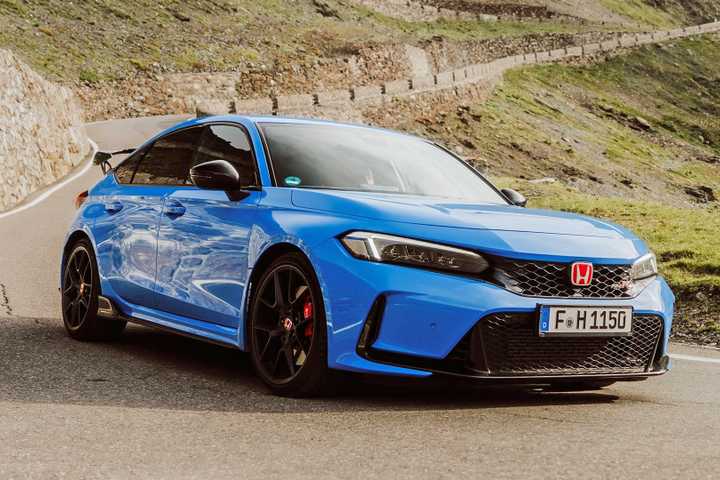
With the K20C1 being produced for 10 years now, this reliable engine has been fitted in both the FK8 and FL5. In the FK8’s case, it produces 306 horsepower, while the FL5 saw its internals beefed up, resulting in a boost to 315 horsepower. The FL5 also boasts a broader personality with its various drive modes. Going from Comfort to +R mode introduces a polar opposite in terms of ride quality, with the suspension becoming ultra-stiff and the steering becoming precise, direct, and heavy. It’s an even more hardcore track machine, one that’s matched by ferocious power delivery during this mode.
Left in its civilized Comfort mode, though, the two Type R generations offer a comfortable and supple ride, while providing light but responsive steering that balances ease of use with a dynamic driving experience. The FL5 offers better refinements through less exhaust drone and an overall more serene driving experience.












No Comments