
The Cruiser That Delivers Harley Energy Without Harley Problems
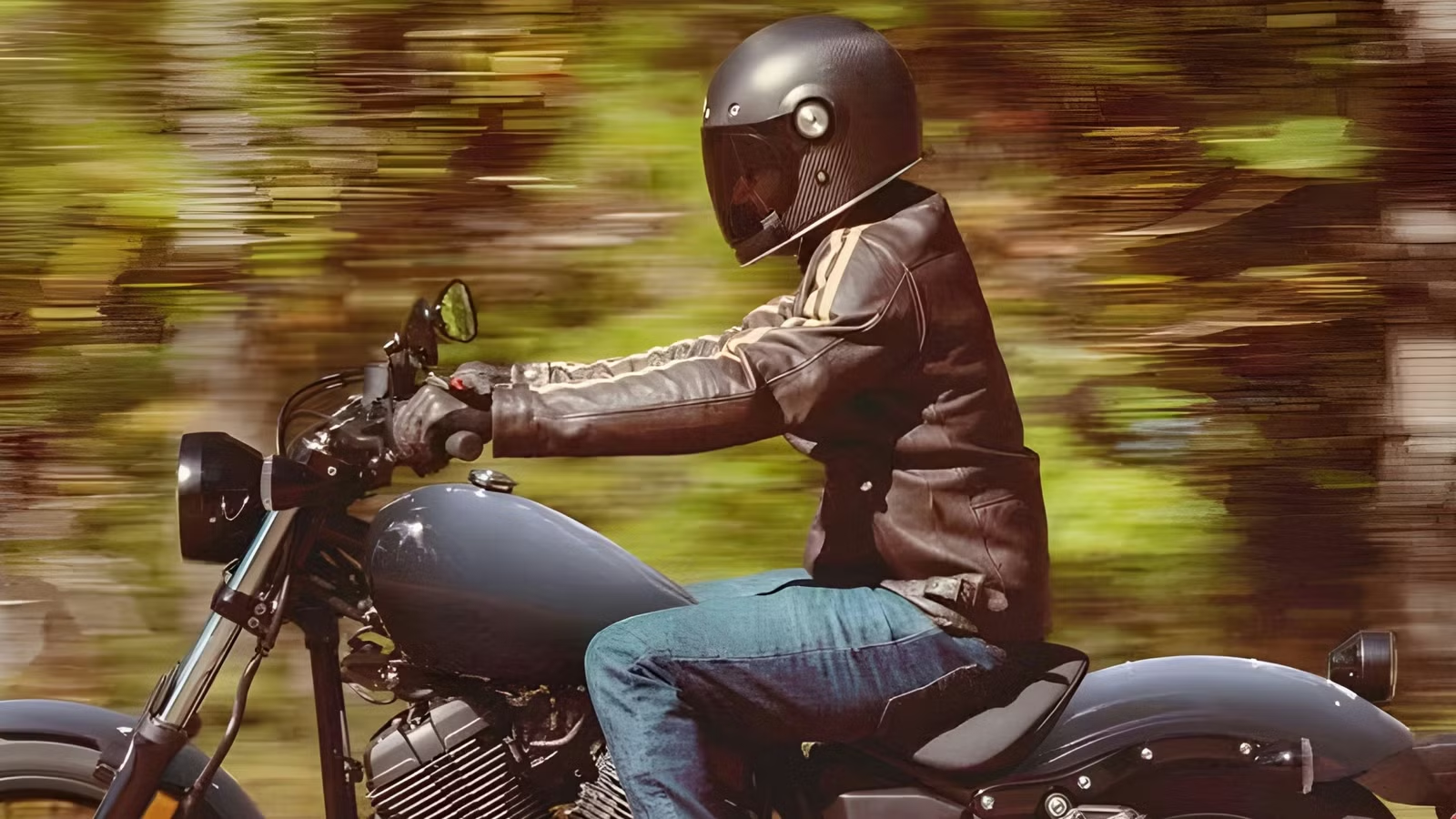
The cruiser motorcycle market has always presented riders with an uncomfortable binary. On one side, the full-blooded American heavyweights — machines with genuine presence and culture, but with the ownership demands to match. On the other hand, a parade of underpowered entry-level bikes that look the part from a distance and disappoint the moment you open the throttle on an on-ramp. Between those two poles, there’s a gap: something with a real V-twin soul, an accessible physical footprint, and the sort of mechanical reliability that lets you stop thinking about the bike and start thinking about where you’re riding it.
The Iconic Harleys Can Become Too Much To Handle Sometimes

The Harley-Davidson look has always been powerful in America because it is so instantly legible: long, low, muscular, and a little defiant. However, the same presence can become exhausting when the ride is not a Sunday loop or a highway cruise. Weight builds quickly in the heavyweight cruiser world, and once a bike starts feeling like furniture in parking lots or during slow-speed turns, the romance gets harder to keep intact. That is where a lighter, simpler machine can make a stronger case for everyday riding.

There is also the matter of ownership mood. Harley’s current direction is not the old “turn the key and forget about it” stereotype. The brand’s modern liquid-cooled Revolution Max family, including the Nightster, represents a more advanced and more expensive kind of cruiser experience, and the company’s recent production moves underline that it is operating in a very different industrial world now. None of that makes the bikes bad. It just makes them a less obvious answer for riders who want the style, the torque-rich feel, and the low-slung stance without stepping into a more complicated ownership equation.
The Yamaha Bolt R-Spec Takes Direct Harley Inspiration Without The Quirks
Base Price: $8,999


Ever since Harley-Davidson completely revamped the Sportster in 2021, the Milwaukee-based bikemaker has left some fans of the little Harley without an affordable, custom-friendly, old-school entry-level motorcycle from the brand. What replaced it — the liquid-cooled, high-revving Nightster starting at $9,999 — is technically impressive but a fundamentally different kind of machine. The lineup is also stripped of the raw, analog quality that made people fall for the old Iron 883 in the first place.
That is the emotional opening Yamaha has been working on for years with the Bolt R-Spec. The base price is set at $8,999. This might seem like a typo for a near-1,000cc cruiser. But it’s not. This is a fully-formed, premium-spec middleweight cruiser that sits nearly $1,000 below the entry point of Harley’s current Sportster range.
Bridging The Gap Left By The American Legend

The Yamaha Bolt’s design is a clear indicator of the inspiration it carries from the 2010s Harley-Davidson Sportster, the one with the Evolution V-twin engine. The parallels aren’t subtle. The Bolt R-Spec’s distinctive silhouette, sleek teardrop tank, and bobber-inspired styling strongly recall the 883 Sportster. Yamaha has gone so far as to replicate the wheel and tire sizes — 100/90-19 front and 150/80-16 rear. The round headlight, the peanut tank, the exposed V-twin: it reads as a Sportster at a glance. The amusing thing is that the Yamaha Bolt R-Spec turned out to be better than its inspiration with an improved engine design, power, handling, and performance.
The Japanese Cruiser That Makes Harley Riders Look Twice
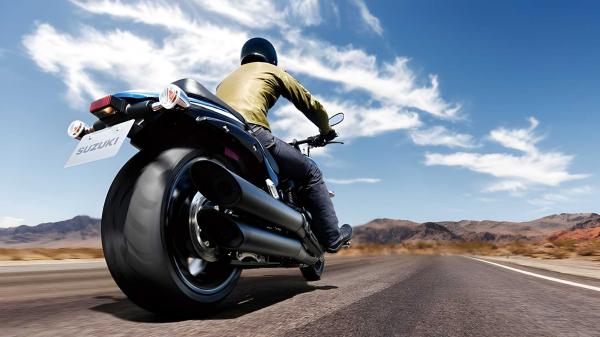
Here is a rare cruiser gem from Japan that can make Harley riders sweat with its presence, even though it has had no updates in 20 years
An Air-Cooled V-Twin Built for Hassle-Free Longevity

The 942cc engine is an air-cooled SOHC 60-degree V-twin with four valves per cylinder, a pent-roof shaped combustion chamber, and a 9.0:1 compression ratio. That’s a low, unstressed tune. Special roller-type rocker arms with needle bearings are used to keep friction loss to a minimum, increase durability, and help the engine achieve the ideal performance characteristics.
Combined with lightweight forged aluminum pistons, the result is an engine that runs cool relative to its displacement and builds very little internal wear at typical street speeds. Yamaha claims peak output numbers of 65 horsepower and 59.3 pound-feet of torque. More importantly, peak torque is produced as low as 3,000 rpm — right where the engine spends most of its life in traffic and at city speeds.
The Refined Soul Of A Metric Bobber

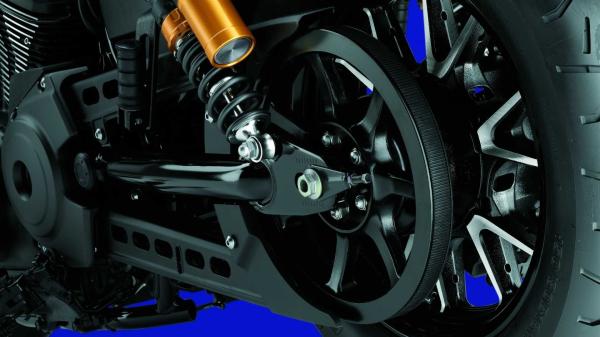
The Bolt R-Spec has a five-speed transmission with a 21mm wide belt final drive. That belt has a carbon-fiber core, which adds strength and durability for longevity. No chain lube, no adjustment intervals, no messy rituals between rides. Elsewhere, fuel economy is estimated at 51 mpg combined, and with a 3.4-gallon tank, that translates to roughly 170 miles of cruising range before needing to stop. The transistor-controlled ignition pairs with fuel injection maps tuned specifically for this engine’s torque characteristics — not lifted from a larger platform — which keeps delivery smooth and predictable across the rev range.
Ergos And Chassis Dynamics That Redefine Cruiser Agility

The low-set seat provides a great riding position while being a mere 27.2 inches off the pavement. So most riders can easily put both feet firmly on the ground at a stop. In a segment where seat heights routinely push toward 29–30 inches, that number matters — especially for newer or shorter riders who’ve been told they’re not the target market.
The rear has a dual shock setup with 2.8 inches of travel, while the front uses a conventional telescopic fork delivering 4.7 inches of travel. In comparison, the rear wheel travel remained at a meager 1.6 inches on the Iron 883, and the forks were thin and provided little stability on bumpy roads. The R-Spec’s piggyback reservoir rear units manage heat during sustained stop-start riding, maintaining consistent damping where a conventional shock fades over a long commute.
City Agility and Highway Composure

The Bolt has a 61.8-inch wheelbase, contributing to its agile handling and leaning into corners. At 542 lbs wet, it’s in a completely different weight class from a Softail, too. The steel double-cradle frame deserves a shout here, mounting the engine rigidly, just like the pre-rubber-mounted Sportsters did, which means vibration comes through as texture. Distinctive 12-spoke cast alloy wheels are wrapped in Bridgestone tubeless 100/90-19 front and 150/80-16 rear tires, backed by dual 298 mm wave-style disc brakes at both ends.
The Cruiser With Honda Reliability And Harley-Level Presence
This metric cruiser bike is designed in the image of the classic Harley-Davidson Roadster.
The Bolt Excels in Real-World Ownership, Too

The V-Twin layout of the engine also comes with an ergonomic compromise. Yamaha had to move the right peg out about 10 cm to compensate for the air cleaner that the rider’s right knee rests against. That’s worth knowing before you buy. The fix is straightforward: swapping to a high-flow aftermarket air cleaner that slims the right-side profile, clears the knee contact entirely, and opens up the airbox for measurably better mid-range torque when paired with a matching ECU tune.
That kind of easy, well-documented, community-supported modification is the Bolt’s secondary superpower. As the perfect beginning canvas for personalization, the Bolt R-Spec is the ultimate example of a motorcycle conceived and designed with owner customization in mind. The aftermarket for this platform is wide and deep — bobbers, choppers, scramblers, rat builds — and the builder community has mapped practically every mod on the internet.
The Ultimate Bulletproof Commuter

The air-cooled 60-degree V-twin design is relatively simple — single overhead cam, four valves per cylinder — with a heritage going back to the Yamaha V-Star and Warrior bikes. In real-world terms, this translates to low maintenance: the belt final drive means no chain adjustments or lubing, and the engine has a predictable oil change schedule, with valve checks needed roughly every 16,000 miles. Owners regularly report over 20,000 miles with minimal issues beyond routine maintenance. There are no complicated electronic subsystems, no liquid-cooling circuits, no ride-mode sensors to recalibrate, either.
In the end, the Yamaha Bolt R-Spec fits the description almost too neatly. It gives you the low-slung V-twin feel, the visual punch, and the relaxed cruiser personality people often chase in a Harley showroom, but it does so at a lower price, with a simpler mechanical story, and with the kind of manageability that makes it easier to use every day. That is why it lands so well. It does not try to be a Harley. It just captures the part of the Harley idea that riders actually miss, then strips away enough friction to make the whole experience more livable.
Source: Yamaha Motorsports

Related posts
Latest Post


No Comments