
The 1972 Kawasaki Superbike That Put 125-MPH Performance On Any Showroom Floor
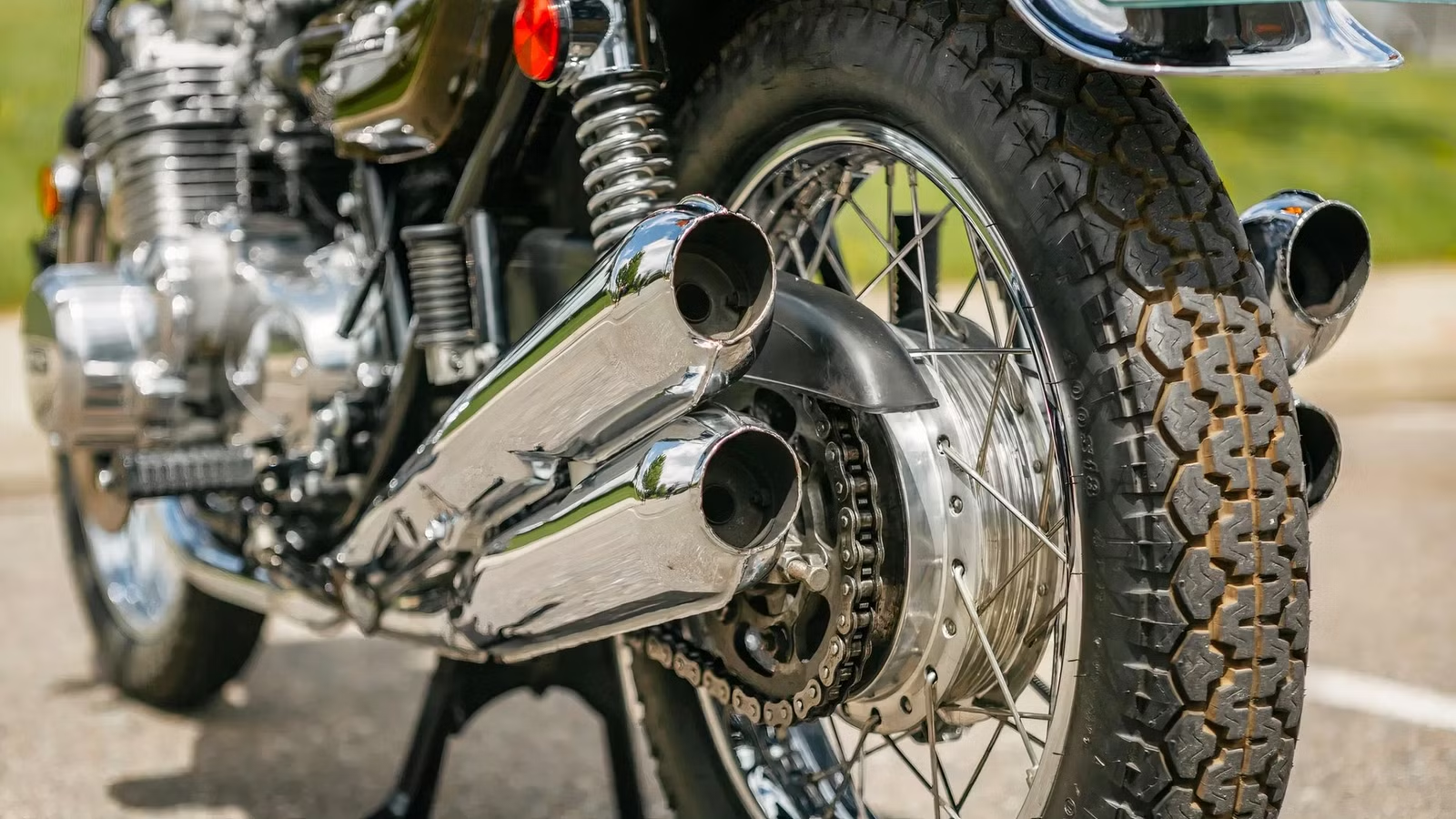
By the late 60s, Kawasaki had plans to put a new air-cooled 750cc inline-four motorcycle into production. Unfortunately for them, Honda had the same idea and were able to beat them to market. The CB750 made headlines everywhere, and was heralded as the world’s first superbike. Instead of rushing their version into production, which would have made them look like a copycat, the decision was made to build something bigger and better.
The Race To Build The Best

Honda had the first mover advantage. Thousands of CB750s were sold in a matter of a few short years, but the other manufacturers were all busy working on some form of retort. Two-stroke-obsessed Suzuki had bet big on the Wankel Rotary engine being the next big thing. Unfortunately, history tells us that they were horribly wrong. That project almost bankrupted the company.
Yamaha, on the other hand, was heavily invested in two-stroke technology, offering a selection of on and off-road alternatives. But, they did enter the UJM (Universal Japanese Motorcycle) race with a decent middleweight of their own. Kawasaki also had a wildly inappropriate high-performance 750cc two-stroke in the form of the H2 on sale (it came out the year prior, and is better known as the original “widowmaker”). But, that was not enough for them. Clearly stung by what Honda did, all they wanted to do was beat them, and beat them they did.
The Kawasaki Z1 Made Performance More Accessible
Top Speed: 125 MPH


The Z1 didn’t just marginally outshine the CB750, it absolutely trounced the bike. Although the Honda may have been the first superbike, there was absolutely no denying that Kawasaki’s superbike was more “super” in every conceivable way. Under the right conditions (and with a slight official Honda test rider), the stock Z1 was more than capable of hitting 130 MPH. 125 MPH was more realistic, though, a top speed which was verified by (less slight) motorcycle journalists back in the 70s.
The Z1 Had A Dual Overhead Cam Air-Cooled Inline-Four
Power: 82 Horsepower

At this particular juncture in Japanese motorcycle history, the engine was everything. Pretty much the entire research and development budget got thrown at it, and it shows. Twin-cam engines were still regarded as fairly exotic back then, with more moving parts they cost more to build, but the performance rewards were there for all to see. With 82 horsepower, it was the most powerful motorcycle money could buy upon its release in 1972.
Crucially, these engines also proved to be just as durable as the Honda. This doesn’t come as much of a surprise, though, as these engines had a fairly low compression ratio (8.5:1) by modern standards in an effort to compensate for low quality fuel customers would likely need to use in rural areas. With more aggressive cams and increased compression, these engines could easily make over 100 horsepower, but that would rather obviously compromise reliability.
The Z1 Was All About Straight-Line Speed

With so much of the developmental budget dedicated to the powertrain, it is fair to say that the chassis, and to some extent, the design, were an afterthought. The rationale here was quite simple, and that was the fact that having a good chassis didn’t sell motorcycles. Speed and power did. As a result, its rather rudimentary steel chassis simply couldn’t cope with all the added power, and required serious modification for race applications.
Regular riders seeking out a canyon road would quickly discover that this 540-pound monster would get out of shape at the mere sight of a corner. It was very much a motorcycle designed explicitly for straight-line speed, and in many ways, that was exactly what the market wanted. Kawasaki priced the bike aggressively and sold tens of thousands of these motorcycles over a span of four years before updating the platform.
This Blue-Collar Hero Is Getting Expensive
Price Range: $12,000 – $20,000

The Z1 came out with a very reasonable price of $1,895. Adjusted for inflation, that equates to roughly $14,000 today, and this is actually around what you would pay for a restored, or semi-original model (although there are some rather unique exceptions that sell for substantially more). Project bikes will cost a fair bit less, but this is still a lot more than what you would have paid for a solid runner just a few short years ago. This was never a particularly rare motorcycle, and it is somewhat surprising that it has become this valuable. In fact, it sold in such large numbers it helped establish Japanese motorcycles as the default choice for riders all over the world.
For a time, UJMs were quite literally everywhere, and like we alluded to earlier, all looked rather similar. The Z1 was no exception, and the only time you would really know what you were up against was when you realized how fast the thing was. It was a genuine high-performance motorcycle that didn’t necessarily look like anything special, and in some respects, that is exactly what makes it special. Over five decades after it first came out, it is a motorcycle that holds some historical significance in the world of high-performance motorcycles. It moved the goal posts back in the 70s, and forced answers out of all its competitors. As good as the CB750 was, the Z1 was that much better, and brought its reign to a rather abrupt end. It also took performance to new heights, previously only thought possible if reliability was compromised.
It is important to note that these bikes were raced extensively back in the 70s and 80s. To get these bikes to work on a track required some serious modifications to be done to the frames, though. If you are looking to buy one, we would not recommend getting an ex-track bike, or any bike that has had its chassis modified. There is just no way of knowing if it was done by a professional, or a hobbyist in the backyard (although some hobbyists may have actually done a better job!).
Source: Bring a Trailer

Related posts
Latest Post


No Comments