
The 10 Most Reliable Luxury Cars That Won’t Drain Your Bank Account

Luxury car ownership has a reputation problem. Gorgeous cabins, then a service invoice that reads like a down payment. But reliability data from RepairPal, J.D. Power, and Consumer Reports tells a different story for a growing list of premium vehicles. Some brands have quietly built reputations for going the distance without draining your wallet along the way. From Japanese stalwarts to a surprising German holdout, these ten cars combine strong ownership-cost data with genuine luxury credentials, proving you don’t have to choose between peace of mind and a badge that turns heads.

The models in this list have been extensively researched to ensure the most accurate information possible as of the time of publishing. Models are listed in ascending order from least to most reliable.
2026 Volvo XC90
Reliability Score: 68/100
Volvo occupies rare air among European luxury brands. It’s one of only a handful of European manufacturers with a reputation for engines that outlast the cabin tech around them. The three-row XC90 starts around $58,000 and holds resale value better than most European seven-seaters, thanks in part to Volvo’s understated styling aging gracefully rather than looking dated after a few years.


The XC90’s long production run means most early software and build-quality issues have long since been engineered out, and the T8 plug-in hybrid variant can meaningfully cut fuel costs for owners with regular access to home charging. Add genuinely class-leading safety engineering, which often translates into lower insurance premiums, and the 2026 XC90 earns its spot as the rare European SUV that won’t punish you twice, once at the dealership, once at the shop.
- Average Yearly Maintenance Cost: $851 (RepairPal)
- Est. Maintenance Cost During The First 10 Years: $9,094 (CarEdge)
2026 Audi A5
Reliability Score: 73/100

The A5 nameplate just absorbed the A4, and the changeover is worth understanding before you shop. The redesigned 2026 A5 starts at $51,495 and replaced the outgoing A4 sedan after the 2025 model year, running a 268-horsepower 2.0-liter turbocharged four-cylinder with standard all-wheel drive and a seven-speed dual-clutch transmission. Audi’s reliability has historically trailed Lexus and Genesis, particularly around older MMI infotainment glitches and electrical gremlins, but the new Premium Platform Combustion architecture simplifies some of the electronics that plagued older A4s.

The added 48-volt mild-hybrid assistance also reduces strain on the engine during stop-start driving, a detail that should help long-term durability. Audi’s complimentary maintenance package covers the first scheduled services, and the A5’s liftback design’s added practicality means owners are less likely to need a separate second vehicle for cargo duty, meaningfully softening year-one ownership costs relative to its German rivals.
- Average Yearly Maintenance Cost: $739 (RepairPal)
- Est. Maintenance Cost During The First 10 Years: $8,800 (CarEdge)
2025 Cadillac XT6
Reliability Score: 82/100

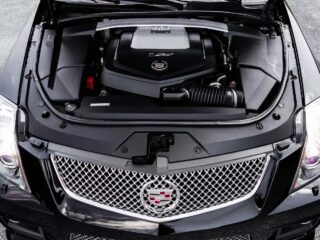
America’s answer to the three-row luxury crossover doesn’t get the reliability headlines of its Japanese and Korean rivals, but recent model years have closed the gap considerably, with GM’s shared powertrains proving far more durable than the brand’s reputation suggests. Pricing starts in the low $50,000s, thousands less than a comparably equipped BMW X7 or Mercedes GLS, while offering three rows, a plush cabin, and GM’s increasingly competitive warranty coverage.

The 2025 XT6 rides on GM’s familiar C1 crossover platform, shared with the Chevrolet Traverse and Buick Enclave, which means parts availability and independent-shop familiarity are far better than with a niche European three-row. Cadillac’s four-year, 50,000-mile bumper-to-bumper warranty also outpaces most German rivals’ base coverage, and owners rarely encounter the exotic electronic gremlins that inflate repair bills on some European three-rows. For buyers who want three-row space without three-row German price tags, or German repair-shop wait times, the XT6 quietly delivers.
- Average Yearly Maintenance Cost: N/A
- Est. Maintenance Cost During The First 10 Years: $10,584 (CarEdge)
2026 Acura TLX
Reliability Score: 81/100

Acura has quietly become one of the most dependable luxury brands sold in America. RepairPal data places Acura as a close runner-up brand overall, with every model earning an Excellent rating and the TLX ranking in the top 10 overall. Built on Honda’s mechanical DNA, the 2026 TLX benefits from widely available, inexpensive parts and low labor complexity, and its turbocharged four-cylinder and available SH-AWD system carry over proven Honda engineering rather than launching all-new, unproven hardware.

Starting price sits around $40,000, among the most affordable entries here, and insurance and maintenance costs trend well below German and even some Japanese luxury competitors. The performance-oriented Type S trim adds power without sacrificing the lineup’s dependability record, and TLX depreciation curves are notably gentler than rivals like the Infiniti Q50. It’s the sleeper pick for buyers who want a badge without ongoing anxiety.
- Average Yearly Maintenance Cost: $440 (RepairPal)
- Est. Maintenance Cost During The First 10 Years: $7,691 (CarEdge)
2026 Lincoln Nautilus
Reliability Score: 80/100

Lincoln’s redesigned Nautilus has moved the brand’s reliability conversation in the right direction, pairing Ford’s mainstream engineering with genuine cabin refinement. Pricing lands in the high-$40,000s to low-$50,000s, undercutting equivalent Audi Q5 and BMW X3 trims, while Lincoln’s complimentary pickup-and-delivery service program quietly reduces the hassle and cost of routine maintenance.

The 2026 Nautilus also offers a hybrid powertrain option that lowers fuel costs over time, and its Ford-sourced components benefit from one of the largest parts and service networks in the country, keeping repair bills and wait times down compared with niche European rivals. It won’t out-badge the Germans, but for buyers prioritizing a comfortable, tech-forward cruiser without premium-brand service shock, the Nautilus makes a compelling value case.
- Average Yearly Maintenance Cost: $940 (RepairPal)
- Est. Maintenance Cost During The First 10 Years: $8,847 (CarEdge)
2026 BMW X5
Reliability Score: 81/100

BMW’s flagship five-seater SUV has shed much of its reliability baggage over the last two generations, with more robust electronics and stronger long-term durability scores than older X5s plagued by iDrive glitches and finicky air suspension. Complimentary scheduled maintenance for the first several years absorbs the oil changes and inspections that used to sting BMW owners early on, and resale values for the BMW X5 outpace most European midsize luxury SUVs.

Starting around $68,000, it’s not cheap, but the X5’s inline-six engines have a well-earned reputation for high-mileage durability when paired with disciplined oil-change schedules, and xDrive all-wheel drive has proven dependable across more than two decades of use. For buyers wanting German driving dynamics without German unpredictability, the 2026 X5 is the strongest case BMW has made in years.
- Average Yearly Maintenance Cost: $1,166 (RepairPal)
- Est. Maintenance Cost During The First 10 Years: $18,231 (CarEdge)
2026 Genesis GV70
Reliability Score: 81/100

Genesis has become the industry’s reliability disruptor, and the GV70 is its calling card. Kelley Blue Book ranks it the number 1 best luxury compact SUV, with a 4.8 expert rating and a starting price of $49,435. What really moves the needle on cost-to-own is Genesis’s ownership program. Complimentary scheduled maintenance for three years is included, plus a 10-year/100,000-mile powertrain warranty that dwarfs anything offered by Audi, BMW, or Mercedes. Genesis also includes valet pickup-and-delivery service for maintenance visits at no extra charge, effectively eliminating the loaner-car and downtime headaches that add hidden costs to German ownership.

The 2026 GV70 has scored well in J.D. Power’s Initial Quality Study since launch, and its generous standard-features list means fewer expensive option packages are needed to match a comparably equipped BMW X3 or Audi Q5. You’re getting a genuinely upscale interior and strong build quality while Genesis’ parent company, Hyundai, absorbs your service bills.
- Average Yearly Maintenance Cost: $896 (RepairPal)
- Est. Maintenance Cost During The First 10 Years: $8,824 (CarEdge)
2026 Lexus RX
Reliability Score: 82/100

The 2026 Lexus RX makes a strong case for being one of the more sensible luxury SUVs on the market, particularly for buyers who prioritize long-term ownership over outright performance. The lineup starts with the RX 350, which uses a turbocharged 2.4-liter four-cylinder producing 275 horsepower and 317 pound-feet of torque. Front-wheel drive is standard, while all-wheel drive is available, and the engine is paired with an eight-speed automatic transmission. Pricing starts at $52,775, including destination charges.

For buyers more concerned with efficiency, the RX 350h is arguably the sweet spot. Its 2.5-liter Atkinson-cycle four-cylinder hybrid system produces 246 horsepower and 233 pound-feet of torque, with all-wheel drive standard. Lexus also offers the RX 450h+ plug-in hybrid, which produces 304 horsepower and provides approximately 38 miles of electric-only range. At the top of the lineup, the RX 500h F Sport Performance develops 366 horsepower and 406 pound-feet of torque from its turbocharged 2.4-liter four-cylinder hybrid powertrain. It uses a six-speed automatic transmission and DIRECT4 all-wheel drive, with a claimed 0-60 mph time of 5.9 seconds.
Despite its relatively compact exterior footprint, the RX remains practical enough for everyday family duty. It measures 192.5 inches long with a 112.2-inch wheelbase, while cargo capacity stands at 29.6 cubic feet behind the rear seats and 46.2 cubic feet with them folded. The combination of multiple powertrains, a comfortable cabin, useful cargo space, and Lexus’ reputation for durability makes the 2026 RX particularly appealing to luxury buyers who want premium features without taking on the potentially higher ownership costs associated with some European alternatives.
- Average Yearly Maintenance Cost: $550 (RepairPal)
- Est. Maintenance Cost During The First 10 Years: $7,842 (CarEdge)
2026 Porsche 911
Reliability Score: 91/100

Yes, a 2026 Porsche 911 on a budget-conscious list sounds absurd — starting prices hover around $123,000. RepairPal actually rates the 911 a middling 2.0 out of 5.0 for reliability, with average annual repair costs of $1,072. But that number misses the point. 911 owners bring their cars in for unscheduled repairs only about 0.5 times per year, less often than most luxury cars, and the flat-six engine is renowned for surviving well past 150,000 miles with basic care. Crucially, no exotic depreciates slower. A well-kept 911 can retain 60-70 percent of its value after five years, meaning the “drain” is largely offset at resale.

Compare that to a Ferrari or Lamborghini, where routine servicing alone can rival a 911’s entire annual repair budget, and depreciation curves are far steeper. Porsche’s Approved Certified Pre-Owned program extends factory-backed coverage on used examples, and buyers who stick with naturally aspirated or single-turbo variants, avoiding the pricier PCCB ceramic brake option, tend to see the lowest long-term costs of all. Few six-figure cars give so much of your money back.
- Average Yearly Maintenance Cost: $1,072 (RepairPal)
- Est. Maintenance Cost During The First 10 Years: $8,879 (CarEdge)
2026 Lexus IS 350
Reliability Score: 91/100

The IS is Lexus’s entry-level sports sedan, and it inherits the brand’s reputation for bulletproof mechanicals. Among 2026 Lexus models with the highest J.D. Power reliability ratings are the IS, the UX, and the GX. The 2026 Lexus IS starts at $45,500, competitive with mainstream German rivals despite Lexus’s near-Toyota levels of mechanical simplicity. Maintenance intervals are long, parts are shared with Toyota’s global supply chain, and dealer service costs undercut BMW and Audi equivalents by a wide margin.

Lexus has topped J.D. Power’s Vehicle Dependability Study more often than any other luxury brand over the past decade, and the IS’s optional naturally aspirated V6 is a proven unit with a long production history rather than an unproven turbo experiment. Lexus also bundles complimentary scheduled maintenance for the first couple of years, trimming early ownership costs further, and insurance premiums typically land lower than on comparable German sports sedans. It’s proof that “entry luxury” doesn’t need to mean entry-level dependability.
- Average Yearly Maintenance Cost: $543 (RepairPal)
- Est. Maintenance Cost During The First 10 Years: $5,500 (CarEdge)
Sources: OEM, J.D. Power, CarEdge, RepairPal

Related posts





Latest Post


No Comments