
The Forgotten Yamaha Cruiser Packing Sportbike Brakes And An Aluminum Frame
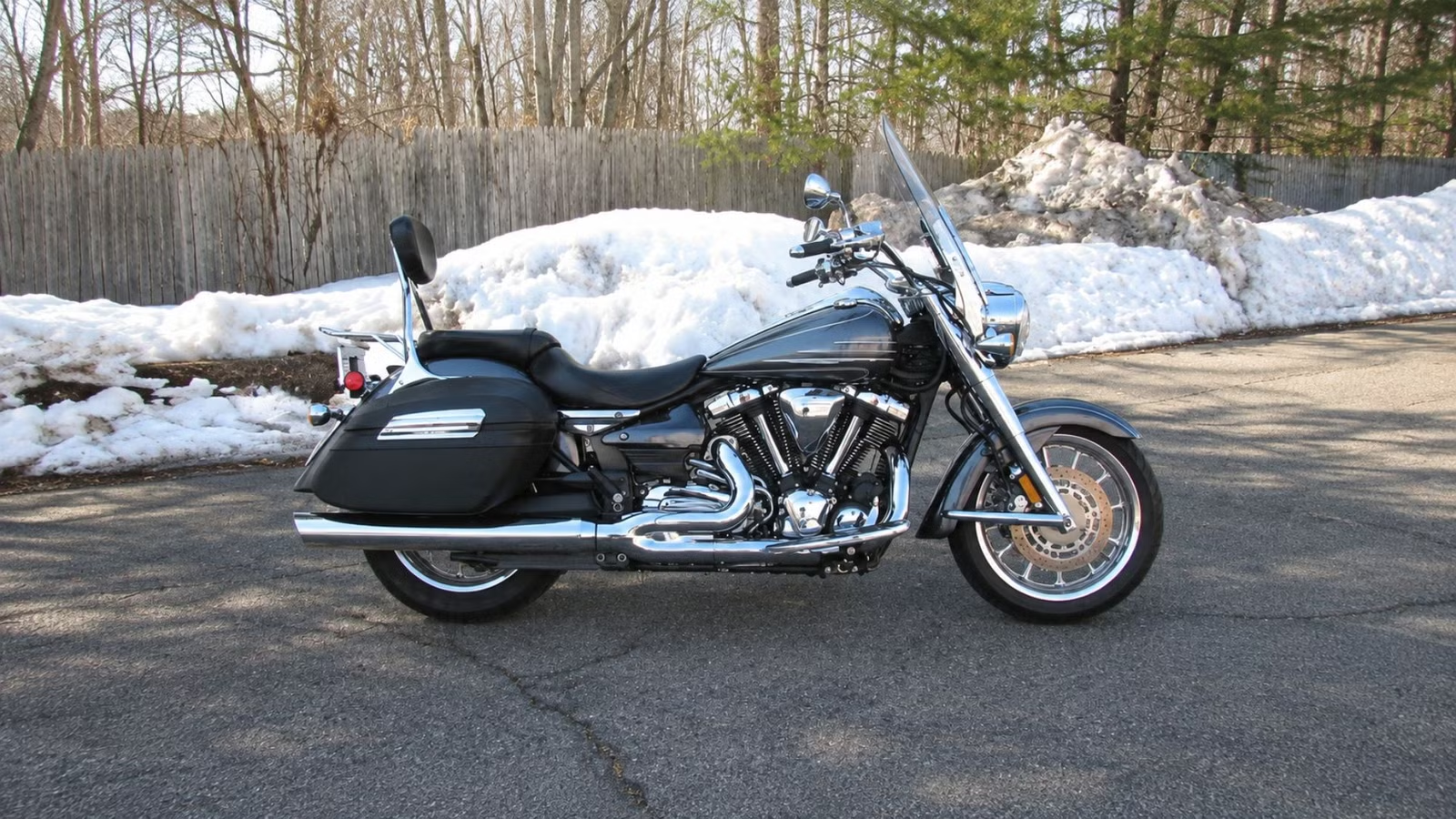
Traditionally, a heavyweight American cruiser is built around the idea of an imposing stance, a large V-twin, and timeless styling. As a result, you get a bulky machine that puts visual presence and relaxed cruising above all else. Yamaha, however, chose not to follow the same old recipe and spiced things up underneath. Known for its precision engineering, the Japanese brand brought sportbike-inspired technology into retro curves. Strangely enough, despite getting so much right mechanically, this motorcycle quietly slipped away into memory.
Why A Heavy Cruiser Would Borrow Sportbike Parts

At first, the idea sounds like an odd decision. After all, cruisers’ appeal is all about comfortable cruising rather than aggressive cornering or lap times. On one hand, modern muscle cruisers bridge these two worlds and offer a unique riding experience. For a heavy touring rig, on the other hand, sportbike parts might seem like overkill. Still, strong brakes and a stiff frame matter just as much on a big cruiser as they do on a racing machine, only for different practical reasons.
Nimble Yet Stable With Retro Bodywork

Beyond its timeless styling and big-bore motor, a big cruiser has to carry a lot of weight, hold steady on highways, and stop confidently with a passenger and luggage aboard. That’s all it asks of its hardware to handle. In that sense, borrowing high-performance parts not only helps feel composed on the highway and handle uneven pavement, but also keeps overall weight down with commanding presence. And that’s precisely what Yamaha did with the Stratoliner.
The Yamaha Stratoliner Integrated Sportbike Tech Into A Heavyweight Cruiser

Yamaha introduced the Stratoliner in 2006, alongside the Roadliner, as part of its flagship XV1900 platform rollout. Sold in the United States under the Star Motorcycles banner, it was one of the most technically interesting heavyweight cruisers of its era. Though it came with classic American cruiser styling, underneath it packed a lightweight aluminum frame, advanced exhaust systems, stronger braking hardware, and performance tech. Because of that, it balanced highway stability with surprisingly responsive handling for a motorcycle of this size.
A Roadliner-Based Touring Cruiser

While the Roadliner (XV1900) was more of a stripped-down boulevard cruiser, the Stratoliner (XV1900A) added touring equipment, including a detachable windshield, locking hard saddlebags, and a passenger backrest. Even so, both shared the same mechanical foundations. Later, Yamaha brought in its Bagger variant, the Stratoliner Delux, that pushed touring specs even further, adding a fork-mounted fairing, integrated audio controls, and iPod connectivity.
Massive Air-Cooled V-Twin Muscle With A Titanium EXUP Valve

Much of the Stratoliner’s big-twin personality comes from its massive air-cooled 1,854 cc (113 cubic inches) V-twin. This mill used a 48-degree cylinder layout, four valves per cylinder, dual spark plugs, and an electronic fuel injection design. On paper, output was rated at 101 horsepower at 4,400 rpm and 123 pound-feet of peak torque at 2,250 rpm, measured at the crankshaft. Meanwhile, power flows through a five-speed manual gearbox and a low-maintenance belt final drive.
Low-RPM Punch Driven By R1 Exhaust Tech

The most interesting feature of this engine, however, is its titanium EXUP (Exhaust Ultimate Power Valve) system, a first for Yamaha’s cruiser range. Derived directly from high-revving sportbikes like the YZF R1 family, the tech adjusts the exhaust valve to help improve torque delivery across the rev range. What that means is strong pulling power right from low to mid-RPM, making it well suited to ultimate touring needs.
An Aluminum Frame And Serious Superbike Underpinnings

Unlike the common steel construction in the segment, Yamaha built the Stratoliner around a die-cast aluminum double-cradle frame and an aluminum swingarm to keep weight down. Even so, it tipped the scale at 758 pounds dry (about 810 pounds wet), and stretched across a 67.5-inch wheelbase, giving it a full-scale cruiser length of 101.6 inches. As such, you get that delicate balance of light-footed agility with straight-line stability. On top of that, an accessible 28.9-inch seat height allowed for easy control during tight low-speed maneuvers.
Sporty Suspension and Stopping Hardware

Complementing the chassis, the suspension setup included a 46 mm front fork with 5.1-inch travel and a link-type rear monoshock with preload adjustment and 4.3-inch travel. More importantly, braking hardware also took sportbike inspiration, using dual 298mm front discs with four-piston monoblock calipers, supported by a single 320mm rear disc with a single-piston caliper. Unusual for a cruiser, this was serious stopping equipment, adding confidence when you need it.
1930s Art Deco Styling Meets Modern Bagger Utility

Visually, the Stratoliner drew inspiration from 1930s Art Deco and Neo-Streamline design themes meant to create a sense of motion even when standing still. Long flowing lines, sculpted fenders, and extensive chrome detailing give it a retro presence. Further complemented by a fuel-tank-mounted instrument panel with a large analogue speedometer and digital display. Meanwhile, its relaxed riding stance, wide two-piece seat design, two-piece heel-and-toe shifter, and wide floorboards enhance the overall cruising experience.
Yet Brand Loyalty Overshadowed Technical Excellence

Despite packing Japanese durability and Yamaha’s Star branding effort, the Stratoliner struggled to capture the American heavyweight market. Thus, production eventually ended after a short eight-year run, during which it was offered in multiple variants over various time periods. In the cruiser space, cultural heritage, community, dealership network, and long-established brand loyalty often carry far more weight than advanced tech details.
Today, however, Yamaha’s used big V-twin examples on the pre-owned market trade between $4,000 and $10,000, depending on model year, trim, and condition. Kelly Blue Book even lists a 2007 Stratoliner S at a typical listing price of $5,185, while a 2014 model is listed at $9,810. In hindsight, the Stratoliner may no longer command the attention its specifications deserve. Yet its unusual blend of sportbike technology and heavyweight cruiser character makes it a fascinating chapter in Yamaha’s history.
Sources: Yamaha Global, Total Motorcycle, Motorcycle Daily, and Kelly Blue Book

Related posts

Latest Post


No Comments