
Pontiac’s Cancelled Head Design Hit 1,219 HP Once It Got 609 Cubic Inches
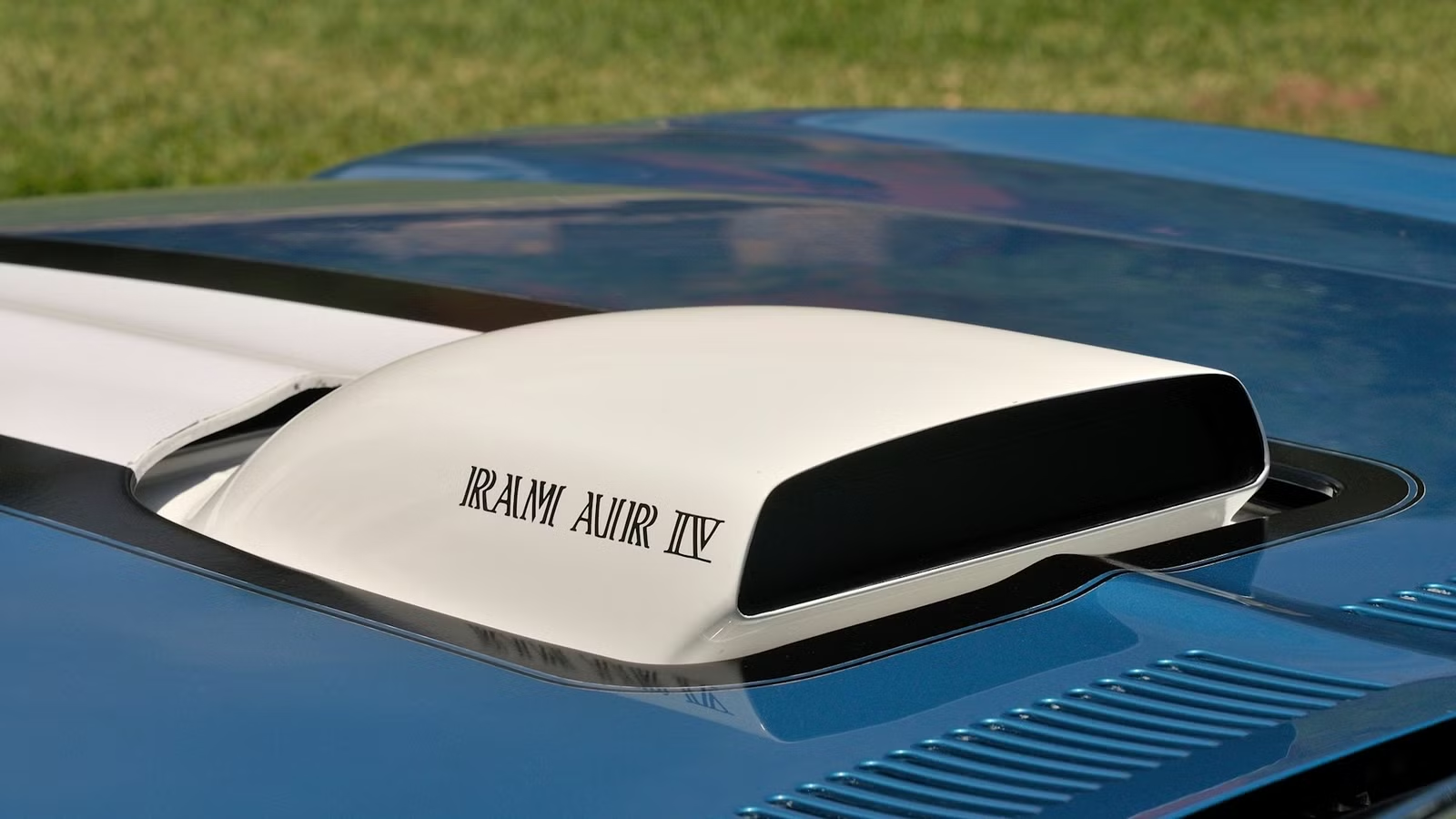
At the height of the late ‘60s muscle car wars, Pontiac was on the top of the automotive world. Fresh off the runaway success of the GTO and Firebird, the division had built a reputation for dominating street-and-strip warfare. Yet behind closed doors, Pontiac engineers were staring down a glass ceiling they would struggle to break through. Put simply, Pontiac’s engineers were facing an airflow wall where conventional wedge heads simply couldn’t breathe past at high rpm. Yet the way they solved it was remarkable.
Ram Air III and IV: Amazing, But Not Good Enough
Let’s set the scene for you. The year is 1969, Neil Armstrong is walking on the Moon, a scrappy baseball team from Queens just won the World Series, and on the drag strip, Pontiac’s Ram Air III and round-port Ram Air IV V8s were turning cars like the GTO Judge and Firebird Trans Am into straight-line weapons. On paper, the 400-cubic-inch Ram Air IV was an absolute monster, officially rated at 370 horsepower, and everyone knew that figure was understated by at least 30 or 40 hp.
Yet when Pontiac’s engineers set their sights on SCCA Trans-Am road racing and NHRA Super Stock events, they realized something dire. Put simply, the mighty Ram Air IV was trapped by an unavoidable overhead-valve packaging compromise. There was a bottleneck between the intake ports and the valve train, right where the pushrods ran alongside the intake runners and pinched the port walls slightly inward. On the 400-cubic-inch Pontiac motor in particular, this meant airflow hit a hard ceiling once engine speeds climbed past 6,000 rpm.
Past that point, you couldn’t make any more power no matter how much you tried. Even the Ram Air IV’s rounded exhaust ports couldn’t overcome it. It was of particular annoyance for Pontiac’s engineering team, consisting of brilliant minds like Malcolm “Mac” McKellar, Tom Nell, Herb Adams, and Bill Klinger.

Modifying an Icon to Be Even Better

Instead of trying to massage the existing round-port castings any further, Pontiac’s engineering crew devised a plan similar to Ford’s tunnel-port system, throwing conventional cylinder-head geometry out the window. Rather than letting the pushrods squeeze against the intake runners, they routed the rods straight through the middle of the intake passages. Effectively, it was like a congested airway being cleared of all obstruction.
This method sealed out vacuum leaks and kept crankcase oil out of the intake tract while removing the pushrod pinch point completely, unlocking a massive cross-sectional flow area that no conventional wedge head could touch. Had everything gone to plan, the Pontiac team intended to apply this design to a family of engines ranging from 303 cubic inches in Trans-Am road racing all the way up to 366 and 428 cubic inches for NASCAR and NHRA Super Stock competition.
Unfortunately, even if Pontiac had brochures ready to print, that line of engines wouldn’t come to pass. For starters, GM corporate rules still capped intermediate street cars like the GTO and Firebird at 400 cubic inches in 1969. On the racing side of things, rule changes in the SCCA and a lack of factory corporate backing in the NASCAR Grand Nationals killed the 303 and 366 race variants. In most contexts, that would’ve meant the program was dead for good. Except, George DeLorean, John DeLorean’s underappreciated little brother, hot rodder, and Ford-backed racer, refused to let all that tunnel-port hardware vanish into a Detroit scrap bin. So the legend goes, it was George who tipped off his brother John about Ford’s tunnel-port heads to begin with, effectively committing espionage over a family dinner.
The Ram Air V: Rejected by Pontiac, Revived by a DeLorean

Even after General Motors pulled the plug on regular assembly-line production in 1970, George DeLorean made sure the hardware survived on the sneak. After opening his own performance shop, Leader Automotive, DeLorean bought up the remaining factory inventory of Ram Air V cylinder heads, blocks, forged internals, and intake manifolds that Pontiac still had lying around after the program was canceled.
Alongside an estimated 80 to 200 complete 400-cubic-inch crate engines, DeLorean built and sold complete Ram Air V performance packages to privateer drag racers and die-hard Pontiac loyalists who wanted the wildest V8 ever to wear the badge. Still, the 400-cubic-inch Ram Air V suffered from that original low-rpm velocity compromise on the street. Of course, the answer was more displacement. It would just take more than half a century to figure it out. Eventually, aftermarket tuners started bolting original or reproduction Ram Air V tunnel-port heads onto 455-cubic-inch and 500-plus-cubic-inch stroker short blocks.

As it turned out, an extra 55 to 135 cubic inches of swept volume was exactly what was needed. With so much more piston stroke pulling air on every intake cycle, low-rpm air velocity jumped dramatically, improving performance on the low end as well as the high end. In the most extreme cases, engines got as large as 609 cubic inches. That’s just shy of 10 liters, and it made north of 1,200 horsepower in this configuration.
The Historic Pontiac Hardware You Can Still Buy Today

If you want to park a piece of this mythical Pontiac history in your own garage today, you have two distinct paths to choose from: hunting down a piece of original 1969 iron, or embracing modern aluminum engineering. On the collector side, surviving factory Ram Air V crate engines and NOS cylinder-head assemblies still surface at major muscle-car auctions and through specialty Pontiac collectors, though complete, documented setups routinely demand high five figures for the privilege.
Because so few original castings ever escaped Pontiac’s parts bins and Leader Automotive’s shelves, tracking down authentic 1969 hardware is no easy feat. Still, for those who actually want to drive or race one without risking irreplaceable museum iron, modern aftermarket companies like McCarty Racing and Millennium Technologies have kept the dream alive through CNC machining and modern computer engineering.
Source: Hagerty, Millennium Technologies, McCarty Racing

Related posts





Latest Post


No Comments