
The Forgotten Spanish Two-Stroke That Invented The Modern Crate Race Bike
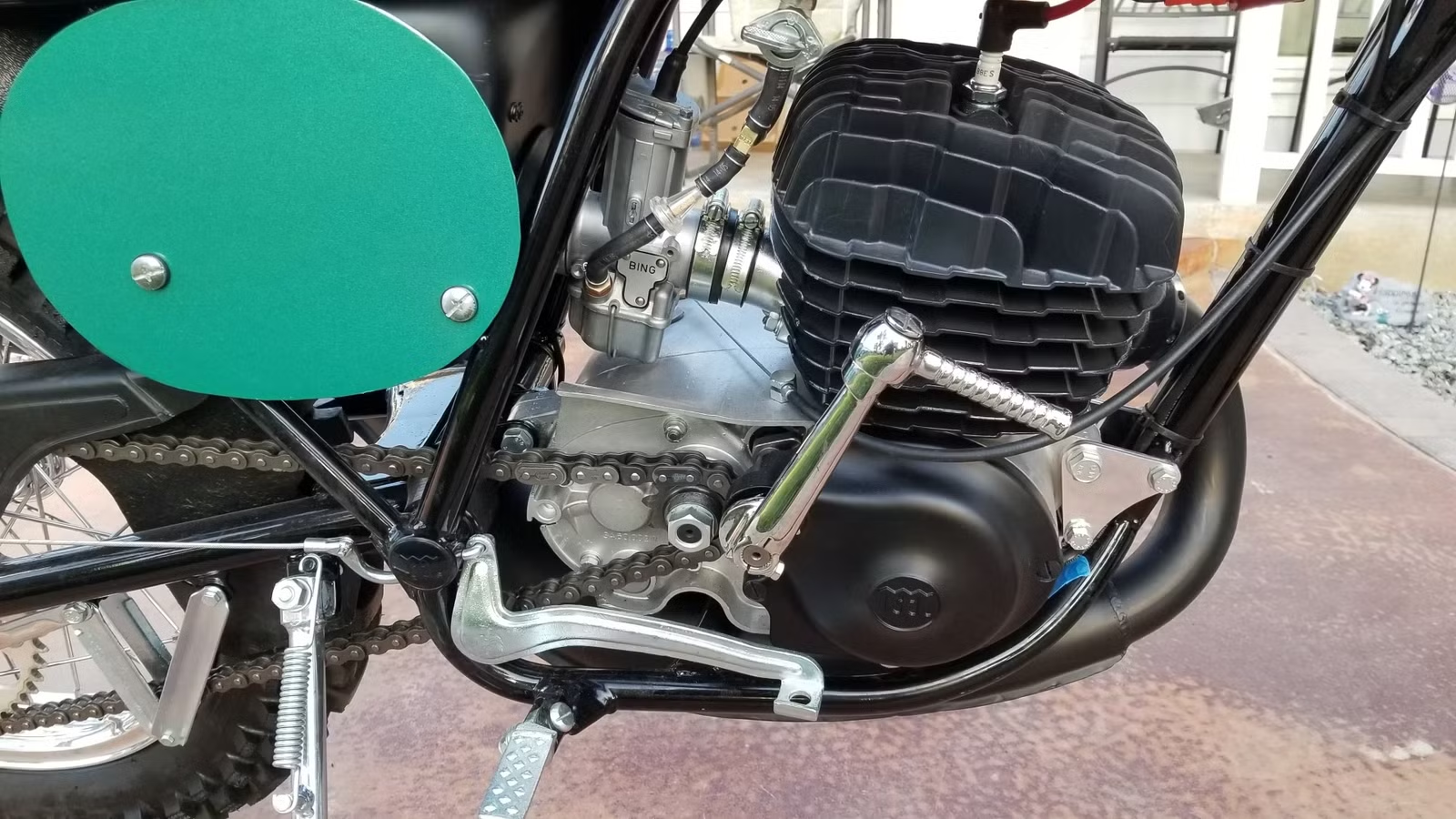
Long before factory race replicas became a marketing cornerstone for the world’s biggest motorcycle brands, a small Spanish manufacturer quietly set the template. Today, when enthusiasts debate the greatest homologation specials ever built, names like the Ducati Panigale V4, the Honda RC30, and the Suzuki RGV250 dominate the conversation — bikes wrapped in aerodynamic bodywork and tuned for smooth asphalt. But the motorcycle that arguably invented the modern crate race bike wasn’t built for the circuit at all. It was built for dirt, and most people have never heard of it.
Before Japan Took Over, Spain Was A Motocross Powerhouse

Even as late as the 1960s, motorcycles remained one of Spain’s primary modes of transportation. The Spanish Civil War, followed by years of economic isolation under Franco’s early regime, meant car ownership remained out of reach for many families, leaving small-displacement motorcycles to dominate the roads. Spain was also fiercely nationalistic, imposing import restrictions to protect its domestic motorcycle industry. The motorcycle became a point of national pride, and Spanish brands like Montesa, Bultaco, OSSA, Derbi, and Sanglas became not only the machines people saw on their roads, but also major names on the international stage. Spain’s rugged terrain made it an ideal proving ground for off-road motorcycles, with brands like Montesa and Bultaco finding particular success in both motocross and trials. Motocross itself was enjoying a boom across Europe during the 1960s. Success on Sunday translated into sales on Monday and, with Japanese manufacturers like Honda, Yamaha, Suzuki, and Kawasaki not yet dominant in the sport, Spanish brands earned a reputation for building lightweight, race-focused machines that appealed to both professional racers and ambitious privateers alike.
Factory Replicas Were Rare Until Spanish Brands Changed The Formula

Race bikes used to belong to two distinct classes: either they were factory machines that came with the power, reliability, and engineering of a motorcycle a manufacturer was proud to put its name on, or they were heavily modified privateer affairs that often produced less power, suffered worse reliability, and fell short of the bike’s true potential. But as the 1960s drew on, manufacturers began to notice increasing demand for factory-spec consumer bikes and started introducing models capable of delivering comparable performance. These were bikes like the CZ 250, Husqvarna 250 Cross, or the Bultaco Pursang Mk5. While not explicitly marketed as race replicas, they offered consumers as close a taste of the real thing as possible without purchasing a full factory machine. But while these bikes were leaving showrooms, Japanese manufacturers were increasingly eyeing Europe as a new market. Able to produce motorcycles in far greater quantities than their European counterparts, they forced established brands to compete on quality and performance rather than simply relying on volume. Montesa responded by sourcing parts from specialist manufacturers, raising production standards without sacrificing the lightweight, competition-focused character its bikes had become known for. With these new, factory-inspired machines, Montesa took the idea one step further and created a motorcycle that carried not only the performance, but also the name, of one of its most successful factory riders of the era.

The 1973 Montesa Cappra 250 VR Was The Original Crate Race Bike

|
Engine |
Power |
Weight |
|
246 cc two-stroke |
35 HP |
224 lbs dry |
With other brands tentatively dipping a toe into the race replica market, Montesa decided to take the leap in 1973 with the Cappra 250 VR. The bike was as close to the factory Cappra 25 MX Works machine it was based on as a production model could be — to the point that the VR in the name stood for Vehkonen Replica, a reference to Finnish rider Kalevi Vehkonen. He was a factory Montesa rider at the time and finished fourth overall in the 250cc Motocross World Championship, making his Montesa the first European-built bike to finish in that position that season. Unlike some race replicas of the era, the Cappra 250 VR wasn’t merely a liveried-up road bike — it actually shared many of the same components as the works machine. The frame used identical geometry to the race bike, giving it a far more responsive, lively ride than many competitor bikes of the time. The similarities extended to the engine, as both used the same basic 246cc power unit. Displacement, bore, carburetors, ignition, and gearbox were all shared between the two bikes — a highly uncommon move, even by 1970s standards. Even integral components like the fork design, wheel layout (shod with Pirelli tires, no less), and fuel tank were carried over to the VR, creating a bike that needed little to no aftermarket modification to be race-ready.

Of course, not everything was exactly the same. The engine, while strong in the VR, had not undergone the same rigorous balancing and tuning as the units in the factory bikes, meaning the customer version was reportedly slightly down on power. The works bikes also had access to prototype and experimental parts that a paying customer understandably wouldn’t, which widened the gap between the VR and the race bike as the season progressed. But while others slapped stickers on their bikes and called it a day, Montesa had created arguably the closest production equivalent to a factory race bike the market had ever seen.
The Cappra Evolved Rapidly Before Disappearing Just As Quickly

Things in motorsport never stand still. The Cappra 250 VR, being a race replica, was destined to be constantly measured against shifting goalposts as the race bike received upgrades that the customer model didn’t. In 1974, Montesa released the Cappra 250 VR75, which focused on smoothing out the engine’s power delivery, improving overall reliability, and refining the suspension. 1975 saw the bike evolve into the Cappra 250 VA. With Japan finally fielding its own answers in the form of the Yamaha YZ250 and the Suzuki RH250, Montesa made the new model more compact and smoother, and gave it greater suspension travel to keep pace with where motocross performance was heading. This accelerated in 1976 with the Cappra 250 VB, as Japanese alternatives intensified the pressure on the Spanish brand. Weight was reduced, brakes were improved, and the frame was revised, but the end was approaching for the Cappra. The model became the VE in 1977, though those changes weren’t enough to hold back the tide of Japanese manufacturing. The Cappra line soldiered on until 1983, with Montesa ceasing production in a market that looked almost nothing like the one the bike had been born into a decade earlier.
Honda Ended The Cappra, But Its Influence Lived On

While the Cappra ultimately gave way to Japanese competition, the story didn’t end there. Honda acquired Montesa just three years after the Cappra line concluded, effectively saving the Spanish brand from collapse. Rather than absorbing it entirely, Honda allowed Montesa to continue operating as a brand in its own right, with production remaining in Spain. Honda, in turn, gained a stronger foothold in the trials market, and the partnership eventually produced the Montesa Cota 4R, which went on to become one of the most successful modern trials bikes in the world. History has largely forgotten the Cappra 250 VR, but its impact on the industry is hard to overstate. The bike broke new ground by giving consumers a genuine factory racing experience straight from the showroom floor — and it did so well before the circuit-racing replicas more commonly associated with the concept ever existed. Sources: Cycle News

Related posts
Latest Post


No Comments