
Pontiac Was Planning A Golf GTI Rival
Pontiac isn’t a car company you could accuse of running out of ideas. The carmaker’s resume includes inventing the muscle car genre with the 1964 GTO to creating the WTF category with the Picasso-esque Aztek of the 2000s. But the problem for Pontiac was not a lack of originality, it was a case of running out of road. Having been a firm favorite with young, cool drivers for much of the ’60s and ’70s, while embodying the new tech age in the ’80s, the carmaker ended the ’90s looking a bit lost. Muscle car fans had been drawn to JDM tuning, and the cheap fast car segment was largely dominated by the hot hatch.
Pontiac Was Staring Down The Barrel Of Bankruptcy In The 2000s

Manga, Motorola Razrs, and Myspace were very much part of the early 2000s — muscle cars were not. At the top of Pontiac’s food chain in the late ’90s and early millennium was the Pontiac Firebird and Trans Am, old school cars that touted rumbly V8s. Nothing wrong with that, but not many people were buying them — WS6 sales were about 3000 cars a year at the end of the ’90s. The truth was that many people wanted the zingy JDM cars that were capturing the public’s imagination, and if they couldn’t get one of those, at least a dull Japanese hatchback with the entire contents of the Racer’s Edge bargain bin tipped onto it.
Pontiac was in the process of trying to reinvent itself for this young, racier crowd. This included everything from trying to get groovy for moms and dads with the Aztek, to launching the Solstice, a two-seat rear-wheel-drive sports car, and eventually importing an Australian sedan and calling it the G8 GXP. It was desperate times at Pontiac, but then the company had another idea.
The Pontiac Vibe GT-R Concept Would Reimagine The Company


While the boardroom at Pontiac was meeting on the regs to try to work out exactly who the company was aimed at in the 2000s, some of the engineers were tasked with upgrading arguably the most uninspiring car in the range. The Pontiac Vibe, a very unvibey urban crossover hatchback that shared most of its oily bits and platform with the Toyota Matrix (and Corolla), was due to be launched in 2002. Pontiac decided this could be the basis for an attention grabber for the company.
Most Vibes had the kind of tough urban looks that suggested it could just about handle a trip to Costco, with those smooth 2000s lines that were inspired by a computer mouse. But things weren’t all bad. The Vibe did have a GT trim and an AWD version, and there was the small matter of a 2ZZ-GE engine, otherwise found in Lotus Exiges and Toyota Celicas. It was decided that the Vibe could be Pontiac’s ticket to the JDM/ tuner/ hatchback party that was erupting in the automotive youth market at the time, so prior to the launch of the production car, GM unveiled a Vibe “GT-R” at the 2001 SEMA show.
The Vibe GT-R Is A Serious Hot Hatch

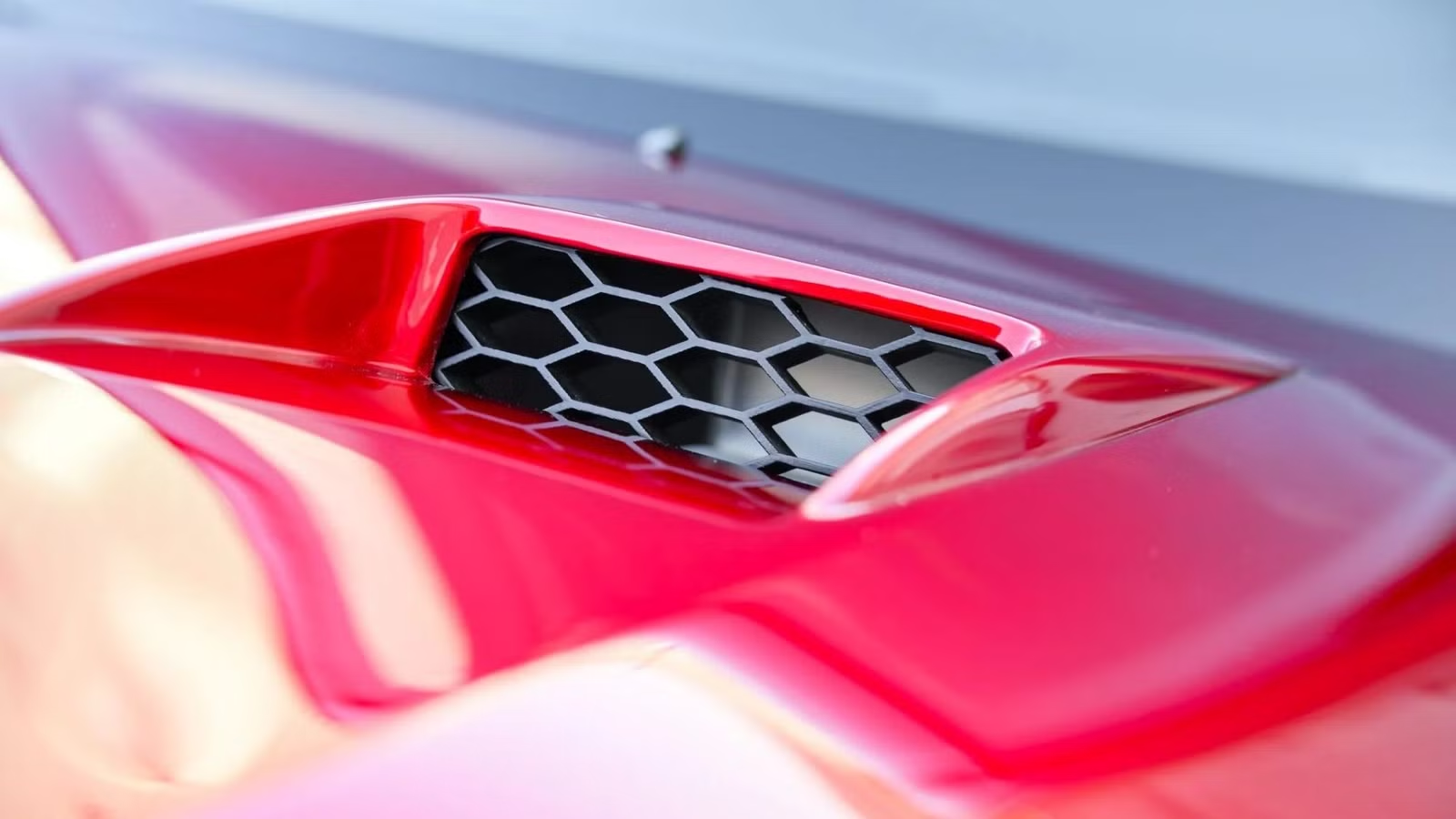
The Vibe GT-R was a tester for a more extreme Vibe as well as bringing much-needed attention to the new range from the youth crowd that had money to burn at the time. The standard Vibe GT was a bit more aggressive than the base car, but it couldn’t really hide its small wagon styling. The GT-R version was, by Pontiac’s own admission, going after the tuned Hondas and Mitsubishis of the time. Pontiac knew they couldn’t get away with a few add-on plastic bits, so General Motors Service Parts Operations (SPO) hit up the GT-R with a Ram Air Induction system and hood scoop that took power up 10 hp to 190 hp power of the production Vibe, with the car lowered by three inches using Ground Control/Eibach ERS adjustable suspension. The 1.8-liter four is joined to a six-speed manual transmission.
The Bodywork Is Pure 2000s

Then the team added a rear deck spoiler, new front and rear facias, roof spoiler, and 19-inch Montegi racing wheels with Bridgestone performance tires. Inside, the car received MOMO Street Racer seats and racing pedals and, this being the 2000s, a soundsystem probably worth more than all the other mods combined. The Kenwood set-up includes an MP3 player, Digital EQ, six-inch front and rear speakers and tweeters, a 10-inch subwoofer and a 250-watt amp with a cool-looking bespoke removable speaker/amp box.
Pontiac Went For Less Vibe In The End

While the GT-R (which seemed to borrow its name from Nissan, just like the original GTO was inspired by Ferrari) got plenty of attention at SEMA, it didn’t result in much. The Vibe GT-R remained a one-off, with the GT version doing the heavy lifting for Pontiac in the hot hatch/ quick mini wagon stakes. The GT had plenty of power for the time and the Toyota parts were reliable. In many ways, it is an underrated hot hatch, but you can’t help thinking that the GT’s looks didn’t help to stop it blending into the background at a time when OTT wasn’t enough in car tuning and style.
Here’s What Happened To The Show Car — And To Pontiac

Interestingly, the Vibe GT-R showcar survived, coming up for sale at least a couple of times, most recently on Bring a Trailer. The Opera Red metallic paint still looks great, and considering how over the top the 2000s went, it looks almost restrained these days. Only problem is, you can’t drive it. The car is not registered for road use, which probably explains why it only fetched $13,000 at auction. Whether a production version would have helped Pontiac, it’s hard to say. In the face of a global economic crisis, Pontiac went out of business in 2010, after 84 years. We can only hope it will come back one day.
Sources: Bring a Trailer

Related posts


Latest Post


No Comments