
The Toyota SUV Engine Owners Trust Past 300,000 Miles
Toyota is synonymous with reliability, so you can expect its vehicles to last a long time. But of course, while all its vehicles are known for reliability, some models are more reliable than others, especially given the plethora of engine families they made, which serve different purposes.

That is the case with the Toyota engine that we’ll be evaluating today, and it’s one of the main reasons why models fitted with this engine seem nearly immortal. What cars are fitted with this engine, and what makes these engines so reliable, are what we’ll be exploring in today’s article.
It Isn’t Just Its Engines That Are Reliable
Before we discuss the immortal engine in today’s article, I would like to first highlight that reliability extends to Toyota’s newer, more sophisticated drivetrains as well.
Million-Mile Hybrids


With the first mass-market hybrid dating back to 1997, there’s a high chance that a Toyota hybrid has already reached the million-mile mark. And indeed, you’d be right. Though hybrids may sound complex since you’re dealing with two powertrain sources, Toyota has actually managed to simplify the hybrid system after decades of evolution.
As a result, we’ve recorded here on TopSpeed a few hybrids that have already breached the million-mile mark. One of those is this 2006 Toyota Highlander Hybrid, which wasn’t killed by unreliability but by a natural disaster in 2022. The Highlander Hybrid only received routine maintenance, which is a testament to its durability through a million miles and 17 years of ownership.
And Then There’s This Immortal V-8

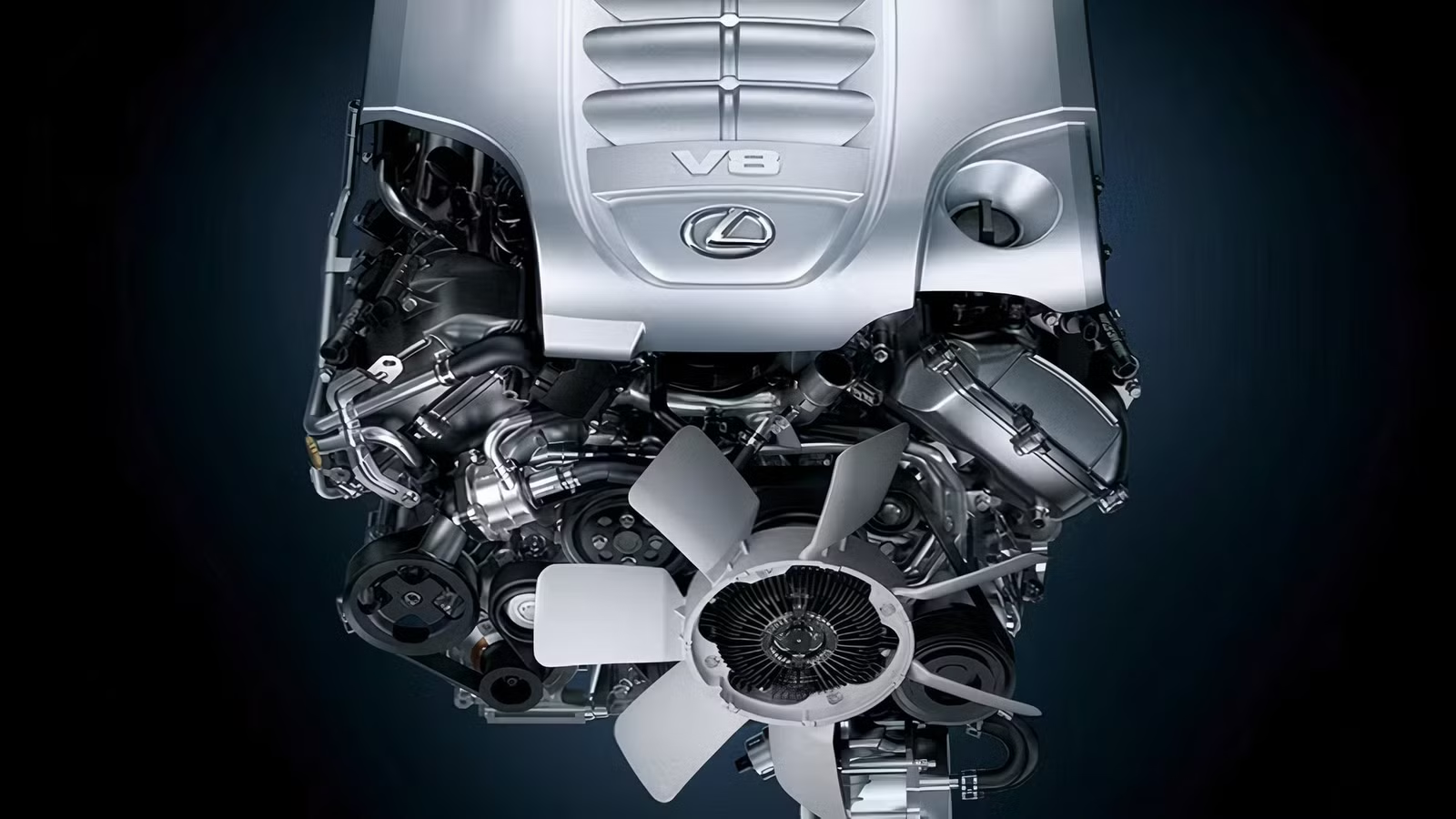
Anyway, let’s get back on track in talking about the Toyota engine that owners still trust even after going past 300,000 miles. Again, most Toyota engines are reliable, but the 2UZ-FE is perhaps the standout, due to its virtually bulletproof reliability.
300,000 Miles Without Breaking A Sweat

The 2UZ-FE is a 4.7-liter V-8 designed primarily for heavy-duty purposes in its SUVs and pickups. The engine was fitted to many SUVs and pickups in the early to mid-2000s, such as the Toyota Tundra and Sequoia, plus the Lexus LX and GX luxury off-road SUVs. These vehicles have easily crossed the 300,000-mile mark without breaking a sweat, and all that owners did during that time was take them for routine maintenance.
Speaking of maintenance, you’d probably be surprised that this engine uses a timing belt rather than a timing chain. This needs to be replaced approximately every 90,000 miles or every seven to nine years. Skip this, and the engine will be unforgiving, but that isn’t a reliability issue at all. It was a maintenance item, which was eventually replaced by a timing chain when the 1UR-FE and 3UR-FE succeeded it. Even then, the 2UZ-FE’s conservative and simplistic engineering means that the engine has a high tolerance for owner neglect, but of course, we don’t recommend doing that.
Simplicity And Overengineering Are The Key

Speaking of simplicity, the 2UZ-FE 4.7-liter V-8’s durability is also attributed to its tough engine block. It was made of cast iron, which has superior strength and durability, and it was also cost-effective since this engine block is cheaper to manufacture. The engine is also easy to maintain due to the accessibility of its parts within the engine bay. The 1UR-FE and 3UR-FE that succeeded it switched to an aluminum block, which, though it doesn’t possess the same raw strength as the 2UZ-FE’s cast iron block, offers better heat dissipation.
Today, the vehicles with this engine that have crossed the 300,000-mile mark still retain their resale value, since there is still plenty of useful life left in these engines. And yes, there’s indeed a Tundra with a 2UZ-FE that crossed the million-mile mark in 2016, which was owned by Victor Shepherd from Louisiana.
When the 2UZ-FE engine was torn down, Toyota’s quality manager at the time, Connie Roberts, said that the bearings of the million-mile engine were “probably the cleanest I’ve seen come out of an engine.” The biggest blemish that they could find was just a slight mark on a bearing, and that’s it. This is proof that all that the engine needed was simple maintenance.
The Engines That Succeeded The 2UZ-FE

Of course, the 2UZ-FE couldn’t live forever without any improvements, and so that’s where the 1UR-FE and then the 3UR-FE came in. Together, these engines are part of the UR family, and they are just as reliable as the UZ family, to which the 2UZ-FE belongs. That’s not the case, however, with what succeeded the UR family.
Reliability Meets Modern Requirements

To satisfy the demand for more power, the UR family became more powerful than the UZ family. You also now have two versions to choose from. There’s a more powerful but more compact 4.6-liter unit (1UR-FE) and an even more powerful and much larger 5.7-liter unit (3UR-FE).
As mentioned, the UR family uses a timing chain and an aluminum block, but they also employ more sensors and various drivetrain technologies to make it more powerful yet more emissions-compliant. As a result, though the engine is still reliable, the added electronics and sensors mean that the UR engine is less tolerant of neglect than the UZ engine was.
Unfortunately, Its Modern Replacement Is Questionable

Today, both the UZ and the UR engines are gone, as they’ve been replaced by the new, more modern, but a helluva lot more complicated V35A-FTS Dynamic Force 3.4-liter twin-turbo V-6 engine. With direct injection, turbocharging, and tighter tolerances that leave minimal margin for error, the V35A-FTS is everything that the UR and UZ engines weren’t. An even more complex hybrid version is also available, and it’s what’s fitted as standard to the flagship Sequoia full-size SUV today.
It’s still hard to gauge how reliable this engine is, but feedback on this engine is mixed. The oldest vehicle with the V35A-FTS is the Lexus LS 500, which has been in production since 2017. To date, the LS 500 has only been hit with two recalls, and neither of them had to do with the engine. Anecdotal feedback also reflects this, with the LS 500 largely remaining almost trouble-free.
The biggest concern comes from this engine’s application in the large SUVs and pickups that Toyota and Lexus make. In 2024, Toyota recalled the Tundra, the LX 600, and the GX 550 for engine replacement due to machining debris from manufacturing that could cause catastrophic failure. In 2025, the recall was expanded to more production dates of these vehicles. To date, more than 270,000 units have been recalled, with more than 70,000 engines replaced as of 2026. Thankfully, the hybrid version is safe from this recall, and let’s hope that the defects are largely due to a manufacturing issue rather than the engine being unreliable.
Sources: Toyota, iSeeCars, NHTSA, RepairPal

Related posts



Latest Post


No Comments