
NASCAR’s Pushrod V8 Has Been Choked Since 1987 And Is Finally Getting 750 HP
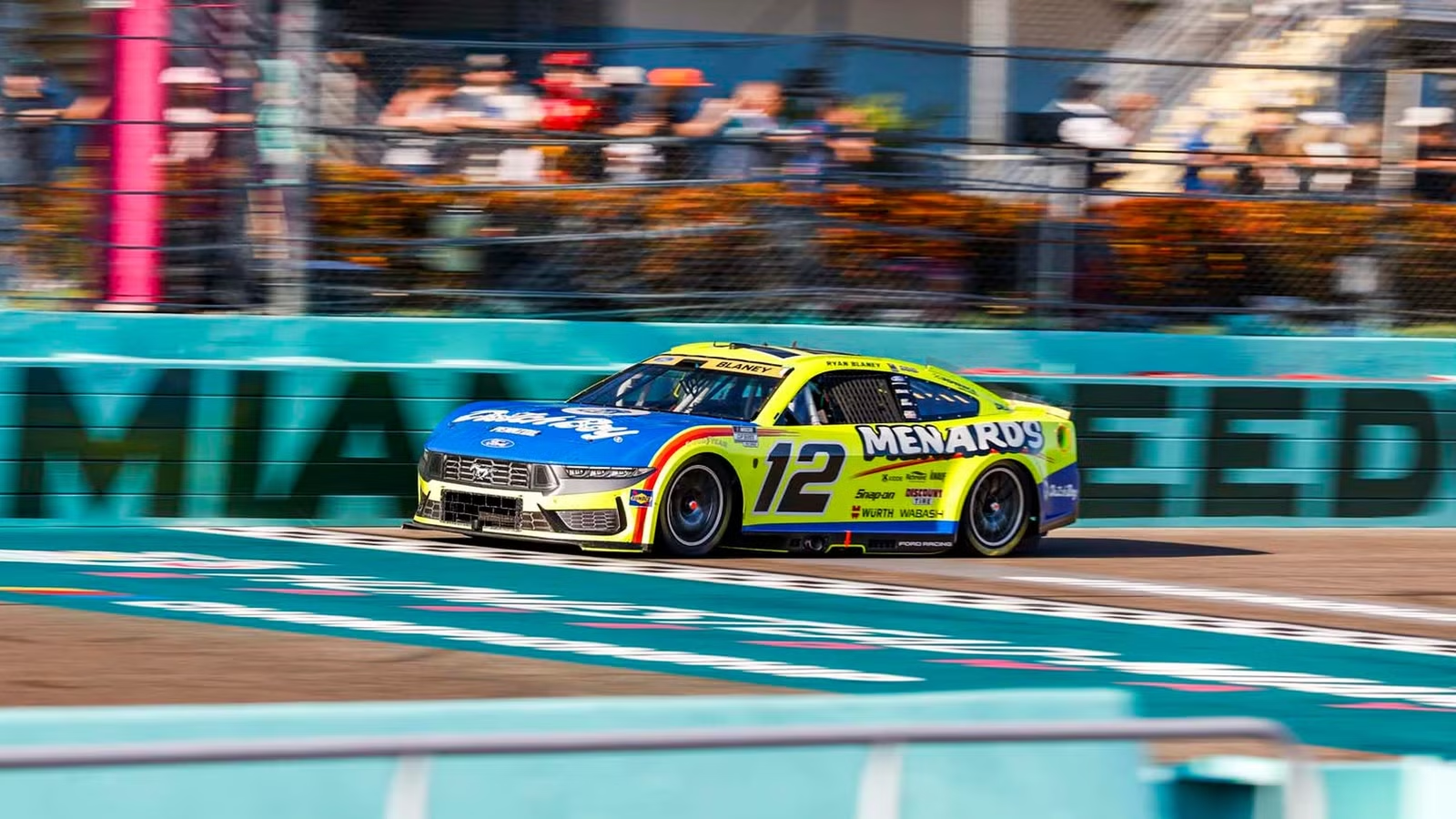
Every NASCAR Cup Series engine follows the same basic recipe: 358 cubic inches, two valves per cylinder, pushrods, and no turbo. That recipe has barely moved in decades. What keeps changing is how much of the engine’s power NASCAR actually lets through to the rear tires. For almost 40 years, the sanctioning body has bolted plates and spacers onto these V8s to strangle their airflow on purpose, first at the fastest tracks and later almost everywhere. Next season, that leash finally gets a lot longer.
NASCAR Raises Cup Series Power For 2027

NASCAR confirmed on November 20, 2026, that target horsepower at intermediate tracks will rise from 670 to 750 for the 2027 Cup Series season. The change starts with the Coca-Cola 600 at 1.5-mile Charlotte Motor Speedway on May 30, 2027, and uses the same tapered spacer that already governs ovals under 1.5 miles, according to the 2027 rules announcement.
A week before Charlotte, the non-points All-Star Race at North Wilkesboro Speedway on May 23 will run an experimental 800 hp package with low downforce. NASCAR and the engine builders will study race quality and engine performance afterward before deciding whether it spreads, so any wider rollout depends on what that single race shows. The intermediate bump follows the 750 hp package that road courses and ovals under 1.5 miles adopted in 2026.
Why NASCAR Started Choking Its V8


The restrictions trace back to the Winston 500 at Talladega Superspeedway in May 1987, when Bobby Allison’s car went airborne and tore down nearly 100 feet of frontstretch catch fence. Speeds at the biggest tracks had climbed past 210 mph, and the wreck came frighteningly close to the grandstands.
NASCAR answered with restrictor plates at Daytona and Talladega from 1988, flat metal plates that limit how much air reaches the engine. The 2019 Daytona 500 was the last plate race. Tapered spacers took over, using a funnel shape that flows slightly better and sharpens throttle response while doing the same basic job. Away from the superspeedways, though, Cup engines ran without a spacer until the end of 2014.
How The 358-Cubic-Inch Pushrod V8 Lost And Regained Its Power

By 2014, Cup engines were making around 850 hp at most tracks. The 2015 rules package introduced a tapered spacer everywhere except the superspeedways, cutting output to about 725 hp. The 2019 package went further, fitting a smaller spacer at ovals of 1.33 miles and longer to drop intermediate tracks to roughly 550 hp, paired with bigger spoilers and splitters for extra drag. Each cut was sold as a way to tighten the pack and create more side-by-side racing.
The Next Gen car arrived in 2022 with a 670 hp target at every track except the drafting superspeedways, which ran around 510 hp. Road courses and ovals under 1.5 miles moved up to 750 hp in 2026, and intermediates follow at Charlotte. Even after the increase, a 2027 intermediate car still makes roughly 100 hp less than its 2014 counterpart did. NASCAR CEO Steve O’Donnell has said 750 hp was chosen to balance performance against the costs facing teams and engine builders, which explains why the step stops there for now.
The 426 Hemi Era Benchmark

Power fights are nothing new in NASCAR, and the most famous one came long before any spacer. Chrysler debuted its race-only 426 Hemi at the 1964 Daytona 500, where Hemi-powered Plymouths swept the top three places and Richard Petty won by more than a lap.
NASCAR banned the race Hemi for 1965 because Chrysler did not sell it in a production car. Chrysler boycotted most of that season, then built the 426 Street Hemi to homologate the engine and returned in 1966. That episode set the pattern for everything that followed: when an engine got too strong, NASCAR rewrote the rules rather than wait for rivals to catch up.
The Untapped Potential Inside A Modern Cup Engine
The Chevrolet R07, approved for Cup competition in 2007, was GM’s first purpose-built NASCAR engine, built around a compacted graphite iron block and the 358-cubic-inch limit. The layout stays deliberately old-school, with two valves per cylinder actuated by pushrods.
The headroom is obvious. These engines made around 850 hp at most tracks before spacers arrived, and an R07 built from NASCAR parts and enlarged to 397 cubic inches has made 924 hp on an engine dyno. A 750 hp target still leaves a big chunk of airflow on the table.
What Stays Restricted At Daytona And Talladega

None of this touches the drafting tracks. Daytona and Talladega stay on the lowest-power package on the calendar, and NASCAR actually cut it further in 2026, shrinking the tapered spacer to roughly 465 hp for the late-season races at both tracks. The original problem of cars getting airborne at more than 200 mph never went away. For 2027 qualifying there, NASCAR is also moving from two rounds to a single timed lap.
Everywhere else, more power is the right call, and it puts control back where it belongs. A 750 hp car spins its tires off the corners and forces drivers to lift into them, so throttle control and tire management count for more than track position and clean air. That is exactly what drivers have asked for, and Charlotte should prove that 750 hp moves the racing in the right direction. The North Wilkesboro test will show whether NASCAR is ready to go further still with an engine it has held back since 1987.
Sources: NASCAR, Toyota, Ford, Chevrolet, SMIFF TV YouTube Channel.

Related posts






Latest Post


No Comments