
Mopar’s Chrysler 300 Letter Series History Quietly Forgot
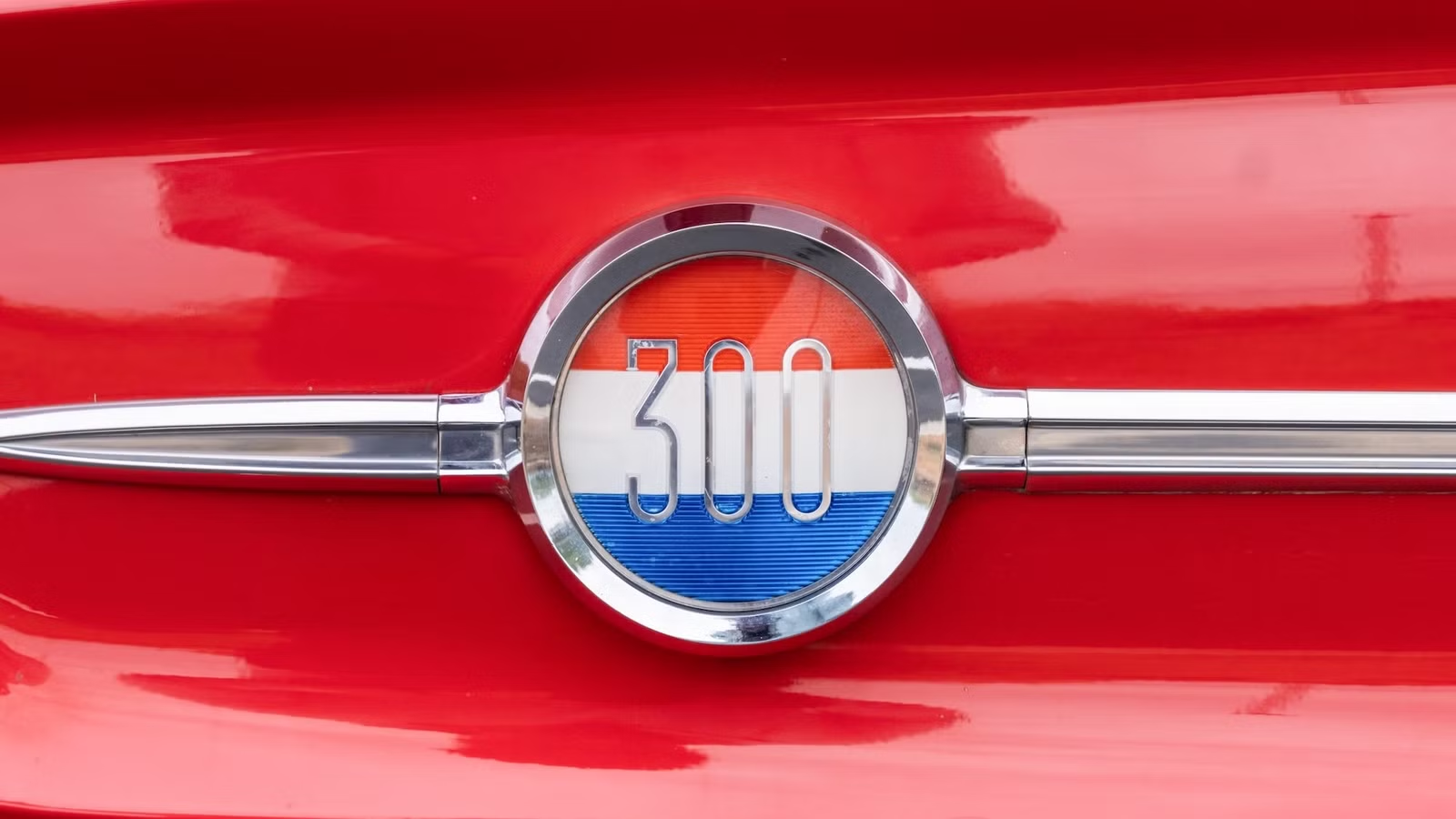
Most car enthusiasts know about the Chrysler 300. With the 300, Chrysler’s Hemi engine broke 300 horsepower and kicked off the muscle car wars. But few know that with the 300 “Letter Series,” Chrysler solidified an all-new segment of the American automobile: The personal luxury car, a unique twist on the European grand tourer. But the model year in which Chrysler finally got the formula right may be the most underappreciated in the Letter Series’ history.
Bringing A European Philosophy To American Luxury Cars

There’s a segment of European automobiles that the American mind can barely comprehend. The “grand tourer” can trace its roots as far back as the Bugattis and Rolls-Royces of the 1920s. The formula is simple: a race-tested engine in a sporty coupe body, light enough to navigate mountain roads at a sporting pace but large enough for two adults and their luggage, and resplendent with luxury materials. A century later, you can still walk into an Aston Martin dealership or Ferrari dealership to buy a modern interpretation of a grand tourer.
During a 1938 trip to Europe, Edsel Ford was taken by the silhouettes of these low-slung coupes with their long hoods and short trunks. He tasked Bob Gregorie with designing a Lincoln version and chose a model name to communicate the romance of Europe: the Continental.
By 1940, Chrysler’s flagship “New Yorker” was competing directly with the Continental. While it was available as a coupe, it was a heavy highway car that had little in common with a European grand tourer. But soon, that would all change.


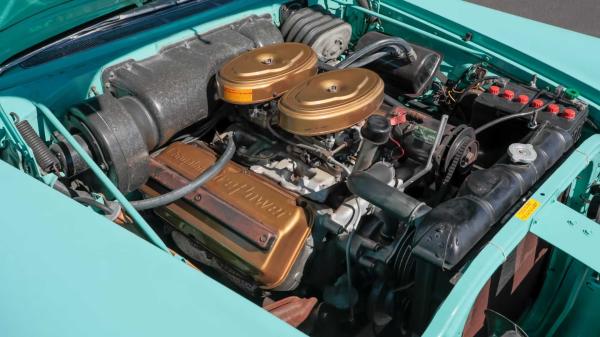
Chrysler engineered an all-new V8 with hemispherical combustion chambers for the 1951 model year (originally rated at 180 horsepower). The Briggs Cunningham racing team took the Detroit V8 to France’s 24 Hours of Le Mans in 1953, clocking an average speed 8 mph faster than the Mercedes-Benz 300SL and finishing first in their class. Beginning in 1954, French automaker Facel-Vega bought the engine for its European-style Grand Tourer. Chrysler debuted its famed 300-horsepower tune of the “Firepower” V8 in its 1955 C-300. It was the first mass-produced Detroit car to break 300 horsepower, and the automaker was so proud, it debuted the new nameplate to make the occasion. With its dual four-barrel carbs, race-spec camshaft, and high-performance exhaust, the luxury car dominated NASCAR and earned the nickname “the banker’s hot rod.”
Chrysler Built The First Production Car With Electronic Fuel Injection In America
Electronic Fuel Injection seemed like automotive witchcraft in the 1950s, but Chrysler added it and produced the first American car with this feature.
How Chrysler Built A Letter Series Legacy One Model Year At A Time

Chrysler’s 1955 C-300 was such a hit that it inspired an entire segment. By 1958, Ford was playing catch-up with the Thunderbird. In 1961, GM threw its hat in the ring with the Buick Riviera. But Chrysler never took its foot off the throttle. The automaker designed an all-new 300 for every model year.
In 1956, Chrysler upped the ante with two engine options for its flagship coupe. They made 340 and 355 horsepower. The automaker rebadged this model year as the 300B, and the “Letter Series” tradition was born.

1957’s 300C featured new styling with a trapezoidal grille, a convertible configuration, and a new engine. The 392 cubic-inch power plant earned a 375 horsepower rating. It also tossed traditional coil suspension for Chrysler’s new torsion bar setup to improve handling. 1958’s 300D was the last year to use a true “firepower” Hemi V8. 1959’s 300E got Chrysler’s 413 cubic-inch “Golden Lion” V8 with wedge-shaped combustion chambers.
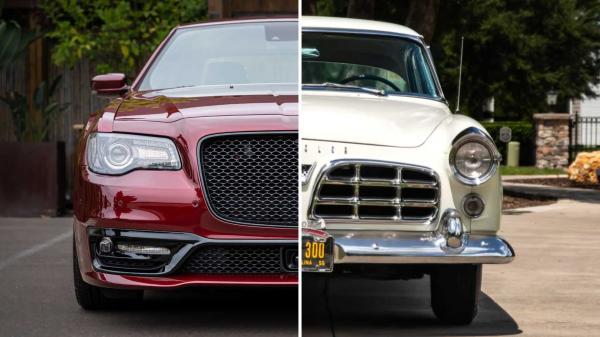
1960’s 300F outfitted the engine with dramatic “Cross-Ram” intakes that crossed over one another to better mix the fuel and air, improving power at low rpm. 1961’s 300G restyle flipped the signature trapezoidal grille, creating a design so iconic, Chrysler imitated it with the resurrected Chrysler 300 in 2005. Chrysler didn’t make any major mechanical changes in 1961. It saved those for the 1962 model year.
Chrysler 300 Generations (All Years): Engines, Trims, Specs, & Value
The 300 has deep roots in Hemi history, making it one of the most memorable Mopars of all time. Here’s what you need to know about every generation.
The 1962 Chrysler 300H Finally Fired On All Cylinders

|
Engine |
Standard 1962 300H Engine |
Chrysler Ram-Induction |
|---|---|---|
|
Displacement |
413.3 cu-in (6.8L) |
413.3 cu-in (6.8L) |
|
Bore x Stroke |
4.188 × 3.75 in |
4.188 × 3.75 in |
|
Carburetion |
Two Carter AFB 4-barrels |
Two Carter AFB 4-barrels |
|
Induction |
Inline dual-quad intake |
15-inch cross-ram intake |
|
Exhaust |
Conventional |
High-flow cast-iron headers |
|
Compression |
10.1:1 |
11.0:1 |
|
Horsepower |
380 hp @5,200 rpm |
405 hp @5,400 rpm |
|
Torque |
450 lb-ft @3,600 rpm |
473 lb-ft @3,600 rpm |
For the 1962 model year, Chrysler did a U-turn. It shortened the 300H’s wheelbase by four inches (to 122 inches), and shaved 300 pounds off the car’s curb weight. Chrysler also upgraded its base engine option with the fabled four-barrel carb setup from the 300E to increase power. The result was even quicker than the 300G.

Chrysler’s designers also kept the 300G’s new grille. But they finally cut the fins that had dominated the trunks of recent model years. The resulting 300 was very much a large American personal luxury car. But its lower weight, shorter rear end, and better performance folded in some key aspects of the European grand tourers of the day. You might say the 300H was the Letter Series model year that finally nailed the original concept: a uniquely Detroit take on the European grand tourer. That would make it the perfect personal luxury car.
Buyers could choose between two tunes of the 413 wedge V8. The entry-level engine used dual quad-barrel carburetors to make 380 hp at 5,200 rpm and 450 lb-ft at 3,600 rpm. But the ram-induction version featured huge 15-inch headers stretching across the engine bay and high-flow cast iron exhaust headers. Its cam was more aggressive, its exhaust valves larger, and its compression ratio was upped to 11.0:1. The result was 405 hp and 473 lb-ft.
Brand Confusion Buried The 300H

Chrysler hit its stride with the 300H. But it wasn’t engineering that finally killed the Letter Series—it was marketing. In 1962, Chrysler also launched a “300 Sport” trim. Enthusiasts often cite this cheaper, less exclusive use of the 300 nameplate as the “beginning of the end” for the Letter Series.
In 1962, Chrysler sold between 558 and 570 300H cars—depending on who you ask. That included 435 hardtops and over 100 convertibles. 1962 was the worst year yet for Letter Series sales numbers. The 1963’s 300J sales fell even further, to just 400 units, setting the all-time low for the lineup. The 300J did away with the beloved astradome dashboard, rounded exterior styling, and convertible configuration.

The 300H didn’t need to suffer such poor sales. Previous Letter Series cars were the only “300” badge available, but were sold alongside other Chrysler models. And Chrysler actually sold 25,578 300 “Sport” cars in 1962. But with the 300 badge split into multiple models, the 300H was saddled with an unfair reputation of being a sales “dud.”
The Lost American Sports Car That Beat The Corvette By Four Years
This race-bred roadster set a Bonneville record in 1949, then vanished into obscurity despite beating the Corvette to market by four years.
Chrysler Enthusiasts Love The 300H

Even Mopar enthusiasts once dismissed the 300H as merely a 300G without fins. But its shorter wheelbase, lower weight, and higher output make it a completely different car. And in many ways, a high point of the Letter Series. Today, the 300H is gaining a following. The classic.com website tracked three sales over the past twelve months, with an average sale price of $44,900 and a top sale of $91,000.
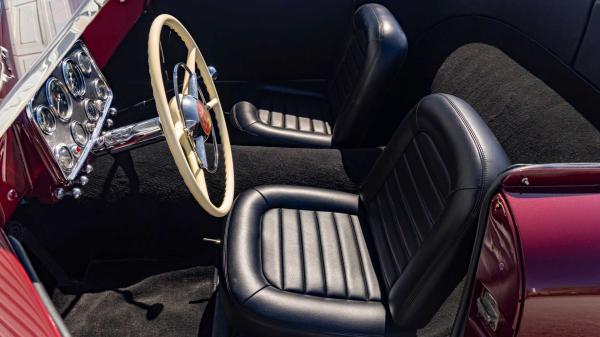
VIN 8423205116 (pictured) has just 36,000 miles on the clock. It sold on Bring a Trailer in May 2026 for $26,500.
Sources: Chrysler 300 Club, DodgeGarage.com, Ford, Classic.com, Bring a Trailer

Related posts





Latest Post


No Comments