
Miata vs GR86: Last Affordable Rear-Drive Manuals
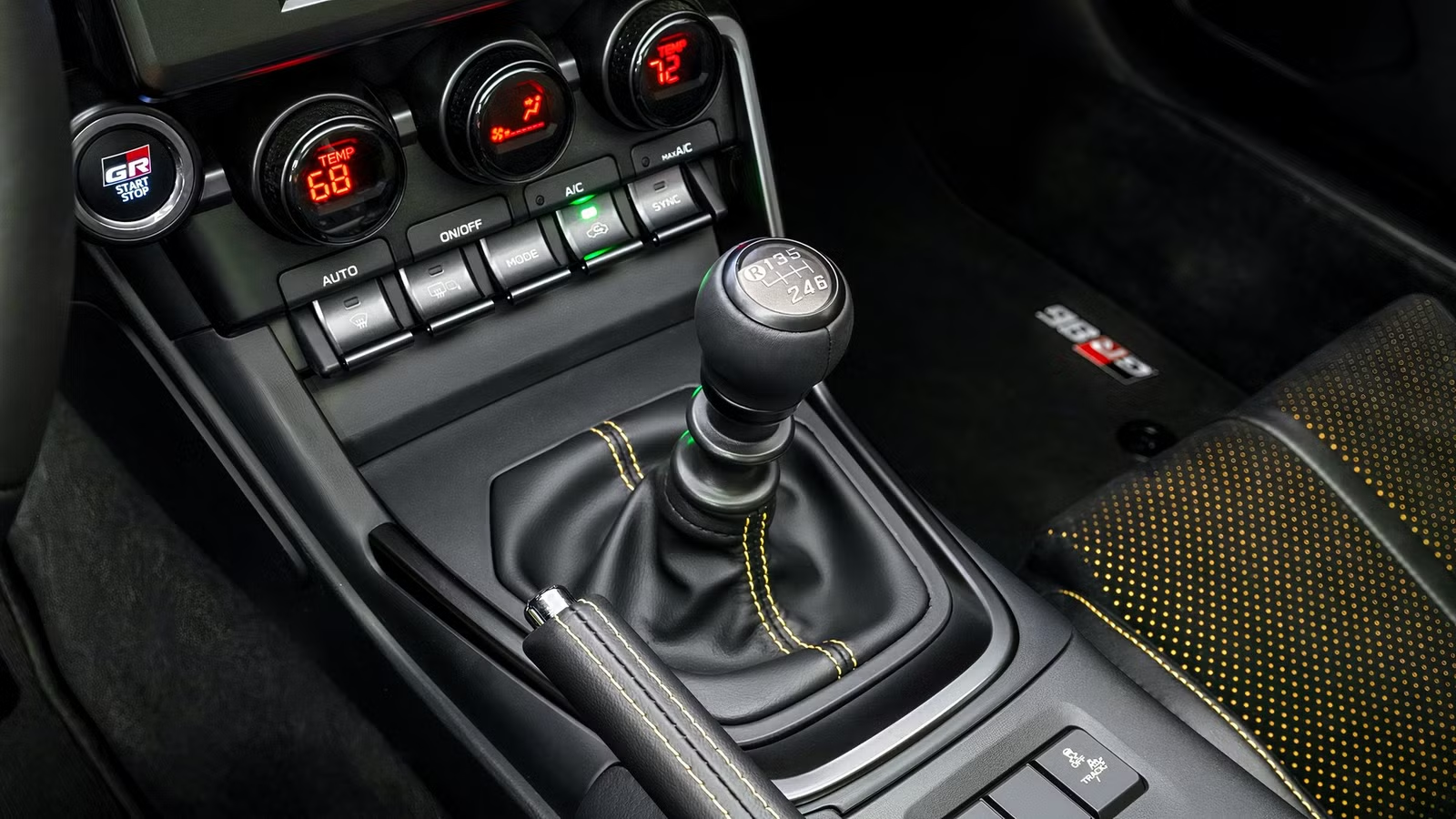
Manual transmissions have become a small part of the new-car market, but some sports cars make a case for three pedals. Two stand out: Toyota and Mazda. They share a recipe, but not much else. Both send naturally aspirated power to the rear wheels through a six-speed manual, yet one is a tiny roadster built around low weight, while the other is a fixed-roof coupe with room for occasional passengers. Choosing between them comes down to what you want from a sports car.
The Manual Sports Car Is Becoming A Choice For A Smaller Crowd

Manual gearboxes are increasingly something buyers seek out rather than expect. Across the broader U.S. market, they account for less than one percent of new-vehicle production, making the continued availability of affordable stick-shift sports cars worth noticing. The Miata and GR86 are unusual because neither treat the manual as an afterthought nor an expensive performance option. Each gives buyers a naturally aspirated engine, rear-wheel drive, and a proper six-speed without moving into exotic-car money. That combination is increasingly difficult to find below the premium sports-car bracket, particularly with naturally aspirated power and rear drive. It is a focused combination.
Younger Drivers Are Losing A Skill That Older Enthusiasts Took For Granted

The shrinking market also reflects a generational shift. An AmericanMuscle survey found that 83 percent of Baby Boomers said they could drive a manual, compared with 39 percent of Gen Z respondents. Fewer arrive knowing how to operate a clutch. The people who still want one are making a deliberate choice. In 2025, around 70 percent of Miata buyers chose the manual, as did 52 percent of GR86 buyers. Subaru’s mechanically related BRZ reached 90 percent. Those numbers show demand remains strong when a car is designed around the experience. Buyers pay for a manual when the car makes a convincing case for one.
The Mazda Miata Is For Drivers Who Want Less Car And More Road


The Miata’s appeal starts with what Mazda leaves out. The 2026 model uses a naturally aspirated 2.0-liter four-cylinder making 181 horsepower and 151 lb-ft of torque. That is modest compared with Toyota’s output, but the roadster weighs about 2,366 pounds in soft-top manual form. There is less mass to move, less car surrounding the driver and no rear seats. It is a simple arrangement overall. That makes the Mazda feel alert without needing high speeds or a wide, empty track. Its appeal is easy to understand before the first corner.
The Miata Rewards The Driver Who Doesn’t Need More Power

The Club trim sharpens that character with Bilstein dampers, a front shock tower brace, an asymmetric limited-slip differential and track-oriented stability control. The short wheelbase, direct responses and open cabin make an ordinary winding road feel like an event, even at sensible speeds. With the roof folded away, the driver gets the engine note and surroundings. Buyers who want a compact weekend car and value steering feel will accept its limits. Its low power is part of the point, not a flaw that needs fixing. That remains Miata’s chief appeal.
The Toyota GR86 Gives Practical Enthusiasts More Muscle

The GR86 uses that formula differently. Its 2.4-liter naturally aspirated flat-four produces 228 horsepower and 184 lb-ft of torque, giving it a noticeable advantage in output and mid-range pull over the Mazda. It is heavier, at around 2,811 pounds in base manual form, but it remains compact and well-sorted. Its fixed roof gives the cabin a more substantial feel, and the rear seats and cargo opening provide useful space. That makes it easier to live beyond a sunny weekend drive. It has a broader job to do as well.
The GR86 Gives You More Room Without Giving Up The Manual

The rear seats are optional space. They can carry a small passenger or extra gear, and the cargo area helps on track days. Toyota’s 2027 updates refine the experience rather than change the car’s character. Smoother throttle calibration and a cleaner fifth-to-fourth downshift help the driver meter power and settle the car into a corner. The 0.5 mm wider shift-interlock chamfer is a small detail, but it supports the same goal: making the manual easier to use smoothly. For someone who takes passengers now and then and visits a circuit, the GR86 is the more accommodating choice.
The Better Buy Depends On Which Compromises You Can Live With
The price difference makes the decision more interesting. For 2026, the Miata Sport starts at $30,730, while the Club is $34,230 before destination. Toyota lists the 2026 GR86 at $31,400 in base trim and $34,000 for the Premium, also before destination. The entry-level Toyota sits close to the Miata Sport, while a Club Miata costs almost as much as a GR86 Premium. Mazda charges for a focused roadster; Toyota gives buyers more power, a roof and extra space. Buyers should compare the equipment they actually want, not just entry prices. That difference matters.
One Is A Roadster Purist’s Toy, The Other Is An Everyday Enthusiast’s Coupe
|
Contenders |
2026 Mazda MX-5 Miata |
2026 Toyota GR86 |
|
Engine Type |
2.0L SKYACTIV-G Inline-4 |
2.4L FA24 Horizontally Opposed Boxer-4 |
|
Displacement |
1,998 cc (2.0 L) |
2,387 cc (2.4 L) |
|
Valvetrain |
DOHC, 16-valve |
DOHC, 16-valve with variable valve timing |
|
Horsepower |
181 hp |
228 hp |
|
Torque |
151 lb-ft |
184 lb-ft |
For a driver who wants an intimate experience and can live with two seats, the Miata Club is the one to buy. Its low mass makes everyday speeds rewarding. If this is your only car, you carry gear, want more torque, or plan track days, the GR86 is the stronger choice. Extra room makes it easier to use. The Subaru BRZ shares the GR86’s basic hardware. Choose the Miata if driving itself is the priority; choose the GR86 if you need your sports car to do more. The GR86 is the better all-around purchase; the Miata is the purer roadster.
Sources: Mazda, Toyota

Related posts




Latest Post


No Comments