
Mazda CX-90: BMW X5 Rival With 340-HP Inline-Six
At some point in life, we just have to accept that SUVs are the mainstay of the automotive industry. SUVs are the most common primary vehicle type in the US, says YouGov, used by 41% of car owners, followed some way back by sedans at 30% and trucks at 12%. But while it is easy to bemoan that SUV you see bumped up on the curb outside the local kindergarten, these types of vehicles are mighty impressive.

Whereas in the ’90s the average sport utility vehicle was little more than a truck with a bit of car-spec luxury thrown at it, these days SUVs can do anything. Lap the ‘Ring like a sports car? No problem. Pick up some plywood from the hardware store? Just pop the seats down. Fill up your TikTok feed? They have you covered. But while SUVs are everywhere, they aren’t strictly all the same.
Not All SUVs Are The Same
Indeed. There is a significant difference between that SUV-like hatchback that putters around with a slightly higher ride height and a bit of plastic cladding on the side. Manufacturers today know that it is not mere chance that makes their top-end SUVs handle like a track-day sports car from a few years ago. There’s a lot of thought that goes into that. Take something like a BMW X5, one of the most accomplished SUVs out there, with many of the traits of one of Bavaria’s finest coupes or sedans when it comes to the twisty stuff. That’s because Bavarian Motor Works didn’t just borrow the chassis of a pickup truck, add five doors, and call it a day.
The BMW X5 Shows How Premium SUVs Are Done

At the very core of BMW is the straight-six engine, and the company wasn’t going to let the X5 miss out. The straight sixes in X5s are mounted longitudinally for better packaging, as opposed to a more transverse-mounted engine suited to front-wheel-drive (or an added AWD system). The set-up in cars like the X5 (which are mostly AWD with a few RWD versions) pushes the front axle forward and gives the X5 its elegant rear-wheel-drive-biased proportions, helping with handling balance along the way. It is the kind of north-south positioning you would find in a BMW M3, for example.
On top of this, the X5 M, for example, has a front Adaptive M suspension with a double-wishbone axle in lightweight aluminum construction, with a rear five-link axle in lightweight aluminum. The emphasis is on making the X5 as sporting as possible, while giving it off-road chops too. But there is another manufacturer that has decided it wants in on this exclusive club of premium SUVs.
Mazda Broke The Mold With Its New CX-90

For anyone who hadn’t noticed, Mazda has been quietly going more upmarket in recent years. Gone are the days of Mazda making unremarkable hatchbacks and sedans. Today, a Mazda parked on your street is sure to turn heads. A lot of this comes down to the Kodo design philosophy that launched in 2010 and gave the Japanese firm’s cars a distinctive minimalist-yet-futuristic look.
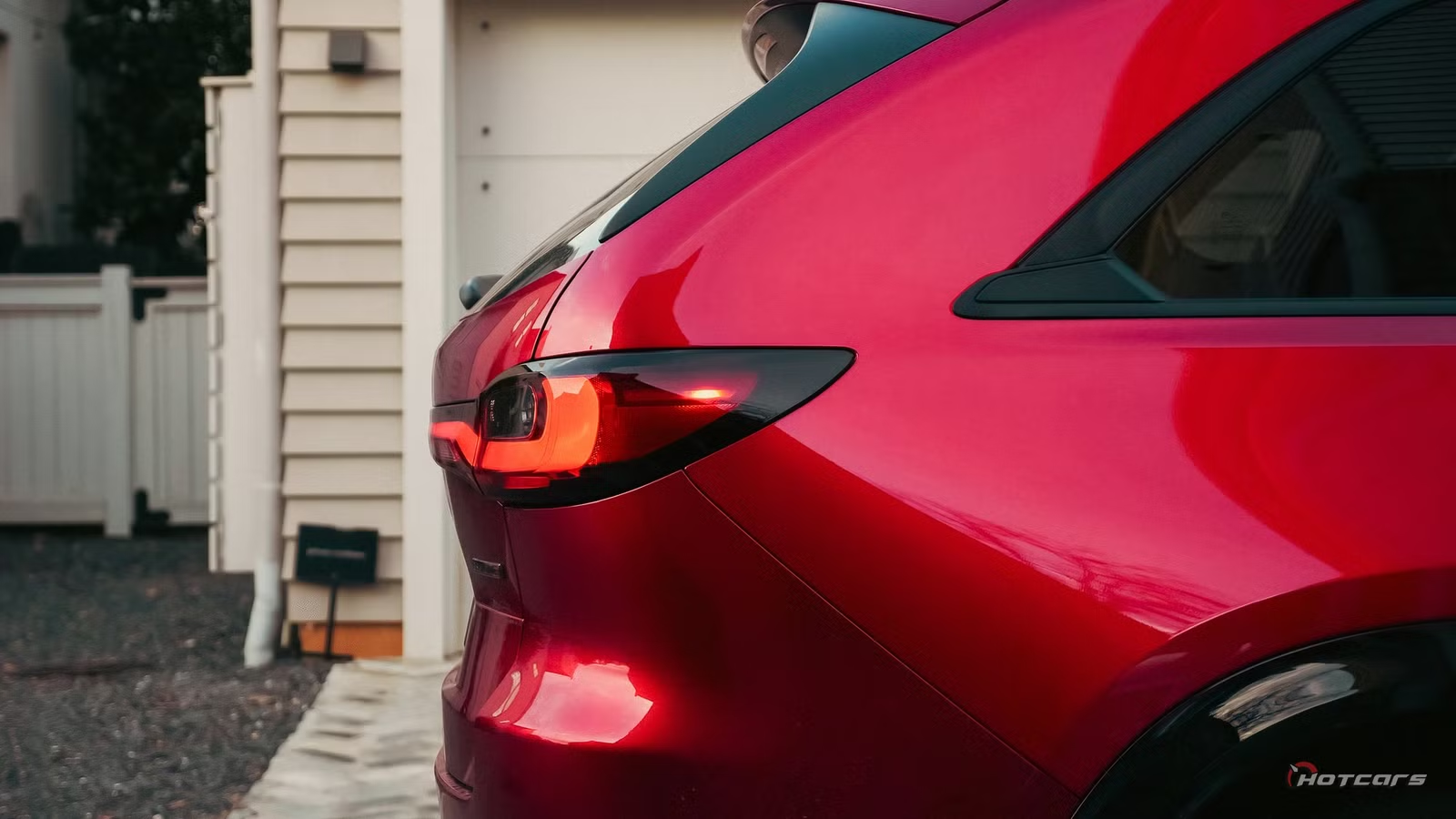
The brand’s SUVs also began to reflect the bold, statuesque elegance of some of BMW’s models—eye-catching without being ostentatious. When the CX-90 was revealed in 2024, Mazda took a significant step further into the premium segment. Mazda is no stranger to thinking outside the box and taking risks, and with the CX-90 it took the unusual step of building an all-new Large Platform that features a front-engine, rear-wheel-bias longitudinal layout. At a time when no one knew which way cars were going to go, it was certainly a bold move.
The CX-90 Is Mazda’s Take On The X5

Mazda didn’t stop there. The CX-90 also launched with an all-new e-Skyactiv G 3.3-liter inline-six turbo engine, which happens to produce the highest horsepower and torque output from any mass-production gasoline engine ever developed by the company. This new mill pumps out 340 hp and 369 lb-ft of torque, and is also equipped with M-Hybrid Boost (a 48-volt mild-hybrid system). The electric motor is placed between the engine and transmission. Just when it seemed EVs were about to dominate the market, Mazda introduced an impressive new SUV with much in common with vehicles such as the X5.
The CX-90’s Inline Six Comes In Two Flavors

The base non-S 3.3-liter turbocharged inline-six engine pushes out 280 hp and 332 lb-ft of torque, but the Turbo S model has a huge hike to 340 hp and 369 lb-ft. There is a 2.5-liter four-cylinder plug-in hybrid version, making 323 hp and 369 lb-ft. All powertrains come with an eight-speed automatic transmission and standard all-wheel drive. This SUV won’t be troubling Lamborghinis at a drag strip, but it is genuinely quick. Expect the S Premium Plus to reach 60 mph in 6.3 seconds, with the Premium Plus getting there slightly slower in 6.9 seconds. The S still manages to achieve an EPA-estimated 23 mpg city, 28 mpg highway, and 25 mpg combined.
The CX-90 Is Designed To Handle Like A German

With seating for up to eight passengers, the CX-90 couldn’t seem further from the lightweight Miata sports car—or so you might think. In fact, the CX-90 comes with Kinematic Posture Control, which first debuted on the MX-5 Miata. This software feature suppresses body lift on tight corners, improving grip in the process. The CX-90 also has double-wishbone front suspension, multilink rear suspension, and standard i-Activ AWD. Mazda says that the double-wishbone suspension keeps the CX-90’s wide tires firmly planted on the asphalt during fast cornering, adding that the “longitudinal powertrain layout is akin to Mazda’s illustrious sports car heritage.”
The CX-90 Seriously Undercuts Established Premium SUVs

The CX-90 saves its best feature for last. The six-cylinder turbocharged premium SUV comes in at a price that is very affordable in this segment. The CX-90 with the inline six starts at $39,300, going up to around $59,100 depending on the trim and options. That’s very good value these days for such a sporting SUV. Even the base model gets three-row seating available for up to eight passengers and leatherette-trimmed seats.
The top-end Premium Plus trim features Nappa leather-trimmed seats, second-row captain’s chairs with a center console, ventilated front and second-row seats, and ambient front and rear footwell lighting. An X5 40 xDrive, with a 3.0-liter BMW M TwinPower Turbo inline 6-cylinder and xDrive all-wheel drive, will be a lot quicker (with 396 hp, it hits 60 mph in 5.1 seconds) but starts from $72,100. Of course, it is hard to fault the prestige and reputation that come with BMW’s long-running SUV, but on paper the CX-90 makes for a compelling alternative. With the future of straight-six engines uncertain, there is good reason to appreciate all of them while we can.

Related posts




Latest Post


No Comments