
6 Quad-Cam V8 Classics Revered by Engine Enthusiasts
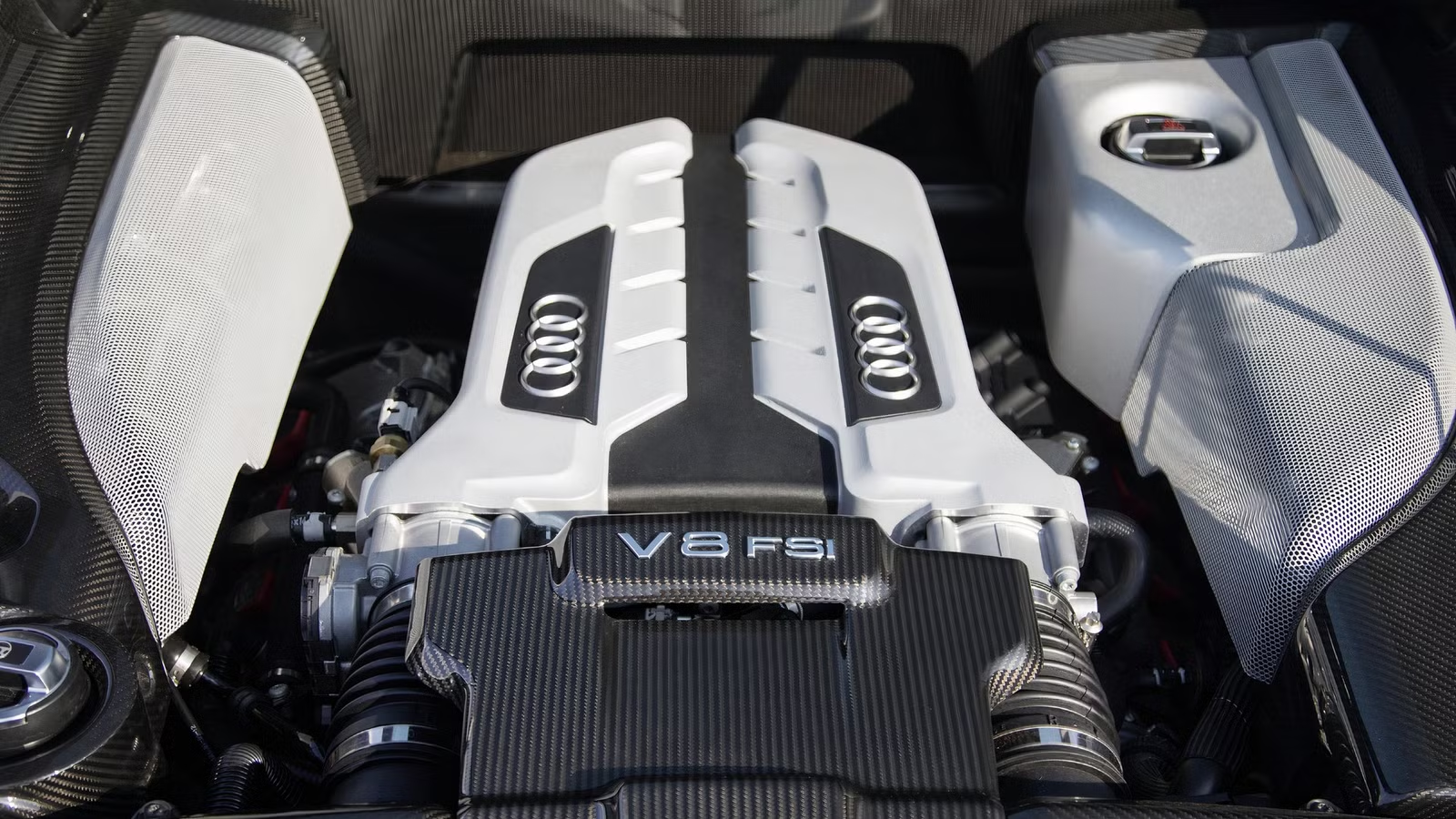
The advent of quad-cam V8s unlocked a new chapter of performance cars that could rev freely and boast massive power figures without excessively burning fuel or losing refinement. As automakers began to chase higher output and greater engineering ambition, these engines became the centerpiece of some of the most iconic machines of their era. While they rarely matched the simple nature of their pushrod counterparts, they compensated for the added complexity with sharp responsiveness, exceptional high-rpm breathing, and remarkably smooth power delivery. The result was a new generation of V8-powered icons that are still quietly revered by enthusiasts who value true engineering brilliance under the hood.
6
Lexus 1UZ-FE
Power Output: 250 HP
 65 autotech Car |
Power |
Torque |
 54 autotech 0-60 MPH |
|
Lexus LS400 |
250 HP |
260 LB-FT |
7.9 seconds |
|
Lexus SC400 |
250 HP |
260 LB-FT |
6.9 seconds |
The 1UZ-FE set the foundation for Lexus’s bulletproof reputation, and it is a direct example of the automaker’s early engineering ambition. Found under the hood of the brand’s debut model, the LS400 sedan, this 4.0-liter naturally aspirated V8 all but dethroned Mercedes-Benz as the king of over-engineering. It entered the scene with an all-aluminum construction, dual overhead camshafts, forged internals in early versions, and meticulous quality checks at the factory. The 1UZ-FE was also placed under the hood of the two-door SC400, and it continued to impress its German counterparts with its smooth idle, whisper-quiet operation, and respectable output well into the 200 range for both horsepower and torque. While Lexus has gradually added forced induction and hybrid systems to its newer engines, the 1UZ-FE stands as proof of Lexus’s early promise to challenge Europe’s established luxury automakers with a machine that could handle seven digits on its odometer.
10 Most Reliable Sedans Of All Time
Which sedans have been at the top of reliability charts in the past? Are these some of the most popular cars on the road today?
5
Mercedes-Benz M119
Power Output: 322 HP

|
Car |
Power |
Torque |
0-60 MPH |
|
Mercedes 500E (W124) |
322 HP |
354 LB-FT |
5.8 seconds |
|
Mercedes SL500 (R129) |
322 HP |
332 LB-FT |
6.1 seconds |
The 5.0-liter M119 V8 was built during a time when Mercedes spared no expense in making its vehicles indestructible. The engine featured a robust fully aluminum construction, variable intake cam timing, and dual overhead camshafts at a time when many other luxury V8s were still relying on older single-cam designs. The M119 can be found under the hood of the legendary W124 500E sleeper sedan and the R129 SL500 roadster, and it produces well over 300 horsepower in both applications. While output was potent for its time, Mercedes engineers intentionally detuned the M119 to keep its components under-stressed. Behind the wheel, the engine’s highly overbuilt nature allowed for remarkably smooth power delivery and plentiful mid-range torque. Today, the M119 still holds its spot as one of the most durable Mercedes V8s you can find.
4
Aston Martin AM05
Power Output: 385 HP

|
Car |
Power |
Torque |
0-60 MPH |
|
Aston Martin V8 Vantage (VH) |
385 HP |
302 LB-FT |
4.9 seconds |
There is nothing like the unmistakable growl of a British V8. The 4.3-liter, 32-valve V8 found in the early VH-platform V8 Vantage represented the Aston Martin’s turning point into the modern era. It was derived from Jaguar’s AJ-V8 architecture, but it was heavily reworked by Aston Martin with bespoke internals, tweaked intake and exhaust tuning, and revised throttle and ECU tuning to retain the dignified, linear character of an Aston. The AM05 V8 delivered output smoothly before reaching peak power at 7,000 rpm, and its naturally aspirated exhaust note is still hard to properly replicate. While later versions of the V8 Vantage switched to a new 4.7-liter architecture with higher output, the earlier 4.3-liter models are still coveted for their more purist-oriented character and highly resonant sound.
10 Exclusive Mercedes Cars That Are Worth A Fortune Today
Old Mercedes performance cars are some of the biggest depreciated bargains on the used market today. These ten have a different story to tell.
3
BMW S62
Power Output: 400 HP

|
Car |
Power |
Torque |
0-60 MPH |
|
BMW M5 (E39) |
400 HP |
369 LB-FT |
4.7 seconds |
The BMW M5 super sedan ended its lineage of inline-sixes with the arrival of the E39, which caught up to its more potent, higher-displacement competition with a 4.9-liter, naturally-aspirated V8 engine. The result was a dual-natured BMW that delivered the brand’s signature balanced handling alongside explosive power on demand. The E39 M5 produced a blistering 400 horsepower and 369 lb-ft of torque, and outpaced its contemporaries from Mercedes and Audi when sprinting from 0-60 mph. The S62 is not necessarily remembered for its remarkable output, but it is far more cherished for its association with a super sedan that could juggle straight-line speed and precise cornering all in one package.
2
Audi BYH
Power Output: 420 HP

|
Car |
Power |
Torque |
0-60 MPH |
|
Audi R8 (Type 42) |
420 HP |
317 LB-FT |
4.3 seconds |
The Audi R8 is widely renowned for shifting the brand’s performance identity from turbocharged rally legends to naturally-aspirated, high-displacement exotics. While the Lamborghini-derived V10 models mostly dominate the spotlight due to their theatrical character, the 4.2-liter BYH powerplant that graced the engine bays of the R8’s V8 lineup has still earned plenty of enthusiast cred. Derived from Audi’s FSI V8 lineup but heavily updated to accommodate a mid-engined layout, this engine featured a 32-valve architecture with direct fuel injection, dry-sump lubrication, and a high-revving personality thanks to its short-stroke setup. The BYH delivered 420 hp and 317 lb-ft of torque in the R8, with a linear power band climbing directly toward its screaming 8,200-rpm redline. Unlike V10 models, the BYH-powered R8 proudly displayed its Audi roots through its metallic exhaust note.
8 Factory Sleepers That Came With Engines From Supercars
These carmakers shoehorned their very powerful supercar engines into average family haulers.
1
Ferrari F136
Power Output: 483 HP

|
Car |
Power |
Torque |
0-60 MPH |
|
Ferrari F430 |
483 HP |
343 LB-FT |
3.6 seconds |
For many Ferrari aficionados, the first iteration of the F136 4.3-liter V8 represents the peak of the brand’s naturally-aspirated era. Found in the mid-engined F430, this engine was developed in tandem with Maserati, and it featured a flat-plane crankshaft, dry-sump lubrication, and continuously variable valve timing for both the intake and exhaust camshafts. In the F430 specifically, this engine produced 483 hp and 343 lb-ft of torque, and it delivered the motorsport-inspired wail that contributes to this Ferrari’s cult status. With the 488 GTB eventually introducing turbochargers to Ferrari’s mid-engined lineup two generations later, the F430’s F136 now represents a bygone era of untamed sound and naturally aspirated purity in the modern supercar landscape.
Sources: Aston Martin, Audi, BMW, Ferrari, Lexus, Mercedes

Related posts
Latest Post


No Comments