
Koenigsegg’s Gemera Proves A Four-Seat Hypercar Isn’t Impossible
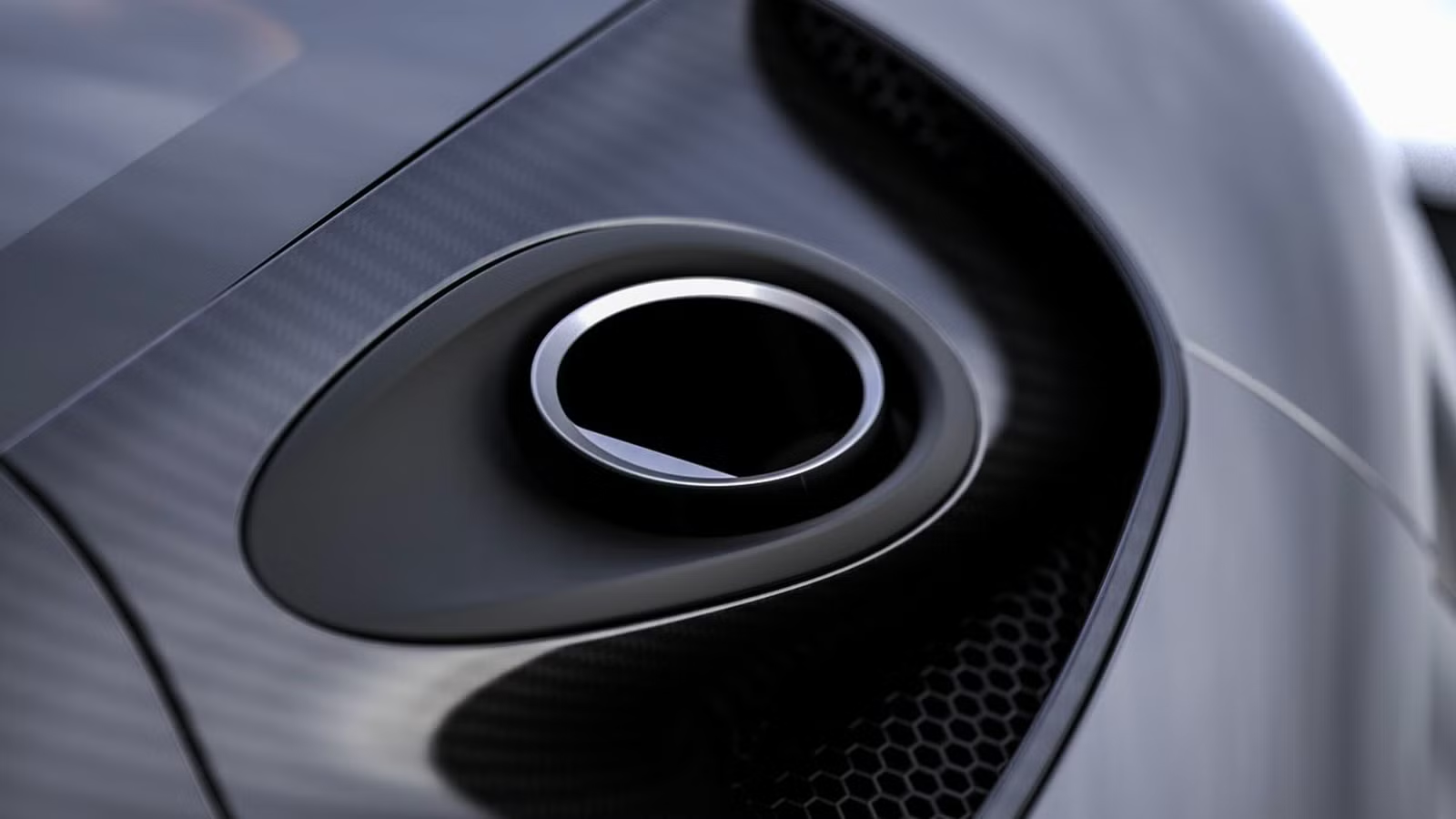
The Koenigsegg Gemera has crossed the line from engineering provocation to delivered reality. The first customer examples are now rolling off the Ängelholm production line and into private hands — marking the moment a 2,300-horsepower, four-seat grand tourer stops being a concept and starts being someone’s car.

For a brand that has spent two decades rewriting the rulebook on what a production hypercar can do, the Gemera may be the most audacious chapter yet. Not because of the power figure alone — though 2,300 hp is a number that demands a moment of silence — but because Koenigsegg chose to put four actual seats around it. That decision changes everything about how the hypercar was engineered, and it’s the reason the Gemera sits in a category essentially by itself.
2,300 Horsepower, Four Seats, and a 1.9-Second 0-62
The Gemera’s drivetrain pairs a twin-turbocharged three-cylinder internal combustion engine — Koenigsegg calls it the Tiny Friendly Giant — with three electric motors, one on the crankshaft and one at each rear wheel. Combined system output lands at 2,300 horsepower and 2,581 lb-ft of torque. Those aren’t peak figures massaged for a press release; they’re the numbers the car is built around.

The performance consequence of that output is a claimed 0–62 mph time of 1.9 seconds, which the Gemera demonstrated publicly during testing runs at the Nürburgring earlier this year, and even broke records at Laguna Seca. Top speed is rated at 248 mph. Context: the Bugatti Chiron Super Sport 300+ required a purpose-built straight and a closed course to crack 300 mph with two seats and no back-seat compromise. The Gemera is doing 248 with room for three passengers and their luggage.
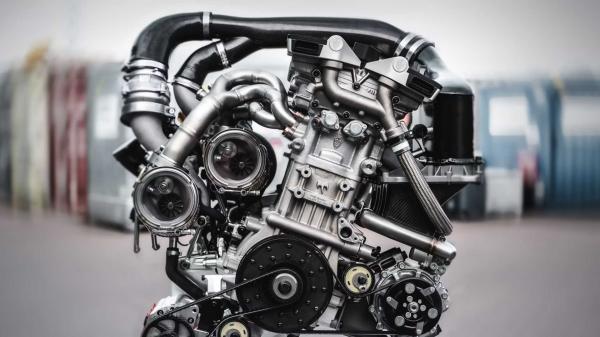
The Highest Rated Horsepower Ever In A Three-Cylinder Engine
The most powerful three-cylinder road-legal engine is just 54 hp shy of toppling the most powerful six-cylinder engine of 2024. Let that sink in.
Why Four Seats — And What That Decision Cost Koenigsegg Engineeringly

Koenigsegg Gemera Seats
The four-seat layout wasn’t a marketing stunt. Christian von Koenigsegg has been public about the rationale: a hypercar you can share with your family is a hypercar you can actually use. The Gemera was designed from the outset as a grand tourer — something capable of crossing a continent in comfort, not just lapping a circuit in anger.
That choice created genuine engineering constraints. Packaging four occupants in a mid-engine hypercar forces compromises in weight distribution, chassis geometry, and interior volume that a two-seat layout simply doesn’t face. Koenigsegg’s answer was to lean into the hybrid architecture — the electric motors at the rear wheels allow torque vectoring that compensates for the longer wheelbase, while the battery pack placement was tuned to keep the center of gravity as low and central as possible. The rear seats are functional, not theatrical: adult passengers fit, and there’s actual luggage space behind them.
From Nürburgring Testing to Customer Driveways

Before the first Gemera reached a customer, Koenigsegg put the car through an extensive validation program. Spy shots and confirmed sightings placed test mules at the Nürburgring as recently as May 2026 — a meaningful choice of venue, since the Green Hell’s combination of high-speed sections, technical corners, and surface variation is one of the most complete durability tests available to a manufacturer outside of a dedicated proving ground.
Autoblog confirmed the first customer car rolling off the assembly line on June 27, with broader delivery coverage following within 48 hours. Production of the Gemera is limited — Koenigsegg announced 300 units when the car debuted — and the order book filled quickly after the 2020 Geneva Motor Show reveal. The buyers now taking delivery have waited roughly six years for the car to move from concept to reality.
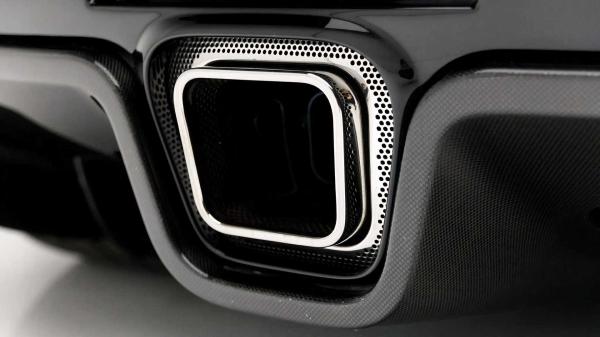
The First Production Car To Break 1,000 Horsepower
The 1,000 horsepower barrier finally fell in 2005.
What the Gemera Means for the Hypercar Tier

The hypercar segment has always been defined by what it refuses to compromise on. For most of its history, that meant sacrificing practicality entirely — two seats, minimal luggage space, a car that demands everything from its driver and gives nothing back in daily usability. The Gemera argues the opposite: that the real frontier isn’t raw power or a lower lap time, but engineering sophisticated enough to deliver both extremes at once.
At 2,300 hp, the Gemera outguns the Bugatti Chiron‘s 1,578 hp and the Rimac Nevera’s 1,914 hp. It does so while seating four. That combination has never existed in a production car before, and it sets a benchmark that will be genuinely difficult for any competitor to answer — not because the power figure is unreachable, but because matching it with a usable rear seat and grand-tourer intent requires an entirely different kind of engineering ambition. Gearheads have been waiting for this one. It was worth it.
Source: Koenigsegg, Autoblog

Related posts




Latest Post


No Comments