
Hyundai’s Twin-Turbo V6 Is Being Quietly Discontinued—Here’s Every Car That Still Has It
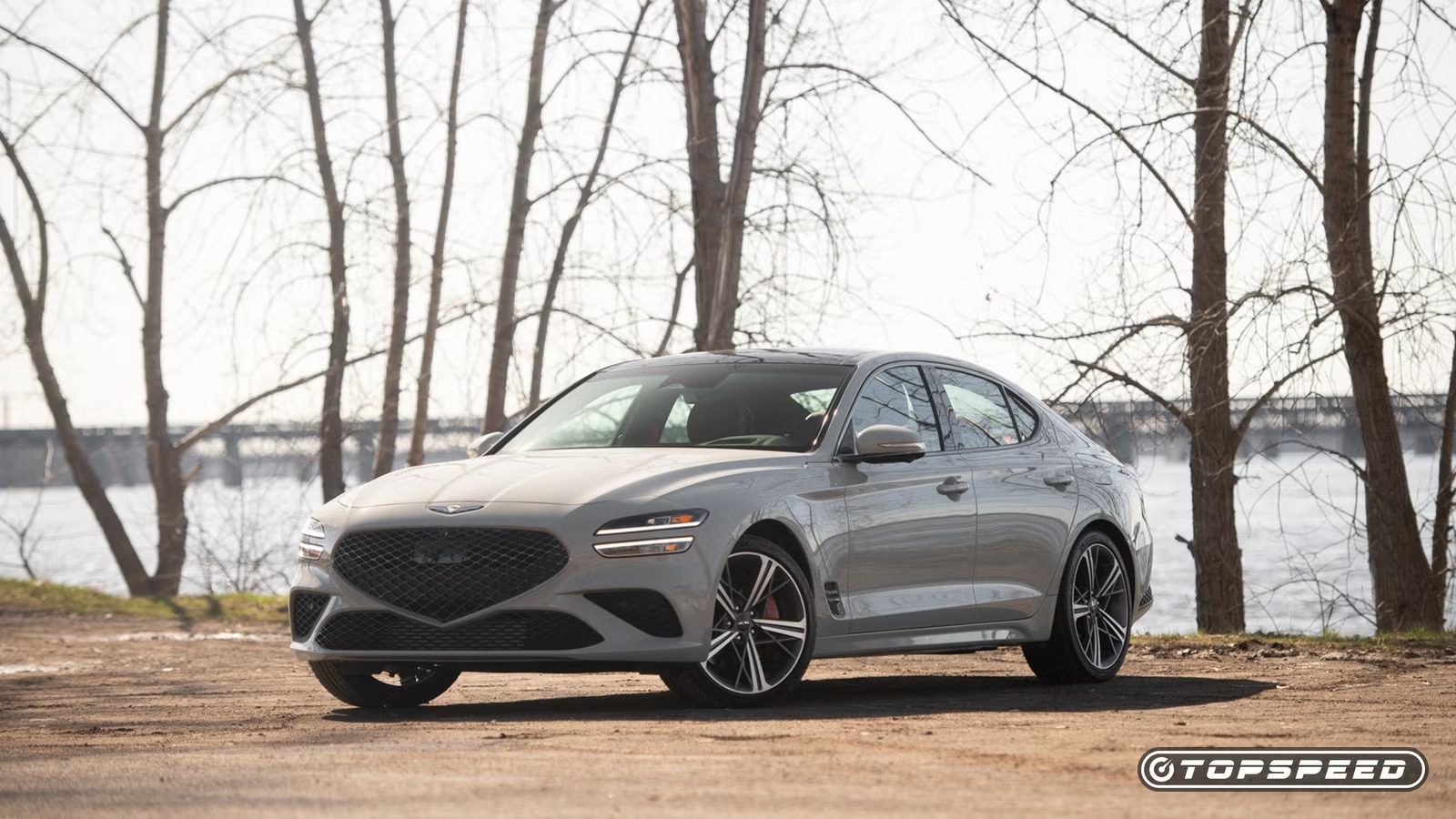
One of the most characterful engines in the modern performance segment is heading toward the exit. Hyundai’s 3.3-liter twin-turbocharged V6—the engine that made the Kia Stinger a genuine sport sedan contender and turned Genesis into a credible performance-luxury nameplate—is being phased out as the broader industry accelerates its shift toward turbocharged four-cylinders and electrification. For buyers who care about the feel of a responsive six-cylinder, the window is closing.

The Carbuzz report framing the 3.3T as a future classic landed this week, and it’s hard to argue with the premise. Turbocharged V6s are disappearing across the board—BMW has trimmed its six-cylinder lineup, Nissan’s VR30 is increasingly rare, and now Hyundai’s own performance flagship engine is on borrowed time. What makes this one worth paying attention to is where it still lives: a handful of current models that you can still buy new or find lightly used at reasonable prices.
Which Models Still Carry The 3.3T Right Now
The 3.3T twin-turbo V6 produces 365 horsepower and 376 lb-ft of torque in its most common tune—figures that still hold up against anything in the segment. As of mid-2026, the engine remains available in the Genesis G80 and GV80 in select trim configurations, and in limited remaining inventory of the Kia Stinger, which ended production in late 2023 but still surfaces at dealers and on used lots. The Genesis G70 carried the 3.3T through its run but has since moved away from it in current configurations. The GV70 offered the engine in performance trim as well.

The practical upshot: if you want a new vehicle with this engine, Genesis is your primary path. Used Stingers with the 3.3T are increasingly the better value play—a well-specced GT2 trim can be found in the $35,000–$42,000 range depending on mileage and market, representing genuine performance per dollar against newer turbocharged alternatives.
Why The 3.3T Is Worth Hunting Before It’s Gone

The case for this engine isn’t purely about horsepower numbers. In a market where turbocharged four-cylinders dominate—and where even premium brands are downsizing—a twin-turbo V6 delivers a different kind of performance. The power delivery is broader, the sound is richer, and the engine doesn’t need to work as hard to reach its peak output. Throttle response from a six with two smaller turbos feels more linear than a single-turbo four straining for the same numbers.
The 3.3T also has a track record. In the Stinger GT, it ran 0–60 mph in the low-four-second range and gave the car a legitimate claim to the sport sedan class against the BMW 440i and Audi S5 Sportback. In the Genesis G80 Sport, it provided a credibility anchor for a brand still building its performance reputation. Engines with that kind of résumé, in cars priced well below European rivals, don’t come along often—and they tend to be undervalued right up until they’re gone.
No Official End Date, But The Direction Is Clear

Hyundai and Genesis have not issued a formal statement pinning a specific discontinuation date to the 3.3T. What’s clear from the brand’s broader trajectory is that electrification and hybridization are the priority—the Hyundai Metaplant in Savannah is ramping EV production, and Genesis has been explicit about its long-term electric direction. A twin-turbo V6 doesn’t fit neatly into that roadmap.
The practical signal is already visible in the lineup: the Stinger is gone, the G70 no longer leads with the six, and Genesis’s next generation of models is being designed around electrified platforms. The 3.3T isn’t being killed with a press release—it’s being quietly retired through attrition, which is exactly how good engines tend to disappear. By the time enthusiasts notice it’s gone, the used market will have already started pricing it accordingly.
For buyers on the fence, the math is straightforward: a lightly used Stinger GT2 or a current Genesis G80 Sport with the 3.3T offers a kind of driving experience that the next generation of these vehicles won’t replicate. Turbocharged sixes are becoming a niche, and this one—refined, powerful, and still attainable—is worth finding before the market catches up to what it is.
Sources: Carbuzz, TTAC

Related posts



Latest Post


No Comments