
Honda Built A 140-MPH Inline-Four Without Any Fancy Modern Technology
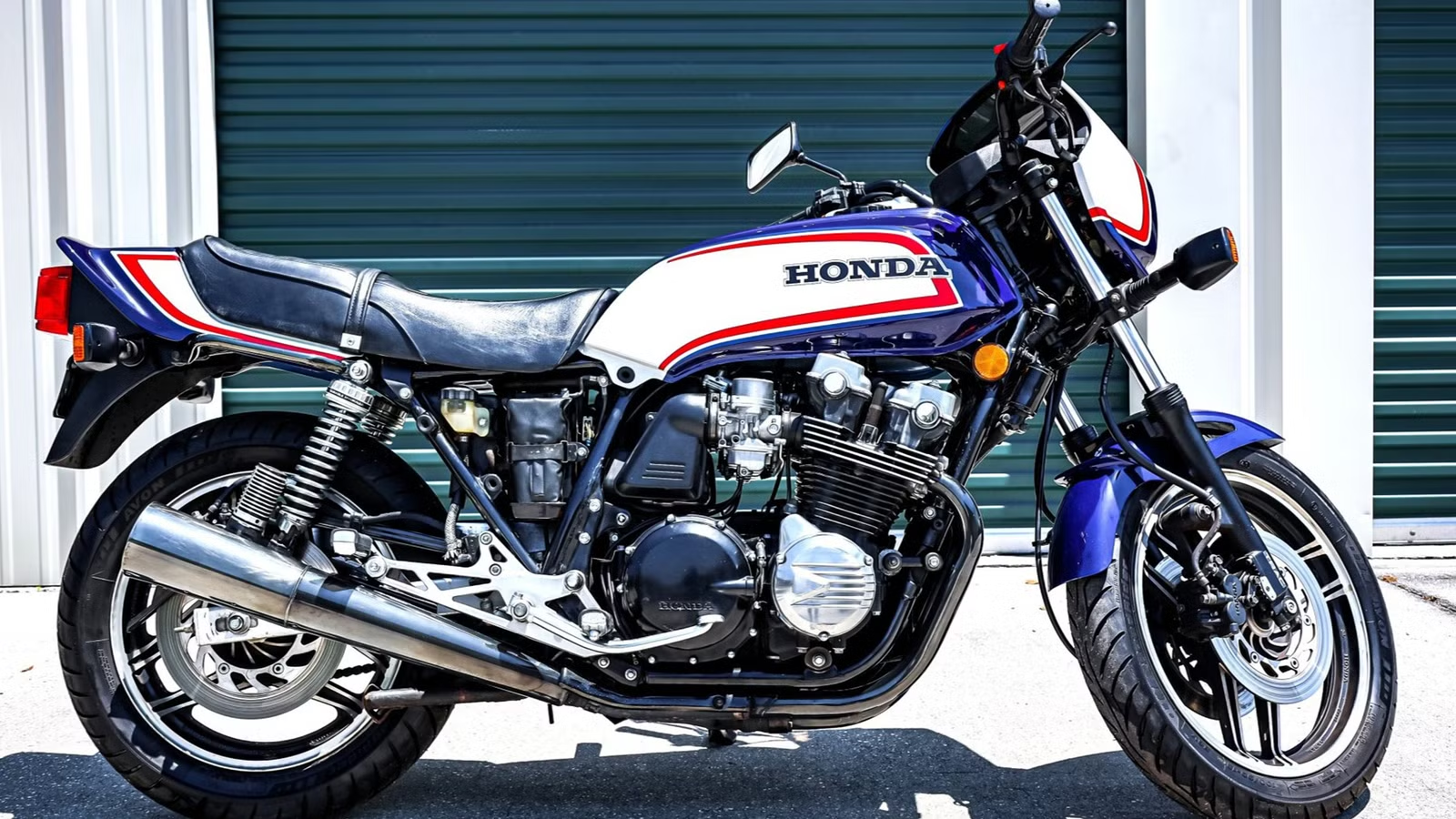
By the early 1980s, Honda had helped make the air-cooled inline-four a familiar sight. Familiarity didn’t make the competition any easier. Buyers could compare increasingly powerful Japanese machines, while liquid cooling and new engine layouts promised another round of improvements. There was still something appealing about getting serious speed from a motorcycle whose engine remained air-cooled. Honda was about to demonstrate just how much performance that approach could deliver.
Honda’s Air-Cooled Fours Had More Performance Left To Give

Honda’s sport fours had already changed considerably since the original CB750. The 1979 CB750F brought double overhead camshafts and 16 valves to the formula, drawing on the company’s endurance-racing work. Those changes mattered more than a fresh paint scheme or another exhaust design. The engine family now offered Honda a foundation for larger, stronger sport motorcycles.
Freddie Spencer and Mike Baldwin raced heavily modified versions of Honda’s CB fours, giving buyers a link between the bikes in dealerships and those on the track. The racing engines went well beyond showroom specifications. Honda’s own history credits its later CB900F-based Superbikes with 145 horsepower. The street bikes had more modest ambitions, but their development followed a similar path: larger engines backed by stronger chassis and better suspension.
The CB900F Provided The Foundation

Honda gave the CB900F a larger version of the CB750F’s twin-cam four, along with bigger valves and carburetors. The extra displacement came with only a 22.5-pound weight increase, according to Honda’s history of the model. Larger-diameter frame tubing and reinforcing gussets strengthened the chassis. A beefier fork and rear shocks with adjustable damping and external reservoirs rounded out the upgrade.

It also set the stage for new design language for Honda. The tank was made wider, and a new tail section behind the seat was introduced. Though updated, the overall design remained very familiar, and buyers wouldn’t need to adjust to an entirely new riding position or get acquainted with a radically different-looking motorcycle. The majority of the important changes were made to the engine and the equipment supporting it.
The 1983 Honda CB1100F Turned Familiar Hardware Into A Faster Superbike

The next-generation CB1100F arrived with the engine enlarged to 1,062cc, giving Honda an even bigger sport four for American showrooms. It retained the CB900F’s general appearance, but added a small fairing rather than enclosing the engine. The layout remained familiar with twin rear shocks and a conventional steel frame.
Honda included an anti-dive front suspension system, adjustable handlebars, and a box-section swingarm. Its historical timeline puts the price increase over the 1982 CB900F at just $200. That helped make the upgrade interesting beyond the horsepower claim. A buyer considering the older formula could get its more developed successor without a huge jump in the original purchase price.
Its 1,062cc Inline-Four Claimed 108 Horsepower

Larger cylinders were mostly responsible for the increase in output, but Honda also revised the camshaft profile, allowing the valves to open farther and stay open longer. Compression was also raised from the anemic 8.8:1 to 9.7:1. Larger carburetors fed the engine, while a bigger oil cooler helped manage some of the heat. Air cooling remained the primary cooling method, supported by revisions suited to the increased output.
Claimed power rose to 108 horsepower, compared with the CB900F’s 89. Honda also strengthened transmission components and fitted stronger clutch springs. Those details make the headline’s “old-tech” description worth qualifying. The layout was established, but a twin-cam, 16-valve engine with revised breathing was hardly an exercise in leaving everything alone.
Cycle World Clocked The CB1100F At 141 MPH

In its January 1983 test, Cycle World measured 141 mph at the end of the half-mile. Looking back in 2012, the magazine identified the CB1100F as the first motorcycle it had clocked above 140 mph. That made it the fastest production motorcycle Cycle World had tested at the time, though the result wasn’t an official land-speed record.
Cycle World also listed a theoretical 144 mph based on the Honda’s gearing. Its actual test figure came at the end of a half-mile run, where the CB1100F reached 141 mph. The magazine hadn’t established whether a longer run would produce a higher speed. Even within that distance, however, the Honda had gone faster than any production motorcycle it had previously tested.
An 11.13-Second Quarter-Mile Backed Up The Top Speed

The Honda’s best quarter-mile pass took 11.13 seconds at 120.48 mph. Cycle World also reported that the CB900F’s tendency to jump out of gear was absent. More power was useful only if the transmission stayed engaged. The result gave the larger bike an acceleration figure to accompany its half-mile speed.
The test wasn’t free of complaints, however, because the clutch began grabbing severely after five dragstrip passes. Stronger springs hadn’t eliminated that weakness. A quick elapsed time and repeated hard launches ask different things of a motorcycle. Including both findings gives a more useful picture than treating the quickest run as proof that every component was equally accomplished.
The CB1100F Gave Honda’s Traditional Superbike Formula A Memorable Send-Off

Honda’s next direction was already visible in the Interceptor, offered to American buyers for 1983. Its liquid-cooled V-four, perimeter frame, and single rear shock presented a different route to sporting performance. The CB1100F therefore arrived at an interesting moment. Honda was refining one approach while putting another into showrooms alongside it.
The CB1100F gave buyers 108 claimed horsepower while retaining carburetors, air cooling, and twin rear shocks. Honda had enlarged the engine and revised the chassis without abandoning the familiar CB layout. The resulting motorcycle reached 141 mph in Cycle World’s testing, even as the liquid-cooled Interceptor arrived in showrooms. For 1983, Honda buyers could choose between a new V-four and the fastest inline-four the magazine had tested.
Source: Honda, Cycle World, Motorcyclist

Related posts
Latest Post


No Comments