
The Touring Bike Most BMW And Harley Riders Completely Overlook
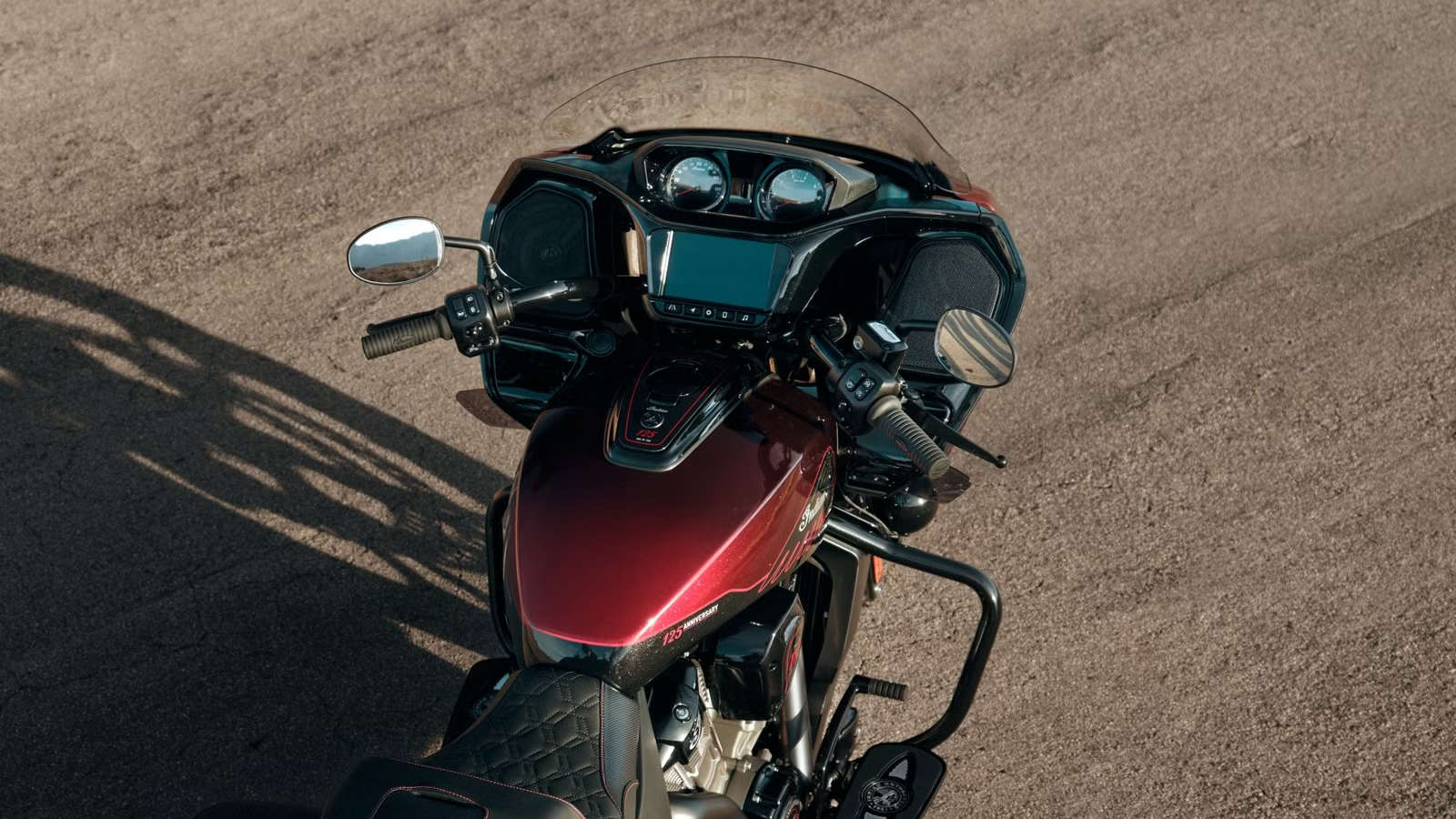
A big touring motorcycle is rarely the sensible choice, and that’s exactly the point. They’re built to eat up long distances, carry a few days’ worth of luggage, and keep you comfortable for hours on the highway. Harley-Davidson has spent decades refining that formula. BMW has approached it from a different direction, adding more sophisticated engines, chassis tech and electronics to the same basic idea. But each approach comes with its own compromises. And what if you don’t want to choose between the two?

Some riders want the presence and character of an American tourer without giving up modern performance and electronics. But what if you could have both? There’s a motorcycle that does exactly that. Its maker has decades of experience building big American motorcycles, and it keeps the relaxed riding position, generous proportions, and V-twin character that make these bikes so appealing, while adding a more modern engine and electronics package.
BMW And Harley-Davidson Build Great Tourers — But Both Have The Same Blind Spot
BMW and Harley-Davidson approach the big touring bike in very different ways, but both make machines that are extremely capable on a long highway ride. BMW’s R 18 Transcontinental is one of the most distinctive bikes in this class. Its huge 1,802cc boxer twin engine, relaxed riding position, and enormous proportions give it plenty of character. At the same time, the fairing, bags, and touring gear make it more than capable of putting up serious miles.

At almost 955 pounds ready to ride, there is nothing subtle about it. And then there is Harley-Davidson. The company’s Grand American Touring bikes remain some of the most familiar choices. The Road Glide and Street Glide, especially, pair large V-twins with big fairings, bags, and plenty of modern electronics.
But You Have To Deal With Some Catches

There’s nothing wrong with either one, but honestly, neither is going to be for everyone. BMW’s R 18 Transcontinental sticks with the characterful air/oil-cooled boxer engine, while Harley-Davidson’s latest touring bikes use a more refined version of the Milwaukee-Eight 117. But even Harley’s setup isn’t fully liquid-cooled, with the engine still relying partly on air and oil for cooling. This means more heat on long rides, more wear over time, and less power overall. So is there a big American tourer that solves all of this without sacrificing character?
The Indian Challenger PowerPlus 112 Adds Liquid Cooling And Real Performance To The American Tourer Formula

The Indian Challenger takes a slightly different approach. It still has that big American touring-bike feel, but it also puts more focus on performance. You still get a large fairing, plenty of luggage space, a relaxed riding position and the road presence you expect from a bike like this. At the same time, Indian has given it a fully liquid-cooled engine, a strong chassis, good brakes and modern electronics.
So yeah, it’s great at covering long distances, but that’s not all the Challenger is about. It’s also the kind of bike that feels quick, stays planted, and is actually fun when you push it a bit. That mix of comfort and performance gives the Challenger a different feel from the more traditional touring style you get with the BMW and Harley-Davidson.
Why BMW And Harley-Davidson Riders Should Consider The Challenger

The Challenger is worth considering if you like the idea of a big American touring bike but want something that feels a little more performance-focused. It has the low seat, big fairing, generous luggage space and strong V-twin character you’d expect, but once you start riding it, it doesn’t feel quite as old-school. A lot of that comes down to the PowerPlus engine. It’s liquid-cooled and has plenty of torque through the mid-range, so the Challenger never feels short of performance. Despite its size, it can pick up speed quickly when you need to overtake, and it has enough punch to make a twisty road more enjoyable rather than simply something you ride along.
The frame-mounted fairing also helps. Since the fairing is fixed to the frame instead of moving with the handlebars, the steering feels more natural when you’re changing direction. And this becomes noticeable on faster roads and through corners, where the Challenger feels more planted than you might expect from a motorcycle of this size.

This is probably where the Challenger stands out most. You still get the comfort, wind protection and long-distance ability you’d want from a heavyweight tourer, but there’s a bit more excitement when you start pushing it. If you’re coming from a Harley or BMW and want something that still feels like a proper American touring bike but is more willing when the road gets twisty, the Challenger is definitely worth riding before making a decision.
The Challenger PowerPlus 112 Has Plenty Of Tech, Along With Trustworthy Mechanicals

The Indian Challenger 112 is more than just a big V-twin with plenty of torque. Indian has given it a nice mix of modern tech and useful features, while still keeping that big American bike feel you expect. The engine is only part of it, though. The Challenger also gives you a comfortable position, good suspension, plenty of storage and all the tech you need for spending long hours in the saddle.
A Big Liquid-Cooled V-Twin With American Character

Liquid cooling hasn’t taken away the character you’d expect from a big American V-twin. The PowerPlus 112 is still a big, torque-heavy engine, but its modern design gives it plenty of performance when you want to use it. With 126 horsepower and 133 pound-feet of torque, it has no trouble making quick highway passes while still delivering the relaxed power delivery that suits a touring bike. The engine comes paired with a six-speed transmission and belt final drive.
Comfortable Ergonomics And Good Wind Protection For Long Highway Days

A touring bike can have all the power in the world, but if you’re uncomfortable after a few hours, none of that really matters. The big fairing does a good job of keeping the wind off you, and the low seat and relaxed riding position make it easier to stay comfortable when you’re riding for hours. And that’s really what you want from a touring bike. It should make those long miles easier, not just give you a big engine and a couple of saddlebags.
How The Frame-Mounted Fairing And Fox Rear Shock Keep A 850-Pound Bike Planted

The Challenger is a big, heavy motorcycle, so the suspension, chassis and brakes have to do a lot of work together to keep it under control. Indian uses a lightweight cast-aluminium frame to give the bike plenty of rigidity while keeping it stable at higher speeds. The chassis-mounted fairing is another big part of how the Challenger handles. Since the fairing is attached to the frame rather than the handlebars, all that weight isn’t moving around every time you turn the bars. This means it helps the steering be more stable while also giving the rider the wind protection you’d expect from a touring bike.
Up front, the 43mm inverted fork adds rigidity to the front end and at the back, the adjustable Fox rear mono-shock has to deal with the weight of the bike as well as whatever you’re carrying. If you’re carrying a lot of luggage or riding two-up, that adjustability helps the bike balance and the ride is comfortable. On the higher-spec versions, you can also get electronic adjustment.

The brakes are just as important on a bike this size. Up front, you get dual semi-floating 320 mm discs with Brembo callipers, while the rear uses a 298 mm disc. That’s useful on a bike this heavy and also the electronically linked brakes help balance the braking force between front and rear.
Over 68 Liters Of Weatherproof, Remote-Locking Storage For Multi-Day Trips

You don’t really appreciate good storage until you’re actually packing the bike for a few days away. The Challenger gives you more than 68 liters of weatherproof storage in the hard saddlebags, so there’s plenty of room for a proper trip. They also have remote locking, which is handy because you can keep your things secure without having to deal with separate locks. There’s enough space for your clothes, riding gear and whatever else you normally take on a longer trip. You also get a couple of small storage cubbies up front for things you want to keep close by, and there’s a USB charger there as well.
A Large TFT Display For Easy Access To Key Info

The technology in the Challenger is pretty modern. You get a 7.0-inch touchscreen running Indian’s Ride Command System, so you have navigation, audio, vehicle information and other controls. You can also get turn-by-turn GPS navigation, and you can also customize the information shown on the display. Apple CarPlay is there too and Bluetooth lets you connect your phone and helmet headset wirelessly.
There’s also something called RideCommand + which lets you access connected features such as live traffic and weather information as well. Indian hasn’t gone fully digital here either. You still get an analogue speedometer and tachometer next to the screen, along with an LED indicator panel for usual warning lights. The PowerBand Audio system is also worth mentioning if you spend a lot of time on the highway. You get four 100-watt speakers (On Elite trim).
Rider Aids And Radar That Come In Handy On Long Rides

Indian has also packed the Challenger with quite a few electronic rider aids, and some of them are genuinely useful on a long ride. You get ABS and traction control as standard, along with SmartLean tech, which adjusts both systems based on how much the bike is leaned over. The brakes are electronically linked as well, which balances the braking between the front and rear wheels. Additionally, the motorcycle features blind-spot warning, rear-collision warning and the Elite trim adds a tailgate warning. These features come in handy when you’re spending a lot of time on the highway, especially in heavier traffic.
The Challenger Has An Aggressive Price As Well

The 2026 Indian Challenger 112 starts at $27,999 in the U.S. That puts it in a competitive position against the big touring motorcycles from Harley-Davidson. It also brings a strong mix of performance, modern tech, rider aids and much more. Of course, the Challenger won’t be the right choice for everyone. Harley and BMW already have their own cult, distinct personalities and each brand has its own idea of what a touring motorcycle should be.
If you like the size and character of a big American touring bike but want modern tech and plenty of performance, the Challenger makes a strong case for itself. Its liquid-cooled V-twin, chassis mounted fairing give it a different feel from the more traditional options. It may not have the same brand recognition as Harley or BMW, but if you’re willing to look beyond usual names, the Challenger gives you a whole lot of bike for the money.
Source: Indian Motorcycles

Related posts

Latest Post


No Comments