
Tesla’s Cybercab Launch Fell Flat And The Feds Showed Up Immediately
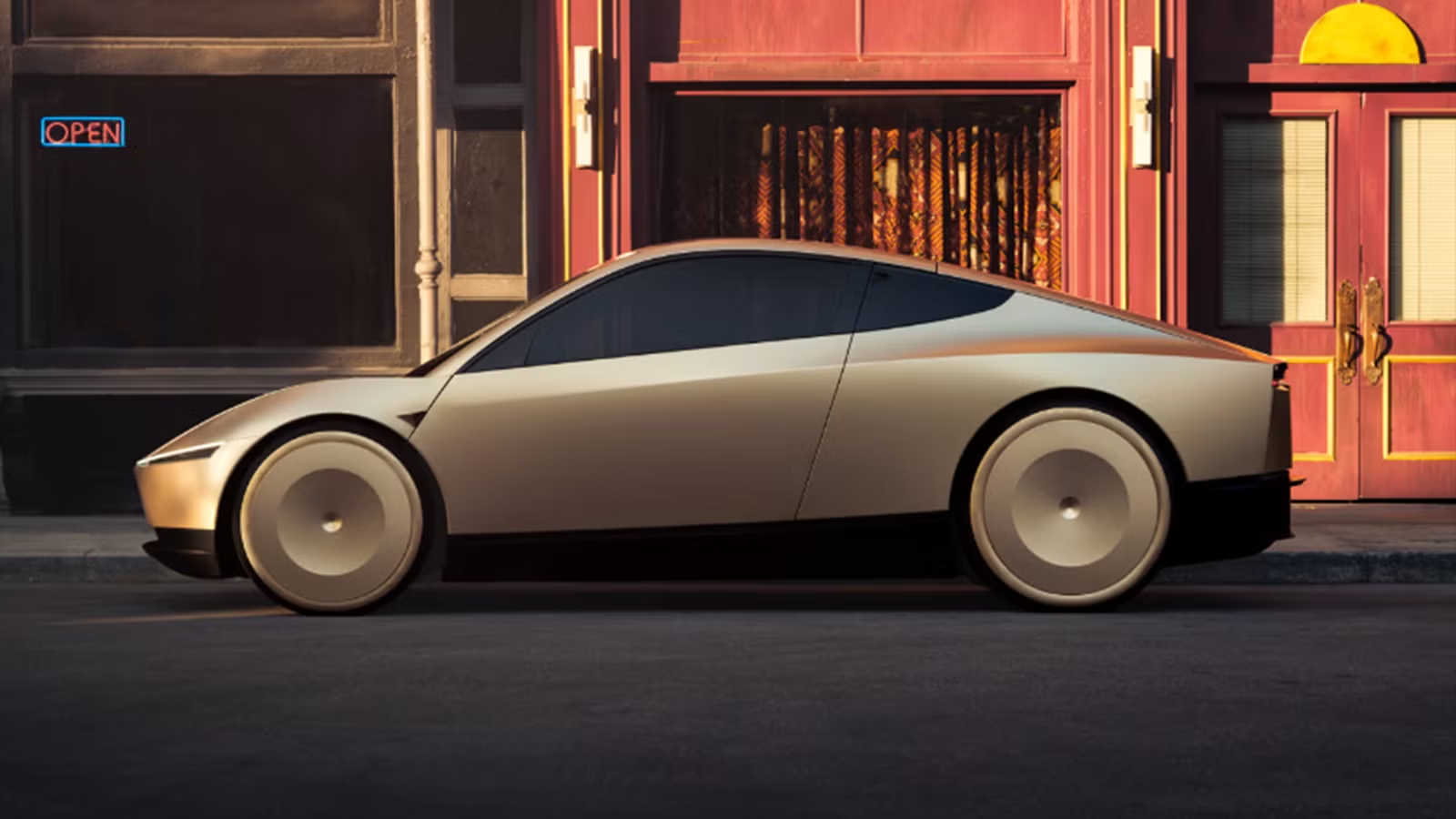
Tesla has spent years telling us its robotaxis will transform transportation, make car ownership unnecessary, and drag the rest of the auto industry into the future. You would expect the launch of its first purpose-built Cybercab to involve blinding lights, enormous promises, and Elon Musk soaking up every second of attention.

Instead, Tesla launched arguably its most important vehicle in years with the energy of a private office meeting. There was no public livestream, no room full of journalists, and apparently no major presentation from Musk. Then, before the confetti had finished hitting the floor, federal regulators announced an investigation into how Tesla put a car without a steering wheel or pedals onto public roads.
Tesla’s Secret Cybercab Event Looked Seriously Suspicious
The September 3 Cybercab launch in Austin was surprisingly difficult to watch. Tesla did not livestream it, excluded traditional journalists, and reportedly filled the tiny guest list mainly with employees and friendly Tesla content creators. Some attendees were required to sign nondisclosure agreements and wait until after the event before sharing anything.

Musk apparently did not speak during the presentation, leaving senior Robotaxi executives to handle a keynote that reportedly lasted only around 15 minutes. For a company that can spend an entire evening announcing a pickup truck’s windshield, Tesla suddenly became very shy when launching a vehicle without traditional controls. Even Tesla supporters were annoyed. Influencers expecting to cover the launch live were left staring at tracking websites while the chosen few watched from inside. If Cybercab is truly ready to revolutionize transportation, hiding its debut behind closed doors was a strange way to prove it.
Instead of showing the vehicle directly to the public and answering difficult questions, Tesla outsourced much of the launch coverage to people already likely to praise it. That is not bold confidence. It looks like carefully controlled damage prevention.
Federal Investigators Crashed Tesla’s Robotaxi Party

One day after the commercial launch, the National Highway Traffic Safety Administration opened an investigation into whether Tesla properly certified the Cybercab under current federal safety standards. The Cybercab has no steering wheel, brake pedal, accelerator pedal, or conventional mirrors. Existing rules still include requirements built around human-operated controls, and manufacturers normally need an exemption to deploy vehicles that do not comply. NHTSA says Tesla had not previously requested one.
Tesla instead self-certified the Cybercab, effectively determining which standards applied to its unusual design. Automakers normally certify their own vehicles, but NHTSA investigates when there are questions about whether those certifications actually comply with federal rules. The agency is now examining the technical information Tesla used to justify putting as many as 1,000 Cybercabs into service.
That does not mean regulators have already declared the Cybercab illegal. It does mean Tesla’s supposed transportation revolution arrived with a giant regulatory question mark hanging over its gold roof. Tesla’s stock then dropped nearly 6 percent, wiping out the gains it made heading into the event.
Tesla Built A Family Taxi That Rejects Young Children

The Cybercab also comes with a hilariously obvious problem: it is a taxi that excludes a massive group of potential passengers. The vehicle has only two seats and no rear bench, immediately making it useless for most families traveling together. Tesla’s own Cybercab rules state that children under 13 cannot ride at all. Passengers between 13 and 17 are only permitted when accompanied by an adult. That means a parent with one young child cannot use Tesla’s futuristic taxi, even though two people would physically fit inside.

The two-seat layout also prevents larger groups from traveling together and limits the Cybercab’s usefulness for airports, families, and anyone carrying more than one passenger. Tesla has created a public transportation pod aimed mainly at solo adults and couples, then marketed it as the future of mobility. There is still impressive technology here. Putting a purpose-built autonomous vehicle into paid public service is a major step, and Tesla now has 45 Cybercabs registered in Texas. However, revolutionary hardware deserves transparent answers, not a secretive presentation followed immediately by federal scrutiny. Tesla wanted the Cybercab launch to prove it had finally delivered the future. Instead, the event showed a company controlling the audience, avoiding serious questions, excluding younger passengers, and racing onto public roads before regulators were convinced everything added up.

Related posts

Latest Post


No Comments