
My recreated Bentley is a special beast
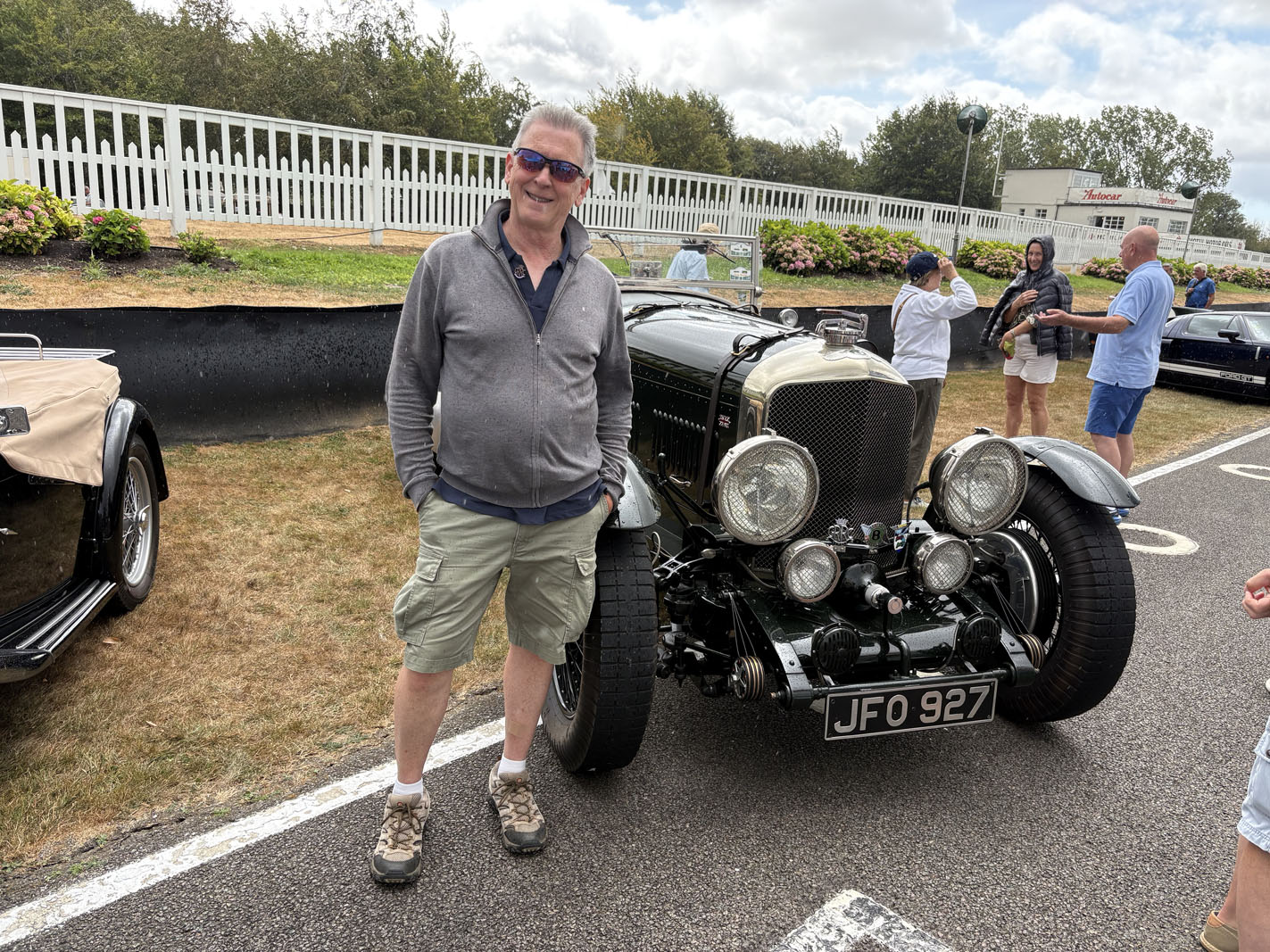
Among the Ferraris, Lamborghinis and Porsches thronging the Goodwood Breakfast Club meeting held towards the end of July was a classic Bentley Speed Six – a magnificent throwback to the era of the Bentley Boys…
“Actually, it’s a recreation of the early Bentleys, and it’s a Speed Eight, not a Speed Six, built no more than 20 years ago,” Duncan Saunders, its owner, corrects me.

Oops, but in my defence it’s nonetheless a remarkably authentic-looking thing, right down to the beautiful, exposed copper fuel lines extending from the fuel tank that’s mounted at the rear.
“Other lines deliver lubrication around the vehicle,” says Duncan. “It has a centralised lubrication system that ensures key moving parts such as kingpins, bearings and springs don’t run dry.”
Duncan bought the car in 2010. He explains: “The model is built by Vintage Racing Green, based in south-west Wales. I had to wait four years for mine. They’re built on a Bentley Mk6 chassis from the late-1940s, reclaimed from scrapped vehicles. You put down a deposit and commit to a chassis. When they get a free slot, they begin building your car. My dad and I were both into cars. Years ago we bought a Lagonda at a Bonhams auction during the Festival of Speed. Then, a few years later, again at the festival, VRG had a stand where they were displaying one of their Bentley Speed Eights. It was so beautiful we had to have one.”

Where the original Speed Six had a Bentley 6½-litre straight-six engine, Duncan’s Speed Eight has a Rolls-Royce B80-series 5.7-litre straight eight. It was designed and manufactured in the 1930s and ’40s to power a range of British military vehicles including the Alvis Saracen and heavy support vehicles. “VRG uses these old B-series engines in many of its models, I believe,” says Duncan. “They’re beautifully built and very reliable, just like the cars themselves. They then strip, sandblast and treat the chassis, and they construct the body on the same lines as the original Le Mans cars, with an ash frame panelled with aluminium and a fabric called Rexine. They will do little changes to your specification, such as fitting a bespoke steering wheel and gauges and different leather on the seats. The car looks heavy, but really the weight is only the chassis and engine. The rest is quite light.”
Duncan says the Speed Eight is popular with enthusiasts who are keen on doing endurance rallies. “It’s a robust car, and owners for whom money is no object enter them on endurance rallies all over the world, including the Peking to Paris,” he says. “VRG equips the cars with two fuel tanks to extend their range. The organisers of the rallies are satisfied these vehicles are faithful recreations.”
I ask Duncan what his Speed Eight is like to drive. “It feels very special,” he says. “It’s obviously big, so you have to be careful. The front drum brakes are hydraulically powered, but the rears are rod-operated. Most of the running gear is in period, but VRG has engineered things to help make the cars more usable – although not mine, which is extremely faithful to the era. The car gives me a lot of pleasure, and I can’t ever see myself parting with it.”

Related posts



Latest Post


No Comments