
From Tokyo Drift to Formula Drift: How The Sideways Motorsport Landed In Your Driveway
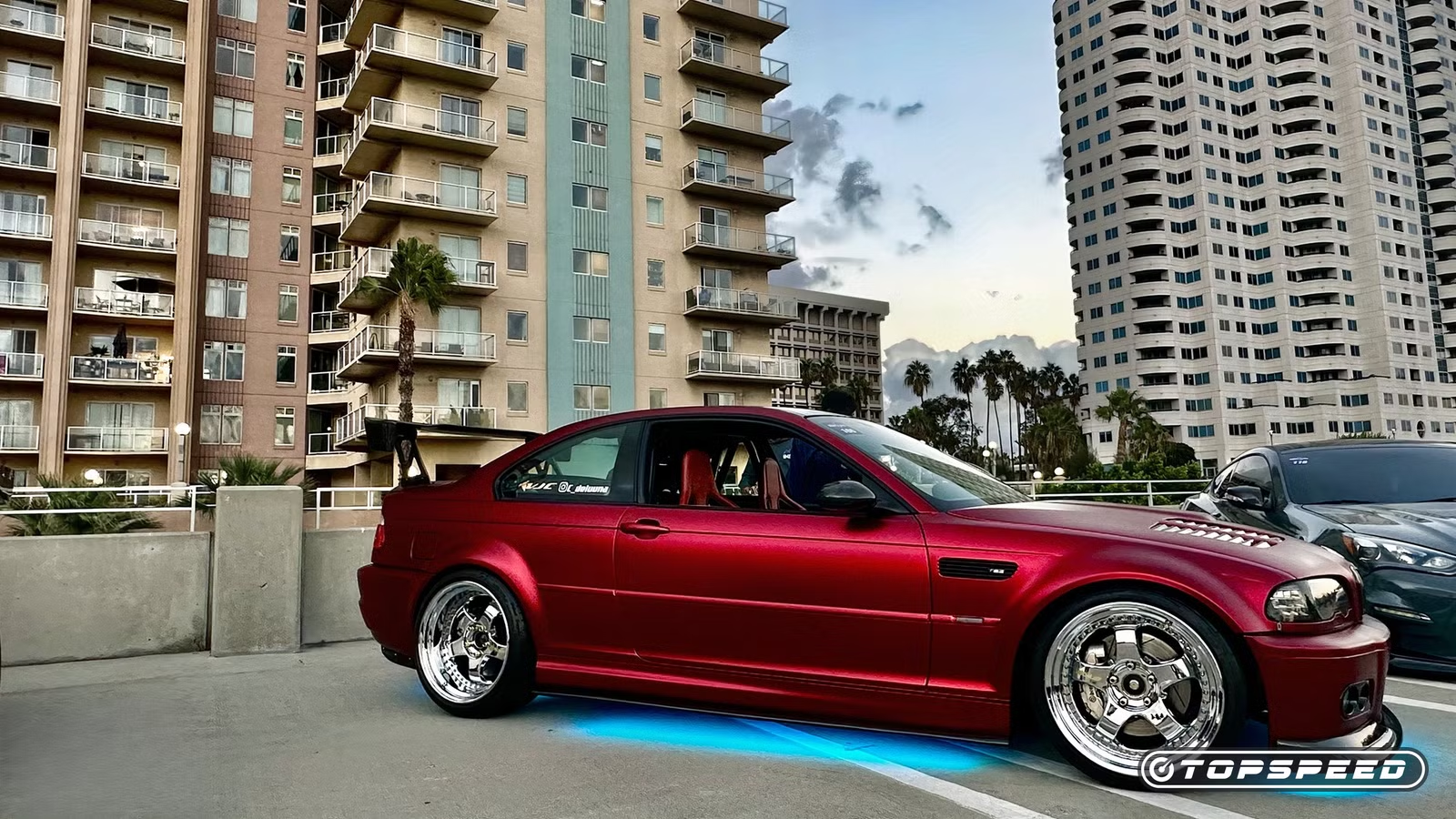
First they called it trouble, then they made it motorsport. Long before drifting became a four-digit-horsepower spectacle of tire smoke and trophies, going sideways was automotive rebellion. Then Hollywood went sideways. When The Fast And The Furious: Tokyo Drift hit theaters in 2006, it blasted Japan’s underground drifting scene and JDM car culture at the mainstream. Suddenly, the W wasn’t about crossing the finish line first. Style, angle, and controlled chaos were the flex.

But Hollywood was actually late to the party. TheFast & Furiousfranchise droppedTokyo Driftwhen Formula Drift was already in its third American championship season. Two decades later, the sport, the movie, and the fanbase have helped turn an underground driving obsession into something automakers are engineering into their production vehicles. So, strap in, because that new car you just drove out of the dealership just may be factory-equipped to get sideways.
Built Like Supercars, Driven Like Stolen Cars
A 455 cubic-inch V8, a staggering 1,249 horsepower and a Ford Mustang engineered to spend its competition life sideways – welcome to the office of five-time Formula Drift champion James Deane. It’s a workday unlike most. And the outrageousness of his “work car” isn’t lost on Deane, stating:

Nowadays, you can get into drifting for your first time ever and, if you have enough money, you can jump straight into a car with 1,000 horsepower, but my story was very gradual. I started at the very bottom with a 120-horse car.
Deane’s RTR Mustang packs a Wilkins-built V8 with a Holley Performance nitrous system protected by Pennzoil 10W-60 synthetic oil. His job is to throw it sideways at speed with as much finesse as there is aggression. It is the kind of driving that looks like a car being pushed beyond its limits. For Deane, it’s just another day at his J.O.B. But for automotive brands, it’s a connection to an enthusiast culture with enough influence to shape what ends up in the showroom.
Formula D Full Circle: From Street Rebels To Corporate Business
In its beginnings, drift action hit as the blue lights faded and the Barney Fife was out of sight. Now it has major brands fighting for a place in the smoke show. A longtime supporter, Pennzoil expanded involvement in 2026, building on a partnership with Vaughn Gittin Jr.’s RTR team dating back to 2017. Their presence stood out at this year’s FD championship weekend, from the TYPE S Night Lights kickoff to the final celebration of the Shoreline Showdown. Pennzoil’s commitment reflects drifting’s growing commercial appeal and its influence on the automotive industry.
The old “Win on Sunday, Sell on Monday” marketing mantra from the Detroit horsepower wars of the ‘60s and ’70s still applies, but drifting sells more than horsepower. It sells performance image, brand attitude, and lifestyle, as well as aftermarket possibilities. And for the automakers, Formula D connects an enthusiast culture with the showroom.
Tokyo Drift Meets Factory Floor

When a driver like Deane podiums, the victory doesn’t end at the track. Highlights hit socials, horsepower makes headlines and the excitement can send enthusiasts from their feeds to online configurators, merch shops, and dealers. Automakers have taken notice. From electronic drift brakes to dedicated drift modes, the tech once associated with going sideways has found its way into production cars.
The Mustang may be the clearest example. Ford didn’t just sponsor drifting. It worked with professional drifters to put a competition-inspired drift brake into a production nameplate. And Ford isn’t alone. Volkswagen, Hyundai and Audi have engineered factory systems that help drivers break traction on purpose and have official pages and programs dedicated to drift instruction. Drift is not just for the Fast and Furious; it’s in the family garage.
Ford Mustang S650: Electronic Drift Brake

Developed with Gittin Jr.’s RTR team, Ford’s electronic drift brake resembles an OG handbrake but delivers more than three times the braking force, electronically helping drivers initiate controlled drifts.
Other drift-capable Fords include the Mustang Mach-E Rally, F-150 Raptor R, Ranger Raptor, and Bronco Raptor, which support off-road slides. The discontinued Focus RS had a dedicated Drift Mode, and the previous-gen Mustang S550 was produced on a drift-capable RWD platform.
Volkswagen Golf R Mk8: Drift Mode

The Golf R’s Drift Mode uses a twin-clutch rear dif to direct torque toward the outside rear wheel, helping break traction and initiate controlled slides. The updated Mk8.5 Golf R is also drift-ready.
Audi RS 3: RS Torque Rear Mode

The Audi RS 3 uses RS Torque Rear mode and a twin-clutch torque splitter to distribute power between its rear wheels, allowing drivers to initiate and hold controlled drifts. Audi also released the limited-edition R8 Coupe V10 GT RWD, engineered for “precise and controlled oversteering on the track.” The new-gen RS 5 uses the quattro AWD technology with Dynamic Torque Control and RS Torque Rear mode to enable controlled drifting.
Other models, including the RS6 Avant and RS7 Sportback, also carry drift-capable hardware. Although they lack dedicated drift modes, some SQ5 models use a Quattro Sport Differential to improve cornering rotation.
Hyundai IONIQ 5 N

The Hyundai IONIQ 5 N features its N Drift Optimizer to help drivers start and maintain a controlled drift, while its Torque Kick Drift makes it easier to kick the rear into a slide. N Torque Distribution allows drivers to adjust how much power goes to the front and rear wheels for more control. Other drift-capable models include the Genesis G70, which favors rear-wheel power in Sport+ mode, and the RWD Genesis Coupe with an available limited-slip dif for sustaining controlled drifts.
Mountain Roads To Main Street: Handling Your Daily Drifter
Drifting originated on Japanese mountain roads but today, factory-equipped cars are putting the capability of going sideways in the hands of everyday drivers. For those looking to learn, just remember what Han Lue said inFast & Furious: “There’s no ‘wax on, wax off’ with drifting. You learn by doing it.”
Sources: Ford, VW, Audi, Hyundai

Related posts

Latest Post


No Comments