
A Forgotten Yamaha Two-Stroke Out-Ran Its Whole Class, And Its 146-MPH Record Still Stands
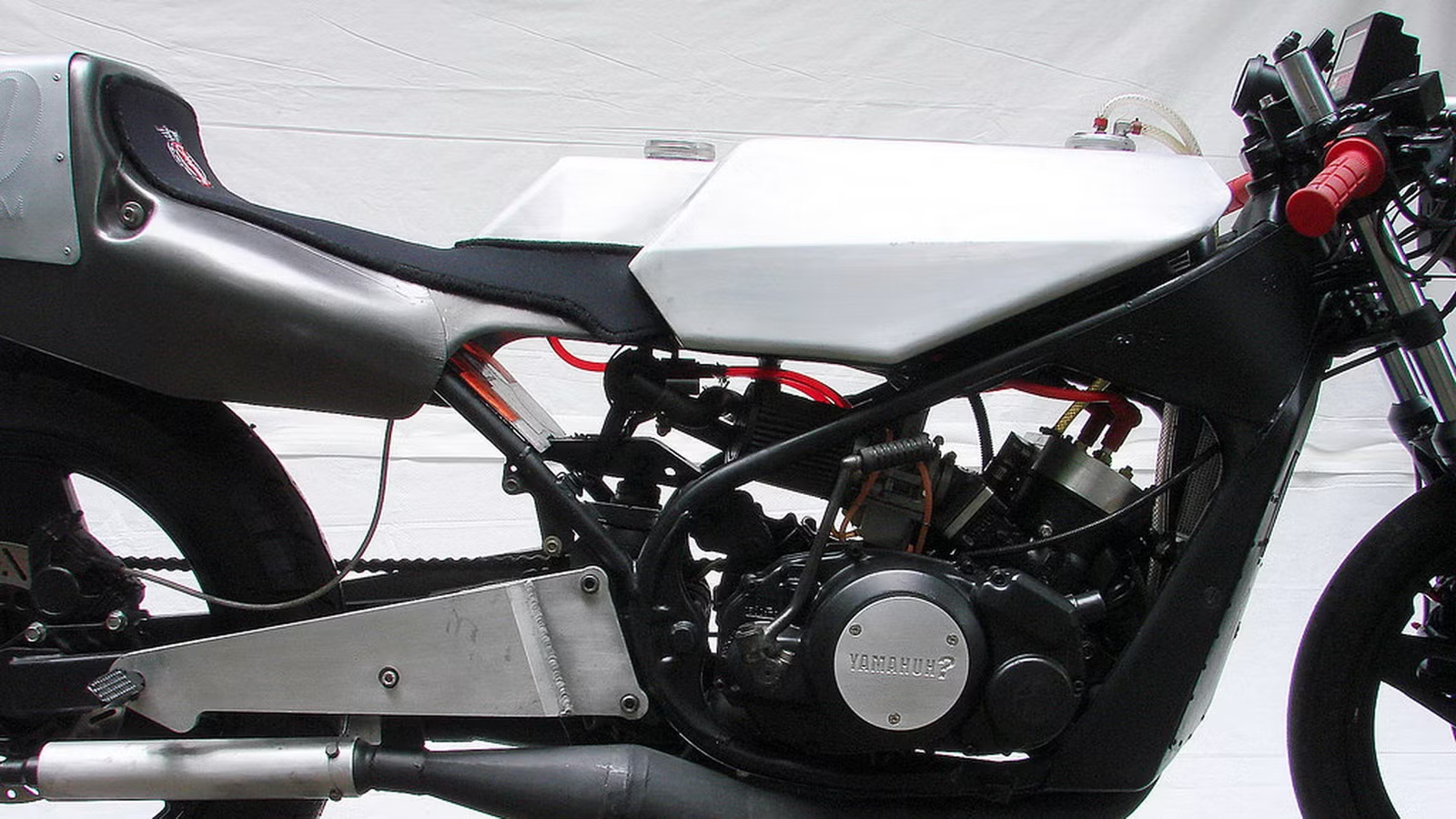
A 350cc motorcycle reaching 146.7mph sounds plausible if you are riding a purpose-built land-speed record streamliner, not if it is a motorcycle that began life as a road-going two-stroke machine. Yet in 1993, Seattle-based builder Eric LeVine took a heavily modified Yamaha to El Mirage Dry Lake in California and recorded this extraordinary speed. That run became a milestone in the 350cc unfaired class, and according to a later RideApart article, the record was still standing when the story was published in 2011. The remarkable part is what happened after. After years of land-speed racing, the motorcycle was put away in a leaking shed, only to emerge 14 years later in a different avatar.
Eric LeVine Turned An Old Two-Stroke Into A Land-Speed Racing Machine

Land-speed racing is a different engineering challenge from track racing. There are no corners or overtaking involved. The objective is to reach the highest possible speed on your motorcycle, which has to comply with its class rules. At El Mirage Dry Lake and the Bonneville Salt Flats, even small improvements to engine performance, gearing, and aerodynamics can make a measurable difference in top speed.
Seattle-based architect Eric LeVine began building his record-setting machine in the late 1989s, starting with a battered production motorcycle. He developed it for speed trials in California and Utah, where sustaining full-throttle runs put enormous strain on the engine. LeVine competed with a team called Twist-Off Racing, which included Mike Senn, David Dastrup and Ray Taylor, with Ken Bickel as crew chief. The team eventually won around eight El Mirage and Bonneville records with LeVine’s 350cc two-stroke and a heavily modified Yamaha FZR600.
The smaller motorcycle was especially demanding to develop. Its displacement had to remain within the 350cc limit, so simply increasing engine capacity was not an option. LeVine had to concentrate on extracting more performance and reducing wind resistance.

The 1985 Yamaha RZ350 Used Banshee Cylinders And Extensive Engine Modifications

The motorcycle was a 1985 Yamaha RZ350, but LeVine’s example had little resemblance to the standard road-going model. Its 350cc parallel twin engine used Yamaha Banshee cylinders with extensively modified porting. LeVine reshaped the posts, thinned the webs between the transfer passages, and precisely matched the cylinder ports to enlarged crankcase openings. Custom gaskets ensured a smooth intake flow as well.
The cylinder head came from ProDesign and used interchangeable combustion chambers. LeVine chose the smallest-volume chambers with maximum squish to increase compression. He also welded the crankshaft to prevent separation under heavy loads and high engine speeds seen in land speed competitions. LeVine estimated the engine produced more than 75 HP, although he never had it tested on a dynamometer. Its powerband was extremely narrow, concentrated between 8,000 and 10,000rpm. That made it unsuitable for relaxed road riding but ideal for a machine geared around maximum speed.
The fueling system used large Lectron Powerjet carburetors, TZ350 intake manifolds, and upgraded reeds. Its custom expansion chambers were made by Rob North. LeVine also monitored exhaust-gas temperatures during runs, shutting down if they exceeded 1,100 degrees, to avoid engine damage.
Eric LeVine’s Yamaha RZ350 Recorded 146.7 MPH At El Mirage In 1993

The extensive modifications delivered a defining result in 1993. LeVine recorded 146.7 mph at El Mirage Dry Lake in California, establishing a remarkable benchmark for a 350cc motorcycle in the unfaired class. The record was still standing in 2011, according to a RideApart article of the time.
Engine performance was only one part of the equation. LeVine extended the swingarm, altered the front end, and adjusted the riding position to reduce aerodynamic drag. The motorcycle used a narrow Goodyear drag-style front tire to reduce frontal area and rolling resistance. Its unusual front fender was also designed around the rules for unfaired machines at the time. It functioned as a fender rather than a conventional fairing without extending far enough sideways to shield the rider from the wind.
For context, the current published record in Bonneville’s 350cc class includes a 138.995 mph record in Modified Air-cooled Gasoline class set in 1978, and a 139.821 mph Modified Gasoline class record set in 2024.
The Yamaha RZ350 Returned To The Street After 14 Years In A Leaking Shed

After its land speed racing career, LeVine put the motorcycle into storage in 1997. According to his 2011 interview with RideApart, it spent the next 14 years in a leaking shed in San Diego. He retrieved it in February 2011, cleaned it up, lowered the gearing, and began the process of converting it into a street motorcycle.
The conversion took more than just adding mirrors and lights. The racing setup used a total-loss electrical system, so LeVine had to recover the original voltage regulator and other electrical components to restore the charging system. He fitted headlights, a tail light, indicators, and a horn.
The gearing was also changed to make the motorcycle more usable on public roads. Given its racing roots, the motorcycle was never meant to be a practical commuter. LeVine described it as quick, loud, uncomfortable, and demanding but was seemingly happy with that combination. In its second life, LeVine’s RZ350 went from being a battered production motorcycle to a 146.7 mph record setter, then spent 14 years forgotten in a shed before being made road-legal again.

Related posts


Latest Post


No Comments