
Corvette C9 Pricing: Chevy Won’t Chase Ferrari, Lamborghini
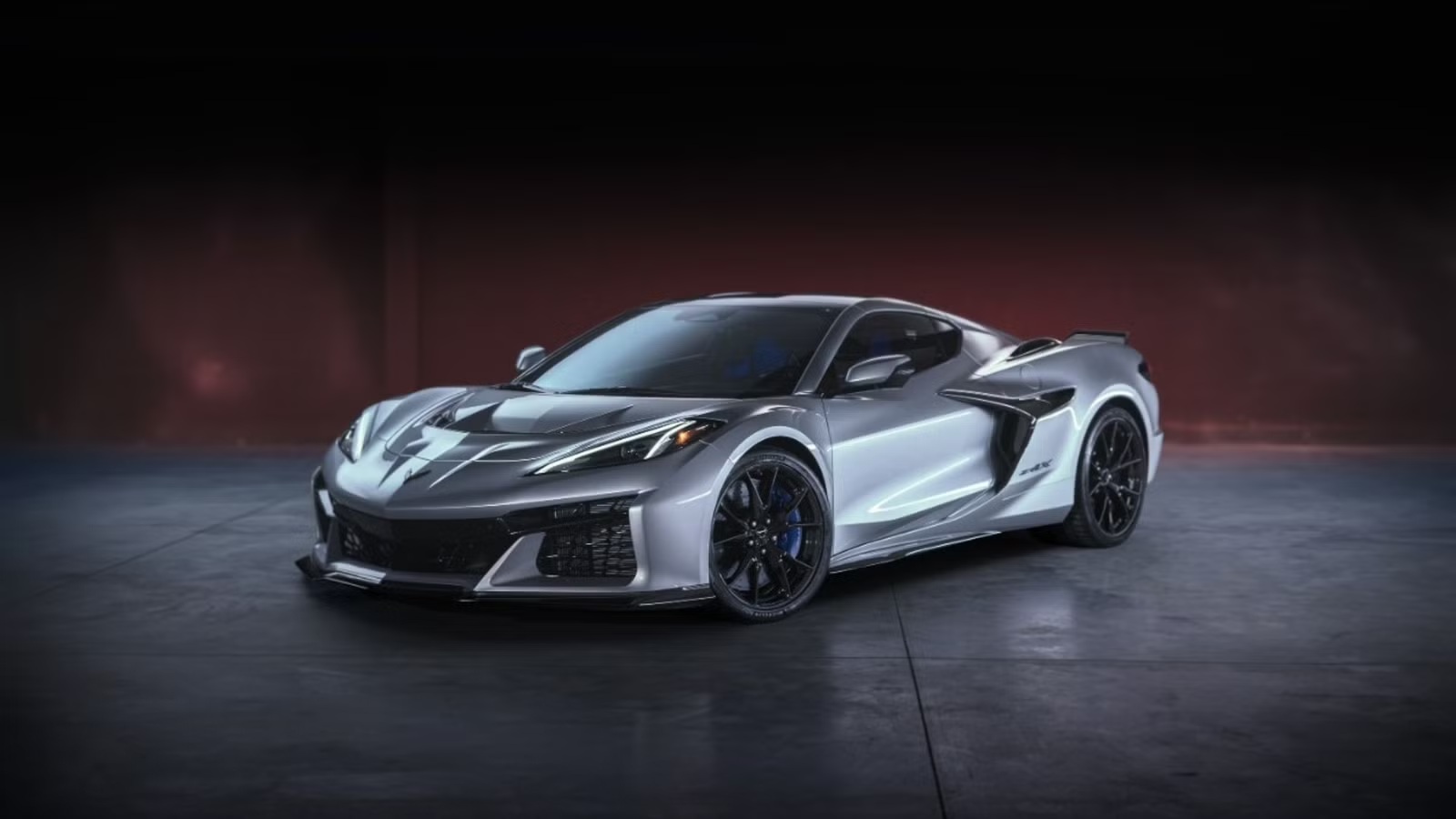
If we’re certain about anything, it’s that Tony Roma isn’t hedging. Chevrolet’s Corvette chief engineer mentioned that the C9, whatever shape it takes, has to beat the C8 on performance without turning into a prestige-priced exotic. That’s a deliberate line in the sand, drawn right as the C8 range stretches further than any Corvette generation before it.

The current lineup runs from the $73,795 2027 Stingray to the $227,695 ZR1X, a spread that already brushes up against six-figure European iron. Roma’s comments make clear General Motors isn’t interested in closing that gap into a single sky-high price tag.
Why Roma Won’t Chase Ferrari And Lamborghini Money
“Even though we’re a mid-engine car now, there’s a lot of people that think that means we need to go chase Lamborghini and Ferrari tit-for-tat,” Roma said. “That’s not the core of what a Corvette is.” That’s a direct rebuttal to six years of assumptions that the C8’s engine swap to the middle of the chassis was step one toward supercar-tier pricing.

Roma’s case leans on the C8 ZR1 itself. At 1,064 horsepower from its twin-turbo 5.5-liter LT7, the ZR1 already runs with, and sometimes past, cars costing three times as much. That’s the proof point: Chevrolet doesn’t need Ferrari sticker shock to deliver Ferrari-humbling numbers.
The Manual Gearbox Roma Can’t Justify

Roma wants a stick shift. He just can’t make the math work. “I would love it as a driver, as a customer, I would love it. I just don’t know if we can make it make sense,” he said of a manual option for the C9.
The C8’s transaxle was built from scratch around dual-clutch operation, with the clutch packs and gear sets designed for that layout from day one. A manual isn’t a bolt-in fix. It means new tooling, a new case, full durability validation, and emissions recertification, the same cost stack that applies to any all-new driveline. Roma pointed out the old front-engine manual architecture took roughly 30 years to refine into something cheap to keep in production. The C8’s transaxle has none of that history to lean on.
He’s also skeptical of the aftermarket workaround. Tremec has shown a manual gearbox adapted for the C8, but Roma doesn’t believe it’s production-viable, noting nobody has actually validated one in a real car yet.
What This Means For The Nameplate

This is as close to an official mandate as Corvette fans will get before the C9 breaks cover. Roma is essentially describing brand identity: a car that keeps getting faster without becoming a car that only shows up at concours events and six-figure auctions.
That’s the gap GM is protecting. The ZR1 and ZR1X already prove the performance ceiling can rise without the price ceiling following it in lockstep. If the C9 holds that line, the next Corvette stays what the last eight generations have been, the fastest car for the money, not just a fast car.

Related posts



Latest Post


No Comments