
Maserati Grancabrio review: Can new-look V6 GT beat Mercedes SL?
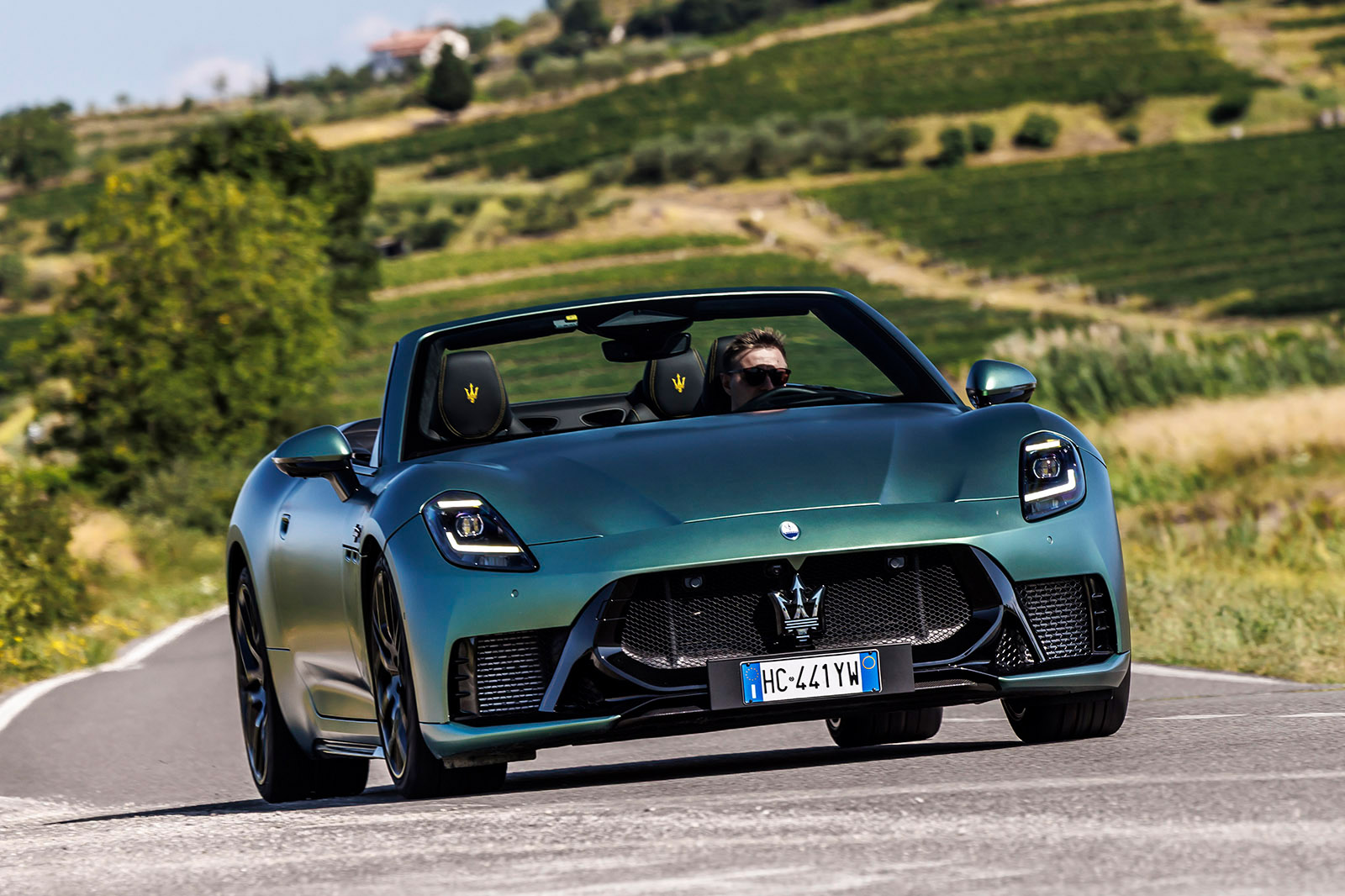
If you want combustion rather than electric power, there’s only one engine on offer here: Maserati’s Nettuno twin-turbocharged 3.0-litre V6, with either 483bhp or 583bhp.
Even in a GT carrying something of a weight penalty, laden with four-wheel drive and air suspension as standard and measuring almost five metres long, that feels like quite a lot.

The most exciting and obvious change for 2026 is the fitting of a new exhaust system that aims to bolster the sense of occasion to a level befitting a £160,000 Italian sports car. No engine would have had an easy time replacing the thunderous 4.2-litre atmo V8 that powered the old Granturismo, meaning this V6 started on the back foot, so droney and flatulent did it sound by comparison. But with this new arrangement, Maserati has recaptured some of that lost viscerality and sense of purpose.
Exclusive to the top-rung Trofeo, it drops the central silencer, reroutes the pipes to the rear muffler on each side, adds wider-bore outlets and gains a hole in the main pipe to create a degree of interference.
It’s “as loud as it can be”, the engineers grin, and certainly it contributes significantly to making the Grancabrio a much more exciting car to drive.

Pootle about in Normal mode and the Nettuno remains a fairly ordinary-sounding engine, not unlike a Volkswagen Golf R’s turbo four in its bubbly idle and burpy gearshifts, but open it out in Sport and it doesn’t so much loosen its tie as strip off entirely and show you some obscene tattoos.
Once the turbos come on song at around 2000rpm, this V6 sings with the best of ‘em. It’s low and ominous through the mid-range, taking on a characteristically shrieky overtone near the top of the rev band to signal the urgent need for a higher ratio.
And when you do change up (calling upon the ZF eight-speeder via some of the most substantial and pleasingly engineered paddles in the business), it emits a piercing whip-crack as any unburned fuel finds itself rapidly combusted at the wrong end of the exhaust pipe. Tunnels are extremely fun.
It’s all a bit contrived and childish, and maybe a little out of place in a car with such aspirations to elegance and sophistication, but it goes some way, at last, to making up for the death of Maserati’s V8.
The four-wheel drive system does have an electronic differential at the rear, but it isn’t a particularly complicated one, the torque distribution varying with selected drive mode.
The eight-speed automatic gearbox is nice and smooth in ordinary driving, but those big paddles don’t deliver the quickest or most crisp-feeling shifts in manual mode.

Related posts





Latest Post


No Comments