
The Affordable Sports Car That Delivers More Drama Than A Porsche
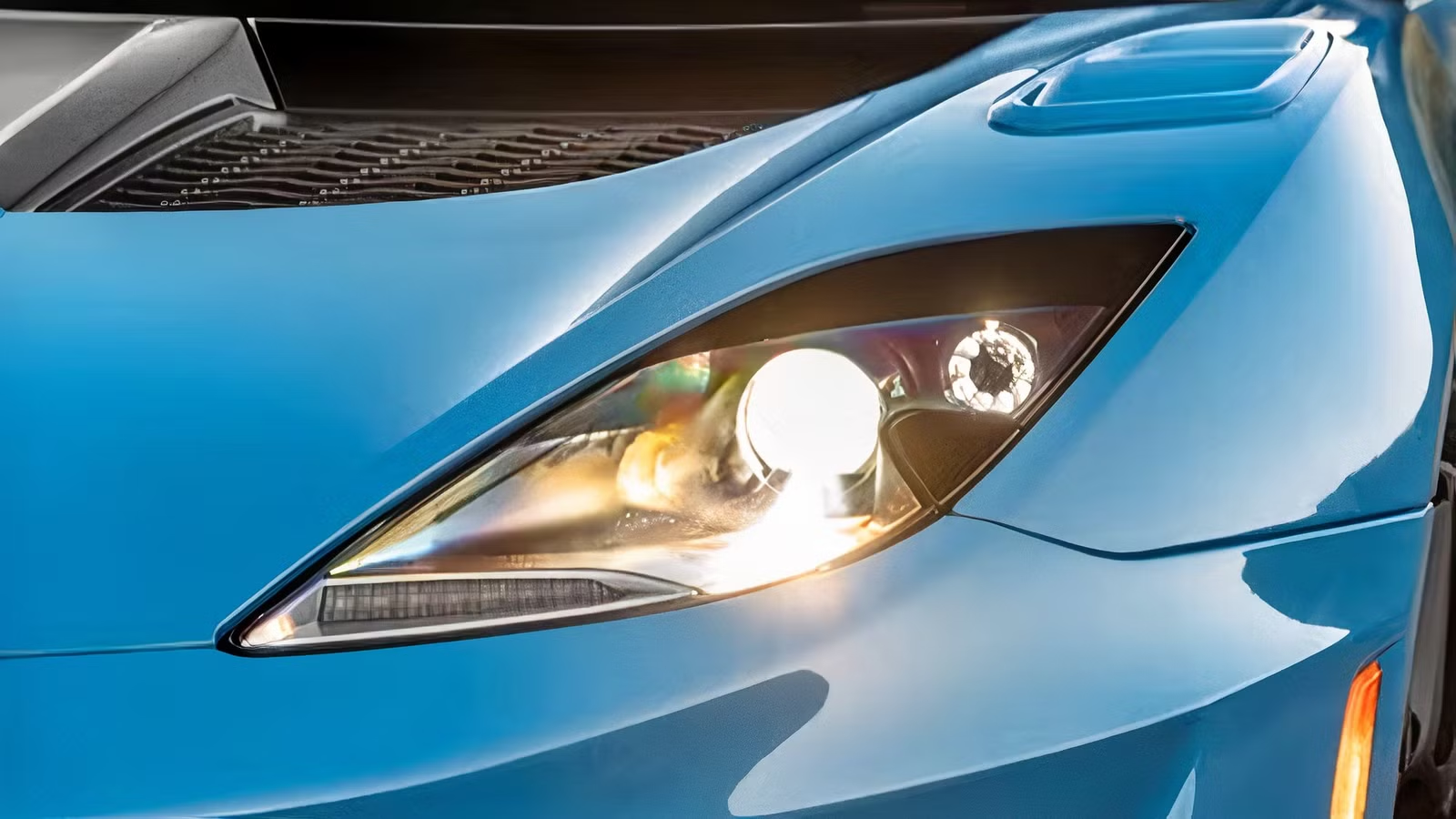
There’s a quiet crisis at the heart of the modern sports car market: the faster these machines get, the less they seem to make you feel. Engineers have become so skilled at eliminating unwanted behavior that they’ve accidentally engineered away the very thing enthusiasts came for — drama. It’s a strange irony that some of the most technically impressive sports cars on sale today are also among the least emotionally satisfying to drive. That tension is exactly what this article is about, and it explains why even Christian von Koenigsegg drives a Mazda Miata to work on clear summer days.

Most of today’s sports cars look unreal on paper, but once you drive them, you are left a bit perplexed about the overall experience. Modern technology has ironed out the imperfections and made cars so good that, oftentimes, they end up lacking the raw character that enthusiasts enjoy. There is a gap between being fast and being thrilling; within that margin exist some of the most intriguing sports cars, like the one in question here.
Speed Without Soul: The 911 Conundrum
The poster child of a sports car that traded raw emotion for clinical precision is the Porsche 911. The modern-generation 911 is an absurdly fast car, rivaling the performance of supercars, but does so with minimal drama. The problem is that drama is what many drivers desire and pay for.
The Porsche Paradox

Back in the 1960s, the Porsche 911 was as pure and evocative as a sports car could get. Through decades of refinement, it became an ultra-precise tool, built exclusively for speed. The chassis is perfectly balanced, the steering has incredible precision, and the power delivery is strong and responsive. Extracting a fast lap time in a modern 911 takes almost no effort for a confident driver. The magic of the 911 is how much confidence it gives you to go fast — and that confidence isn’t a coincidence. It has been precisely engineered to feel that way.
Yet, somewhere along the way in the pursuit of speed, the 911 lost its soul. It remains an incredibly capable tool, but it feels numb — like a machine. Many drivers want something that pushes back, surprises you, and keeps you on your toes. Sadly, the modern 911 is no longer that vehicle.
Precision Vs. Emotion

Modern performance engineering carries a built-in paradox: the faster a car gets, the more of its character must be filtered out in the process. Take BMW’s shift to electric power steering as a clear example. As much as it was celebrated for its inline-six engines, BMW had become equally renowned for class-leading hydraulic steering feel across earlier 3 Series generations — the E30, E36, E46, and E90. If you wanted a proper rear-wheel-drive sports car with genuine steering feedback, BMW was the obvious choice.

When the F30 3 Series arrived in 2012, decades of development were set aside as BMW adopted electric power steering for the first time in the 3 Series lineup. One of the brand’s most celebrated selling points vanished almost overnight. More than a decade on, the situation has not been meaningfully corrected. BMW’s modern steering is perfectly precise but lacks real fidelity once you push it hard. The cumulative effect is a car that is faster yet less involving — the drama that so many drivers still crave has been effectively engineered out in the pursuit of impressive-looking specifications.
How To Actually Define “Drama” Behind The Wheel

At its core, driving drama is a specific sensory experience that makes you feel like you are having a conversation with a sentient being rather than executing commands on a super-intelligent computer on wheels. More than one factor contributes to this feeling.
Sensory Overload Is A Good Thing

Have you ever started up a V-8-powered vehicle with an aggressive cam? From the moment those eight cylinders fire up for the first time, you feel every vibration of the engine. The sensation is so extreme and direct that you feel like you can tell the exact angle and position of the camshaft just from the sound alone. You feel like you can hear the very heartbeat of the vehicle, because that’s how intimate the experience is. The fact is that most cars that provide this level of drama share a set of identifiable qualities.

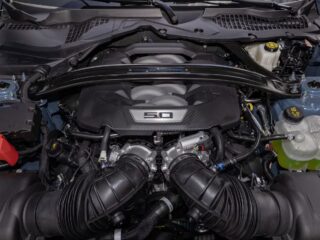
These types of emotions are the reason why cars like the Ford Mustang GT still exist, despite being a dying breed. The Mustang GT wasn’t engineered to be dramatic, per se, but there is something about its simple foundation that still evokes this desirable sense of drama. Jeremy Clarkson often said that his favorite cars were those that many others considered “imperfect,” because they had strong, undeniable character. Sometimes a lack of refinement provides the exact edge that many drivers are looking for.
Imperfection As Engagement

Beyond pure sensory experience, there is also the degree of imperfection that demands skill from the driver. A car that fights you is better than one that doesn’t communicate anything meaningful at all. Drivers, at the end of the day, want to be challenged. This is why a vehicle that demands constant micro-corrections under hard cornering is still more fun than a car that magically grips in and out of a corner with ease. A linear power delivery is great, but even better is a power band that demands your utmost attention and respect — because you know that even a small lapse in judgment could have catastrophic consequences.

This is also the reason why manual transmission cars are more fun than automatic variants. Are they faster than their quicker-shifting automatic counterparts? Rarely. Yet, because you feel directly in control of the mechanical linkages, the experience is far more rewarding. Once you nail your first clean heel-toe sequence in a manual, you’ll want to chase that feeling over and over again. Despite this, very few new manual-transmission sports cars remain available — which is exactly why, when it comes to sports cars, newer doesn’t necessarily mean better.
Why The Lotus Evora Is One Of The Last Pure Sports Cars

So we have argued that spending more on a sports car doesn’t always translate to a more fulfilling driving experience. Sometimes, the more honest and imperfect choice is actually the one that will provide you with the most reward. In this case, nothing else feels quite like the Lotus Evora.
A Sports Car With Analog Porsche Feel At A Lower Price

The Lotus Evora is unlike any other sports car on the market. It is equipped with a mid-mounted, transverse, Toyota 3.5-liter 2GR V-6 engine, which is supercharged in the S, 400, and GT variants. The Evora 400 produced 400 hp and 302 lb-ft of torque thanks to its intercooled supercharger setup built by Edelbrock, enabling a 4.1-second 0-to-60 mph time at a curb weight of just 3,154 pounds. If the Evora had a direct Porsche competitor, it would be the Porsche 718 Cayman GTS 4.0, which delivered 394 horsepower from its naturally aspirated 4.0-liter flat-six and is a close match for the Evora in terms of performance intent.

Where these two sports cars separate themselves is in their current used-market pricing. In our own independent research, the Lotus Evora 400 can be found at a significant discount compared to equivalent used examples of the Porsche 718 Cayman GTS 4.0 — often by a margin of $40,000 or more depending on year and mileage. That’s not a little bit more expensive than the Lotus, that’s a whole tier — or two — higher in luxury. Is the difference worth it? What you thought was your top pick may be in doubt if you experienced both back-to-back.
The Lotus Has A (Not So) Magic Advantage

The Evora may be the more affordable option of the two, but the area where it truly dominates is steering feel. If you are buying a Lotus, it is for this particular feature. The hydraulic rack utilized by the Evora is one of the best-feeling steering racks available in any sports car from its era: perfectly weighted, not overly boosted, and delightfully communicative. Finding a car with a hydraulic steering rack at all is already a rarity today, but Lotus’s system stands as one of the finest examples you can find. The GTS 4.0 also feels great, but it requires a bit more speed to deliver useful feedback.

The Evora communicates every road detail through the seat and steering wheel by the time you hit 25 mph. Your inputs aren’t filtered and summarized by a computer before being fed back to you. The Evora simply provides a raw directness that cannot be replicated by modern systems — a feeling that is effectively absent in contemporary sports cars. The result is a car where every input feels consequential and no drive, no matter the distance, feels the same as the last. The GTS 4.0 is the more polished and capable vehicle, but the Lotus leaves a bigger impression after you’ve driven it.
A Six-Speed Manual And A Cabin Built Around The Driver

Adding to the Evora’s back-to-basics appeal is its gearbox lineup. When new, buyers could choose between a six-speed manual or a six-speed paddle-shift automatic. Given how focused this sports car is, seeking out a used Evora with the manual transmission is the obvious choice for maximum engagement.

Lotus’s approach to the interior tells the same story. The cabin is well-appointed with features, but the focus never strays from performance. It’s a tight 2+2 in name only — the rear seats are a squeeze even for children, and the trunk is laughably small. The front seats, however, hold you firmly with thin padding that channels feedback directly from the car. The interior isn’t designed for comfort; it’s designed for an exhilarating driving experience.
Drama Has More Value Than Speed

Although we like to think that most drivers who own sports cars take them to the track regularly and obsess over perfecting the craft of driving, this is not the case in practice. Most sports cars live and die on public roads, where speeds are rarely extraordinary and the difference between 400 hp and 600 hp is almost non-existent. The slower the speed, the car that feels more alive wins almost every time.
Extreme Capability Only Means So Much On Public Roads

Even if you are one of the few fortunate individuals who own a Porsche 718 GTS 4.0, this German sports car only truly comes to life at speeds that are not achievable on public roads. The Lotus Evora, in contrast, feels just asrewarding at road-legal speeds as it does at the racetrack. Every drive in the Lotus feels like a special occasion, and that is arguably the most important trait a sports car can have.

This is why, among driving enthusiasts, the most memorable cars are not usually the fastest ones, but the ones that leave the longest-lasting impression. Few cars pull at the heartstrings quite like the Evora, and it is the antithesis of the desensitized modern sports car in almost every way. The GTS 4.0 is definitely the faster car on track and perhaps the better investment asset, but the Lotus is the car you will be thinking about when you go home — and the next day, and the day after that. You don’t always have to spend the largest amount of money possible to experience driving excellence, and the Lotus Evora is the perfect example.
Sources: Porsche, Lotus, BMW, Kelley Blue Book, Top Gear

Related posts


Latest Post



No Comments