
Ford LTD Crown Victoria Country Squire: The Wagon With Police Hardware
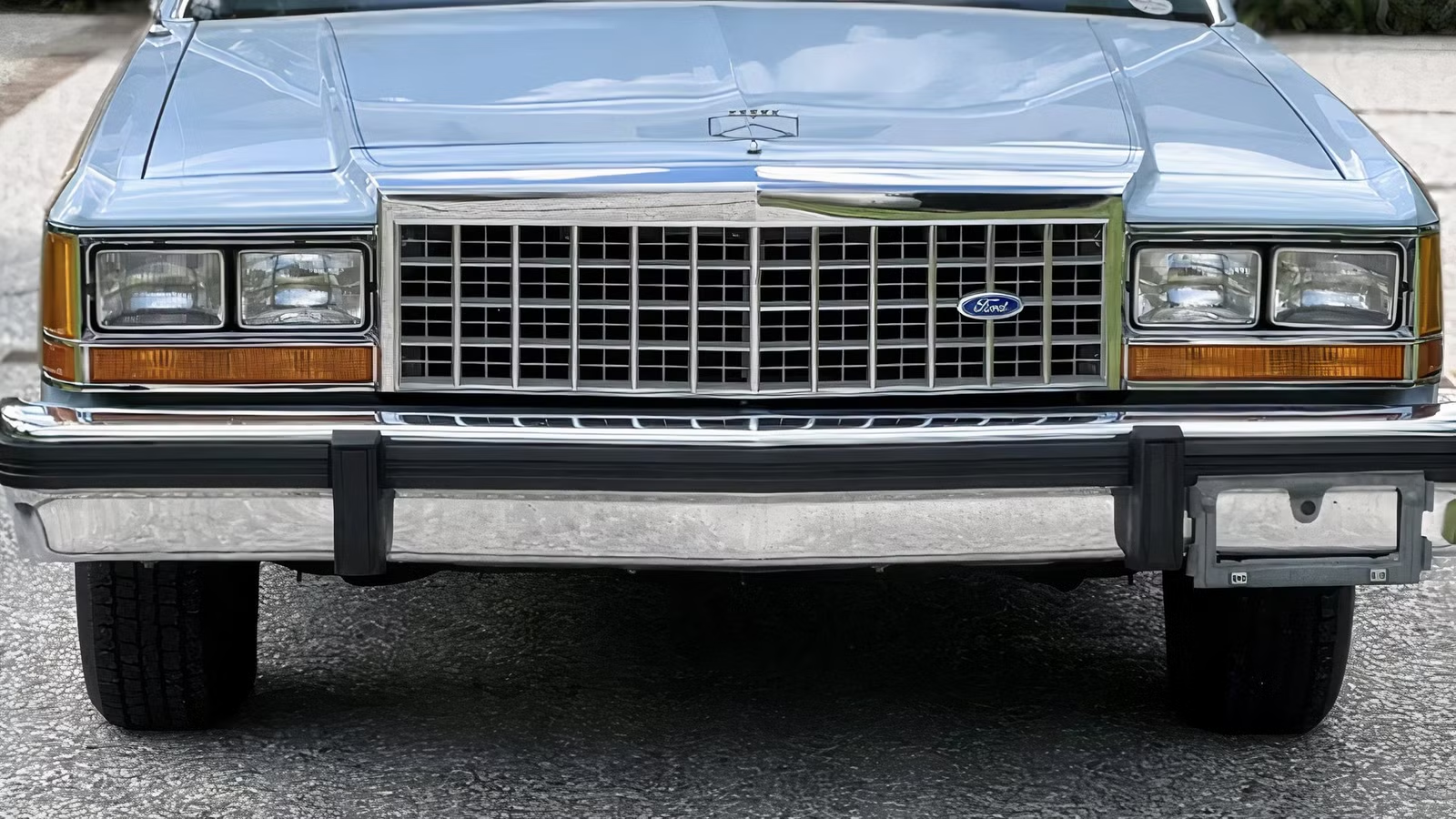
Here’s the skinny: it’s the early 1980s at Ford Motor Company, you’ve spent the last decade in a state of utter humiliation, still mostly drunk on the high of the ‘60s muscle car wars. The Malaise era nearly took out each and every one of Detroit’s Big 3 automakers, but somehow all three made it out alive. Ford was spared from humiliating government bailouts, unlike Chrysler. But that didn’t mean FoMoCo could rest on its laurels much longer. Something had to change, and when it did, it did so quietly—tucked inside a perfectly normal-looking full-size wagon.
Ford in the early ‘80s: Reinventing Itself Brick by Agonizing Brick

It’s really no joke to say Ford barely survived the ‘70s. The Mustang quite literally devolved from a muscly pony car into a Pinto-based, emissions-choked monstrosity, the Torino had bloated into something that couldn’t even be classed as a muscle car anymore, and shockingly by modern standards, the F-Series was being consistently outsold by the Chevy C/10 platform.
It was as close as Ford ever came to truly being in the red until the financial crisis of 2008, decades later. But that didn’t mean Ford had no strategy at all as they moved into the twilight years of the 1970s. Still several years away from the paradigm-shifting Taurus, the American appetite for larger full-size sedans, as well as station wagons on the same chassis, was still considerable in those days.
In the vacuum leading up to the unibody Taurus’ development, something along the lines of a traditional body-on-frame sedan of this type would have to pull double duty. It needed to capture the traditionalist market, the folks that bought gigantic landships from Ford during the malaise years, as well as people looking for something more modern. What they came up with wound up last the company until the mid-2010s, but they could never have known it at the moment.

Ford Made One Muscle Car That Nobody Remembers
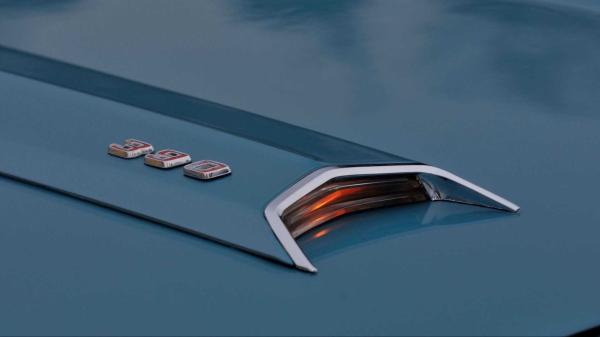
It seems bizarre that high-profile company like Ford would have an anonymous ride, but they produced one of the most obscure classic muscle cars ever.
The Panther Platform: Pure Body on Frame Brilliance

In the beginning, Ford’s Panther full-size architecture was all things to all people. It was the pencil-pushing bureaucrat’s chariot as the Ford LTD, the middle management jockey’s personal transport as the Mercury Grand Marquis, and the founder/CEO’s chauffeur machine as the Mark VI Continental. It also needed to work as a station wagon, one capable of carrying as many people, or more, than modern SUVs and crossovers.
That was a tall order, but the Panther platform was up to the task. Built to go toe to toe with the GM B-body and the Mopar R-body, the Panther platform was a foot and a half shorter and as much as half a ton lighter than previous equivalent models, and it did its best to help Ford meet new CAFE standards. It was simple, drivetrainwise, with the choice of three Windsor-based V8s ranging from 255 to 302 and 351 cubic inches.
An archaic but practically indestructible AOD four-speed automatic transmission ensured the platform had the durability it needed, and the body over the top looked traditional in a way Ford’s customers demanded. The sedan variant was dubbed the LTD Crown Victoria, and it was one of Ford’s most successful cars of the 1980s. But depending on who you ask, the best of the bunch was the wagon variant—mostly because of the goodies Ford snuck beneath the skin.
Detroit’s Most Overpowered Family Car Of The Muscle Era
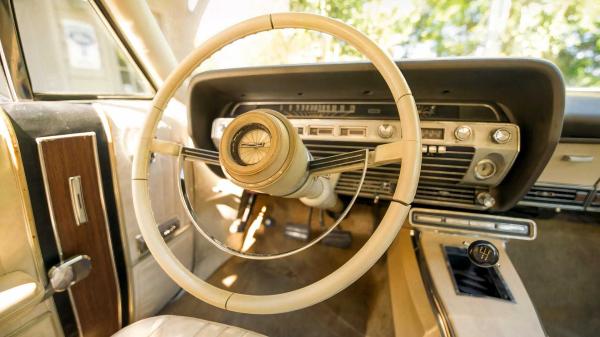
Beneath its unassuming wood-grain exterior, this 1960s station wagon hides a thunderous surprise.
Ford LTD Crown Victoria Country Squire: Long Name, Solid Performer

Before roughly the mid 1990s, the idea that a station wagon, or an estate car as it’s known outside the US, could be a performance car was something of a novelty. Icons like the Audi RS2 Avant were still years away, but that doesn’t mean there weren’t attempts by American OEMs that came close. For starters, even if it was built like a tank and had the wheelbase of a battleship, Ford went to great lengths to make sure the Country Squire could still dance a bit.
Uniquely, each Country Squire fitted with the heavy-duty suspension and Class III Trailer Towing package had its sofa-like setup replaced with stiffer springs, a rear anti-roll bar, severe-duty shock absorbers, and, starting in the mid-1980s, the iconic Ford 8.8-inch rear axle with 28 splines.
By 1986, Ford was effectively throwing the same 302-cubic-inch V8 powertrain as you’d find in a Fox-body Mustang into a platform substantially larger. The biggest difference, of course, was the High Output (HO) tune applied to the range-topping Mustang GT. That package offered 200 horsepower and a 5,000 RPM redline. Even so, the bare block and all the internals were much the same. In the P-72 Police Interceptor configuration, you could even get the much-beloved 351 Windsor V8 that even an ‘80s V8 Mustang never saw from the factory. For the time, the Crown Vic Country Squire of the period really could boogie.
The Ultimate Faux-Wood Wagon

Not to be outclassed by Mercury or Lincoln, an LTD Country Squire Wagon was one of the most lavish Fords you could buy in the 1980s. With 38.5 inches of legroom in the second row of seats, plus dual face-to-face sideways-folding seats behind, you could legitimately cram eight adults inside an LTD wagon without much issue.
With both rear rows of seats folded away, you could fit up to 89.5 cubic feet of cargo behind the driver’s seat. For some context, that’s nearly as much as a modern Chevy Traverse or Toyota Grand Highlander. Albeit, you won’t be lugging super tall items in a Country Squire like you might with a modern full-size crossover. Back then, automakers thought more horizontally than vertically, that’s for sure. Elsewhere, the 3-Way Magic Door Gate folded down like a pickup tailgate, or swung open like a normal door.
With an optional four-speaker premium audio unit, faux wood grain trim pieces, a digital clock, and, for the first time ever on a Ford, automatic climate control with a vacuum-driven digital interface, you could drive around in style as you sprinted to 60 in roughly 13 seconds. That might not sound very fast, but let us remind you, once again, that this thing hauled eight people without being a crossover. An RS6 it certainly wasn’t, but the LTD Country Squire was indeed desirable.It was a full-size station wagon that could cruise at 80 mph in the left lane all day long. Back in the 80s, that really was as impressive as zero to 60 in under 5 seconds.
Ford Made One Muscle Car That Nobody Remembers
It seems bizarre that high-profile company like Ford would have an anonymous ride, but they produced one of the most obscure classic muscle cars ever.
A Used Market Curiosity

It would probably be in poor taste to tell you to run out and buy a V8 gas-guzzling full-sized classic station wagon right now. But that said, plenty of people are willing to absorb the fuel costs and the tight parking spaces just to drive something that isn’t a crossover. On the used market, perfectly preserved, numbers-matching examples can fetch as much as $15,000. For a fixer-upper, there really is no floor on the price — just whatever someone’s willing to accept for it.
Often, those are the best restoration projects. The ones that sell cheaply because the name attached to them isn’t a viral household name, and yet they still have everything needed to be roadworthy once again. So, if you’re looking for your first project car, there really are much worse choices out there.
Source: Classic.com

Related posts



Latest Post


No Comments