
The PHEV With The Best Highway MPG Most Buyers Overlook
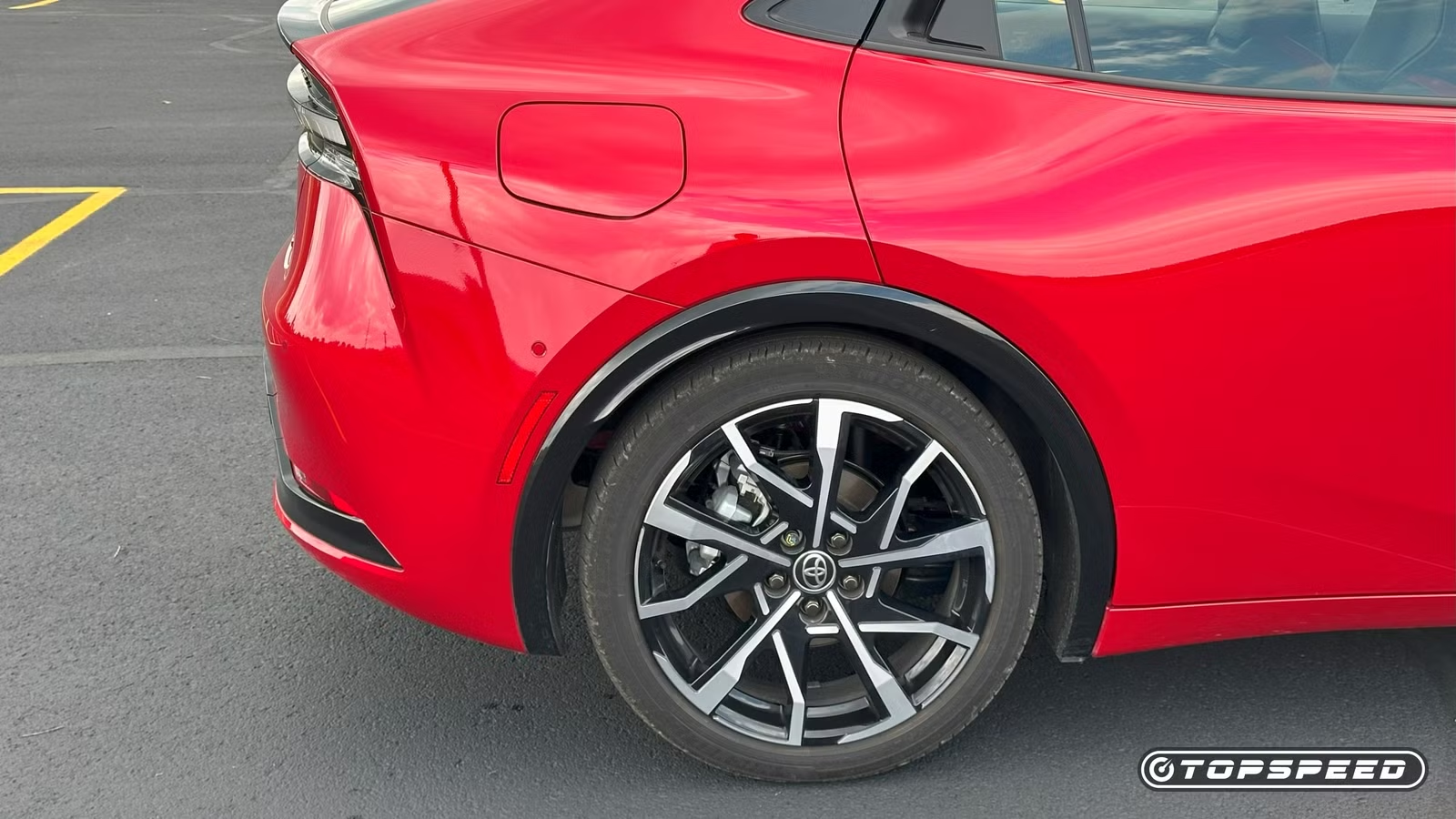
Most PHEV shoppers base their purchase on marketing. The consequential numbers on the spec sheet rarely become primary talking points. Most consumers simply compare the electric range, see if they can get a rebate or tax credit, and move on. Yet, there is an efficiency rating buried inside every PHEV listing, one that determines how expensive a multi-hour road trip will actually be once the battery runs out. This key metric is known as the EPA charge-sustaining (CS-mode) highway rating. The gap between the best and worst 2026 model year performers is wide enough to cost hundreds of dollars annually. There is one model in particular that leads the ranking by a margin that realistically puts it into a class of its own.
EV Range Dominates PHEV Marketing

When you watch a commercial about a PHEV in 2026, the automaker can’t wait to tell you about the electric range. Manufacturers emphasize electric range to make PHEVs seem more like EVs than traditional gas cars, but for long highway drives, the opposite is often true.
The Pivotal Number Few Shoppers Seem To Care About

When looking at EPA efficiency ratings for PHEVs, you will see two separate figures: one for electric operation and the other for charge-sustaining (CS) mode—the rating that applies once the battery is depleted. The CS-mode figure is split into city, highway, and combined just like standard efficiency ratings. The figure that matters the most when taking a long road trip is the CS-mode highway rating, but this metric almost never appears in standard marketing materials you see on a daily basis.
Most PHEV shoppers tend to instead focus on the combined MPGe figure or the EV-only range, but these metrics are misleading when considered in isolation. Real-world highway efficiency can be best understood by the CS-mode highway rating, and the spread across 2026 PHEV models is intriguingly wide. Depending on which make and model you select, figures can range from the low 20s to the low 50s mpg (highway), which is the difference between an efficient car and an expensive one once your trips get longer.
The Cost Of Ignorant Bliss


Consider this example. On a 500-mile trip where the first ~50 miles are electric, the remaining 450 miles at a 28 mpg CS-mode highway rating and $6.40/gal costs about $103. At 51 mpg highway, that same 450 miles costs around $56. That $47 difference per trip compounds every time you decide to take a long-distance highway drive. If you do about two highway trips per month, that gap adds up to about $1,130 annually before accounting for all the other savings a more efficient model may carry.
The Plug-in Hybrid That Feels Like A Lexus Without The Price Tag
This plug-in hybrid may be one of the most underrated ones on the market. It’s not classified as luxury, but it comes as close as you can.
Why Battery Size Doesn’t Tell The Full Story

It might seem logical that a bigger battery size means a better PHEV, but it just isn’t that simple. Battery capacity may determine how far you can drive on an electric charge, but it does not indicate how efficient the vehicle is in all real-world driving situations.
The GLE 450e Is A Clear Example

The 2025 Mercedes GLE 450e carries one of the largest battery packs in any production PHEV and delivers up to 50 miles of electric range as a result. Once the battery depletes, the CS-mode highway rating is 28 mpg, according to 2025 EPA figures. 2026 GLE 450e EPA ratings are currently unavailable, thus 2025 figures are our closest reference. While 28 highway mpg is not bad, it demonstrates that, at its core, the GLE 450e is a large luxury SUV, not a vehicle built for maximum efficiency. A buyer who purchases a GLE 450e for its efficiency credentials will see most of that efficiency dissolve once they drive further than 50 miles.
Optimizing CS-Mode Efficiency

Post-depletion efficiency is not rocket science; it comes down to the same standards that make all vehicles efficient. The primary determinants are vehicle weight, engine architecture, and transmission design—not battery capacity. A compact car running an Atkinson-cycle engine with a CVT will return better highway mpg than a heavy SUV with a turbocharged engine and a conventional automatic transmission. The PHEVs that dominate CS-mode efficiency rankings do so because their gas powertrains were engineered to the same high standard as their electric systems. That trade-off is something most PHEV buyers don’t spend enough time looking into.
Highly Efficient Hybrid Sedans You May Have Overlooked
While these sedans don’t dominate headlines, they are incredibly efficient and criminally underrated.
The 2026 Toyota Prius PHEV Is The Highway MPG Leader

The 2026 Toyota Prius Plug-in Hybrid posts the highest EPA CS-mode highway fuel economy rating in its class, achieving 51 mpg on the SE trim. That makes the Prius PHEV SE the highest-rated PHEV currently available in 2026. That figure is a product of a platform designed around gas-mode efficiency from the start, built on a proven hybrid architecture.
The Efficiency Difference Between The SE And XSE Trim

The Prius PHEV utilizes a 13.6 kWh battery pack and achieves an EPA CS-mode rating of 53 city mpg and 51 highway mpg. The XSE trim achieves a slightly lower rating with 50 city mpg and 48 highway mpg. That translates to a four-mpg drop in combined fuel economy, which can be attributed primarily to the significantly larger and heavier 19-inch wheels used on the XSE, as opposed to the lighter and more aerodynamic 17-inch wheels used on the SE model. These larger wheels also affect electric range, dropping from 44 miles on the SE to 39 miles on the XSE trim. This might not seem like a meaningful difference initially, but this four-mpg advantage will begin to add up if you frequently drive highway miles.
Real-World Numbers Back The EPA Rating

Edmunds road-tested a 2026 Prius PHEV XSE and achieved 50.9 mpg in real-world conditions. Despite the XSE being the lower-rated trim in terms of efficiency, it was able to surpass its EPA rating during this test. We searched owner forums and found multiple owners reporting similar efficiency. Certain PHEVs can diverge from their lab-tested EPA rating once driven in more dynamic environments, but that is not the case with the Prius PHEV. The 50.9 mpg real-world results on the XSE suggest that the more-efficient SE trim’s 51 mpg highway figure should be easily achievable under normal driving conditions.
The Luxury PHEV That’s Now Cheaper Than A New Toyota Tacoma
This luxury PHEV not only costs less than a new Toyota Tacoma, but it also offers class-leading handling and good-enough pure electric range.
How Other PHEVs Compare

Once we consider the full 2026 PHEV landscape, it is clear that the Prius PHEV is in a class of its own in terms of overall efficiency. The spread from the top of CS-mode efficiency to the bottom is a wider gap than most shoppers might imagine.
Compact, Midsize, And Luxury Benchmarks

The Prius PHEV is in a class of its own because there is no other plug-in hybrid compact sedan on the market. The next closest thing is a subcompact SUV, the 2025 Kia Niro PHEV, which achieves 33 miles of electric range and 47 highway mpg. That efficiency figure puts it within striking range of the Prius PHEV XSE. That 47 mpg figure outpaces most of the midsize SUV field by a significant margin.

The midsize SUV segment is a different story. The 2025 Toyota RAV4 PHEV has 42 miles of electric range and offers 36 mpg highway; 2026 figures are currently unavailable. The 2026 Hyundai Tucson PHEV and the 2026 Kia Sportage PHEV each offer between 32–33 miles of electric range and 35–36 highway mpg. In the luxury compact segment, the 2026 Lexus NX 450h+ offers 37 miles of electric range and 33 highway mpg. Not bad for a luxury crossover, but 18 highway mpg behind the Prius PHEV SE.

For reference, the standard hybrid 2026 Toyota Prius achieves 56 mpg highway, the absolute benchmark for gas-hybrid efficiency. The 2026 Honda CR-V FWD achieves 36 highway mpg, while the AWD variant drops to 34 mpg. The Prius PHEV SE’s 51 highway mpg sits closer to the standard Prius than any other PHEV currently rated. It is clear that if you want optimized efficiency in different forms, the Prius will get the job done.
What Buyers Should Actually Shop For

If you live in a metropolitan area and rarely exceed the limit of your PHEV’s electric range, CS-mode highway mpg is a secondary concern at most. EV mode will be able to handle most tasks in this situation, but once you take a long highway drive or two, this consideration changes quickly.
A Choice Depending On Your Lifestyle

If you want to determine whether a PHEV is the right choice for you at all, consider this practical framework. Estimate what percentage of your monthly miles are highway trips that exceed your PHEV’s electric range. If that figure exceeds 30-percent, you need to consider CS-mode highway mpg as a determining factor in your purchasing decision. A Mercedes GLE 450e sounds like a pragmatic choice, but if you spend a lot of time on the highway, you will inevitably spend much more on fuel than you would have had you purchased a Prius PHEV instead. The Prius PHEV earns its spot at the top of the table because it was engineered to be just as efficient without a charge as it is with one. That is a standard that only this Japanese compact sedan can currently meet in the PHEV segment.
Sources: Toyota, Lexus, Honda, Mercedes, Hyundai, Kia, EPA, Edmunds, Kelley Blue Book

Related posts




Latest Post


No Comments