
The Cruiser That Makes 1,000cc Feel Like The Perfect Engine Size
For years, cruiser motorcycles’ displacement has worked more like a status symbol. Bigger engines brought more torque, more presence, and usually meant more money spent. That made sense when air-cooled V-twins were doing most of the work, and extra cubic inches were the straightforward route to stronger performance. Modern liquid cooling, higher compression, sophisticated valve trains, and electronic throttle control have changed that equation rather dramatically. So the question now is not how large an engine can be squeezed into a cruiser, but how much engine does the motorcycle actually need. Around one liter is the answer that can be surprisingly complete.
Big Cruisers Have Made Displacement An Easy Shortcut

Cruiser buyers have been trained to look upward. A 1,200cc engine once sounded large, but today, it sits closer to the entry-level of a manufacturer’s range. And it isn’t the rider that’s to blame. Manufacturers have been plonking giant V-twins into cruisers for decades, becoming the norm for cruiser motorcycles in America. Call it a bid to feel substantial, or simply sticking to tradition, the big-displacement cruiser engine usually goes above the 1,700cc mark.

Indian’s V-twin platform stretches beyond 1,800cc, while Harley-Davidson’s current heavyweight touring engines exceed 1,900cc. Those motorcycles have jobs that justify the capacity, but they have also shifted expectations of what a “serious” cruiser should have between its frame rails. More recently, however, the age-old adage of there being no replacement for displacement is being challenged by modern engineering. Around 1,000cc, with the right engineering, can deliver the performance, sound, and highway ability that riders expect without dragging a heavyweight engine and chassis along for the ride.

The downside to bigger engines is also more obvious once the road stops being straight. Bigger engines tend to be nestled in larger chassis which are heavier; they need more cooling hardware, robust drivetrains, and then reach the sort of curb weights that make minor parking-lot mishaps very expensive. Huge torque, of course, is entertaining, but using a fraction of it around town while maneuvering 900-plus pounds of motorcycle can feel like bringing a sledgehammer to hang a picture.


A roughly liter-sized engine sits in a more useful middle ground. It can still produce enough torque to pull cleanly from a standstill, yet it does not require the rest of the motorcycle to be built like a freight train. Liquid cooling and modern cylinder-head design also let engineers chase horsepower without depending solely on displacement. Keeping the mass down also gives the engine more revs to work with, and the 1,000cc stops looking like a compromise. Harley seems to have that figured out, and is slowly pushing the concept onto newer riders.
The Harley-Davidson Nightster Makes 975cc Count

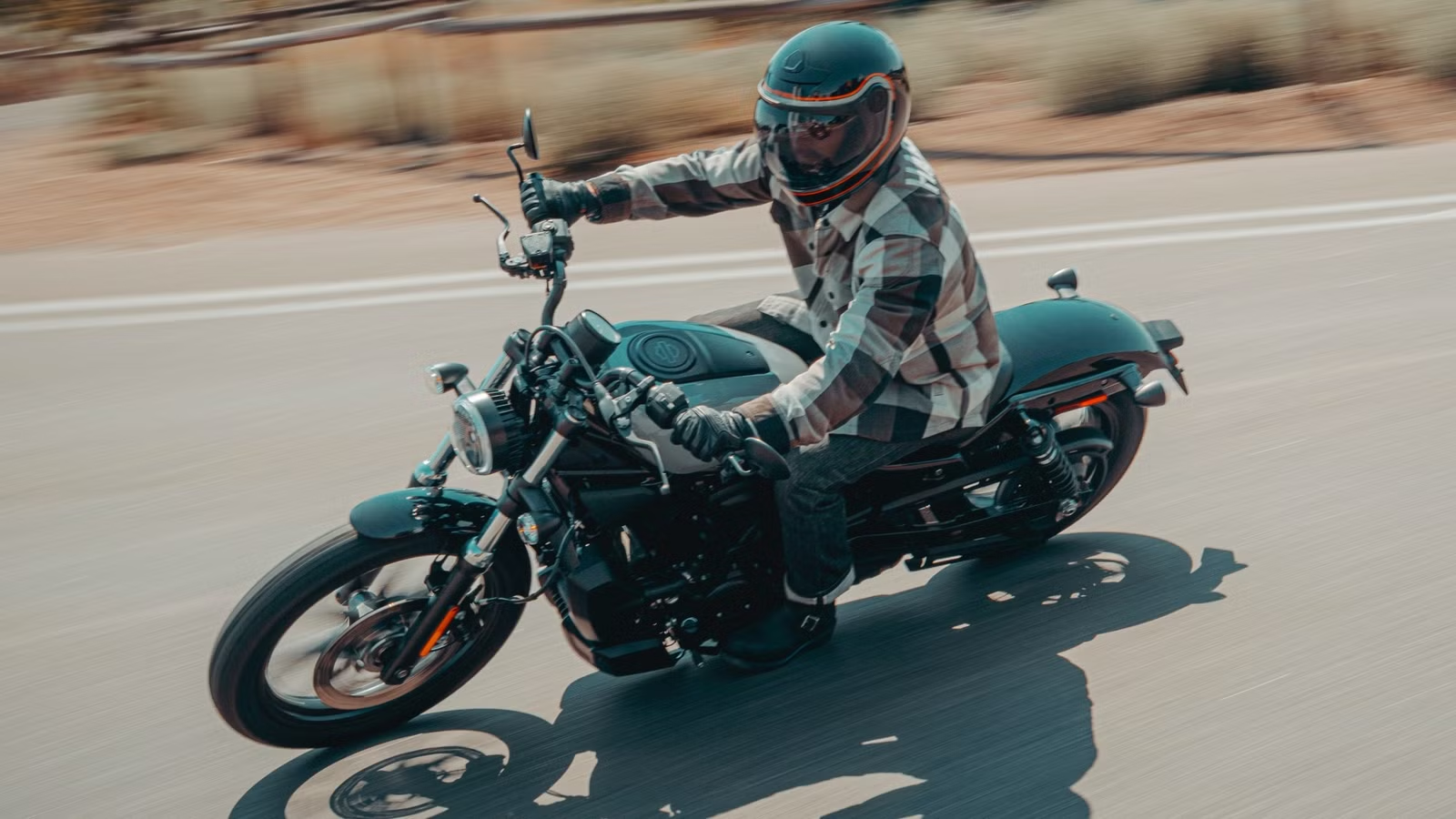
The 2026 Harley-Davidson Nightster (and the Special) is the clearest example of this newfound approach. Its 975cc Revolution Max 975T is a liquid-cooled, 60-degree V-twin producing 91 horsepower at 7,500 rpm and 72 pound-feet of torque at 5,750 rpm. Starting at $9,999, it is still as affordable and approachable as Sportsters have been, while also carrying Sportster cues. But the engineering is thoroughly current: the engine is a structural part of the chassis, the fuel tank sits below the seat, while electronic rider aids are integral to the package. Instead of recreating an old Sportster with a radiator attached, Harley built a compact cruiser around what a modern V-twin can do.
The Revolution Max 975T Makes 1,000cc Feel Like Enough

Harley labels the engine 975T, and it’s assumed that the T emphasizes mid-range torque, since peak torque is made well under 6,000rpm, but its 7,500 rpm horsepower peak is what makes the displacement feel so well judged. The Nightster still delivers the low and midrange pull that’s expected from a cruiser, yet it keeps working well beyond the point where many larger V-twins are ready for another gear.
Dual overhead camshafts, four valves per cylinder, liquid cooling, a 12:1 compression ratio, and intake-side variable valve timing help the Revolution Max 975T extract more from its capacity. With 91 horsepower moving 481 pounds, the Nightster has enough performance to make the upper half of the tachometer properly useful, while its 9,500-rpm redline gives riders room to hold a gear when the road opens up. This engine is possibly the clearest advocate of making a 1,000cc work beautifully for a cruiser.
A Smaller Engine Pays Off In The Chassis

The Nightster’s advantage is not merely that it makes strong power from 975cc. It is that Harley pairs that output with a reasonable wet weight, so the engine never has to compensate for unnecessary bulk. Around town, that means easier low-speed maneuvering and less effort during tight maneuvers or stop-start traffic. On a faster road, the same lack of mass helps the bike respond more readily when the rider changes direction or wants more acceleration.

Its packaging reinforces that advantage further. The 3.1-gallon fuel tank sits beneath the seat, while the space above the engine houses the airbox and electronics, keeping more weight lower in the chassis. Combined with a 27.1-inch laden seat height and 60.8-inch wheelbase, the Nightster feels compact without being cramped. This is where its roughly 1,000cc formula delivers enough engine for highway use and spirited riding without saddling the rider with the size and inertia that accompany bigger cruisers.
Modern Electronics Make Performance Easier To Use

A lively engine is more useful when the rider can tailor how it responds. The Nightster includes Road, Sport, and Rain modes, which alter throttle response and rider-aid intervention. Anti-lock braking, traction control, and the Drag-Torque Slip Control System are standard, giving the bike a level of electronic support that is not usually expected at this price. These systems also make the Nightster easier to adapt to changing roads and weather without adding mechanical complexity. Sport mode brings out more urgency from the 975T, while Rain mode reins it in when conditions deteriorate, giving the Nightster a useful layer of flexibility.
The Scout Sixty Bobber And Rebel 1100 Show How Tight This Class Has Become

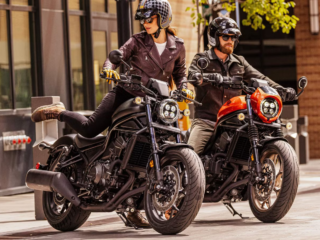
Indian’s 2026 Scout Sixty Bobber makes for a close comparison because it starts at the same $9,999 and uses a 999cc liquid-cooled V-twin. It produces 85 horsepower and 65 pound-feet of torque, but weighs 536 pounds in running order. The Scout Sixty Bobber also has a lower 25.6-inch seat and a more traditional bobber stance, yet the Harley Nightster has the stronger power-to-weight ratio and includes ride modes and traction control as standard.
Honda’s $9,699 Rebel 1100 uses a 1,084cc parallel-twin, with a 497-pound curb weight, and features like cruise control and optional Dual-Clutch Transmission that make it an exceptionally practical road cruiser. It is the rational alternative, while the Nightster keeps a genuine V-twin character alive and the quintessential Harley identity. That is why the 975cc feels so convincing here. The Nightster has enough engine to be exciting, but not so much motorcycle built around it that the engine has to spend its energy hauling it around.
Source: Harley-Davidson

Related posts

Latest Post


The Cruiser That Makes 1,000cc Feel Like The Perfect Engine Size
For years, cruiser motorcycles’ displacement has worked more like a status symbol. Bigger engines brought more torque, more presence, and usually meant more money spent. That made sense when air-cooled V-twins were doing most of the work, and extra cubic inches were the straightforward route to stronger performance. Modern liquid cooling, higher compression, sophisticated valve trains, and electronic throttle control have changed that equation rather dramatically. So the question now is not how large an engine can be squeezed into a cruiser, but how much engine does the motorcycle actually need. Around one liter is the answer that can be surprisingly complete.
Big Cruisers Have Made Displacement An Easy Shortcut

Cruiser buyers have been trained to look upward. A 1,200cc engine once sounded large, but today, it sits closer to the entry-level of a manufacturer’s range. And it isn’t the rider that’s to blame. Manufacturers have been plonking giant V-twins into cruisers for decades, becoming the norm for cruiser motorcycles in America. Call it a bid to feel substantial, or simply sticking to tradition, the big-displacement cruiser engine usually goes above the 1,700cc mark.
Indian’s V-twin platform stretches beyond 1,800cc, while Harley-Davidson’s current heavyweight touring engines exceed 1,900cc. Those motorcycles have jobs that justify the capacity, but they have also shifted expectations of what a “serious” cruiser should have between its frame rails. More recently, however, the age-old adage of there being no replacement for displacement is being challenged by modern engineering. Around 1,000cc, with the right engineering, can deliver the performance, sound, and highway ability that riders expect without dragging a heavyweight engine and chassis along for the ride.
The downside to bigger engines is also more obvious once the road stops being straight. Bigger engines tend to be nestled in larger chassis which are heavier; they need more cooling hardware, robust drivetrains, and then reach the sort of curb weights that make minor parking-lot mishaps very expensive. Huge torque, of course, is entertaining, but using a fraction of it around town while maneuvering 900-plus pounds of motorcycle can feel like bringing a sledgehammer to hang a picture.

A roughly liter-sized engine sits in a more useful middle ground. It can still produce enough torque to pull cleanly from a standstill, yet it does not require the rest of the motorcycle to be built like a freight train. Liquid cooling and modern cylinder-head design also let engineers chase horsepower without depending solely on displacement. Keeping the mass down also gives the engine more revs to work with, and the 1,000cc stops looking like a compromise. Harley seems to have that figured out, and is slowly pushing the concept onto newer riders.
The Harley-Davidson Nightster Makes 975cc Count
The 2026 Harley-Davidson Nightster (and the Special) is the clearest example of this newfound approach. Its 975cc Revolution Max 975T is a liquid-cooled, 60-degree V-twin producing 91 horsepower at 7,500 rpm and 72 pound-feet of torque at 5,750 rpm. Starting at $9,999, it is still as affordable and approachable as Sportsters have been, while also carrying Sportster cues. But the engineering is thoroughly current: the engine is a structural part of the chassis, the fuel tank sits below the seat, while electronic rider aids are integral to the package. Instead of recreating an old Sportster with a radiator attached, Harley built a compact cruiser around what a modern V-twin can do.
The Revolution Max 975T Makes 1,000cc Feel Like Enough
Harley labels the engine 975T, and it’s assumed that the T emphasizes mid-range torque, since peak torque is made well under 6,000rpm, but its 7,500 rpm horsepower peak is what makes the displacement feel so well judged. The Nightster still delivers the low and midrange pull that’s expected from a cruiser, yet it keeps working well beyond the point where many larger V-twins are ready for another gear.
Dual overhead camshafts, four valves per cylinder, liquid cooling, a 12:1 compression ratio, and intake-side variable valve timing help the Revolution Max 975T extract more from its capacity. With 91 horsepower moving 481 pounds, the Nightster has enough performance to make the upper half of the tachometer properly useful, while its 9,500-rpm redline gives riders room to hold a gear when the road opens up. This engine is possibly the clearest advocate of making a 1,000cc work beautifully for a cruiser.
A Smaller Engine Pays Off In The Chassis
The Nightster’s advantage is not merely that it makes strong power from 975cc. It is that Harley pairs that output with a reasonable wet weight, so the engine never has to compensate for unnecessary bulk. Around town, that means easier low-speed maneuvering and less effort during tight maneuvers or stop-start traffic. On a faster road, the same lack of mass helps the bike respond more readily when the rider changes direction or wants more acceleration.
Its packaging reinforces that advantage further. The 3.1-gallon fuel tank sits beneath the seat, while the space above the engine houses the airbox and electronics, keeping more weight lower in the chassis. Combined with a 27.1-inch laden seat height and 60.8-inch wheelbase, the Nightster feels compact without being cramped. This is where its roughly 1,000cc formula delivers enough engine for highway use and spirited riding without saddling the rider with the size and inertia that accompany bigger cruisers.
Modern Electronics Make Performance Easier To Use
A lively engine is more useful when the rider can tailor how it responds. The Nightster includes Road, Sport, and Rain modes, which alter throttle response and rider-aid intervention. Anti-lock braking, traction control, and the Drag-Torque Slip Control System are standard, giving the bike a level of electronic support that is not usually expected at this price. These systems also make the Nightster easier to adapt to changing roads and weather without adding mechanical complexity. Sport mode brings out more urgency from the 975T, while Rain mode reins it in when conditions deteriorate, giving the Nightster a useful layer of flexibility.
The Scout Sixty Bobber And Rebel 1100 Show How Tight This Class Has Become
Indian’s 2026 Scout Sixty Bobber makes for a close comparison because it starts at the same $9,999 and uses a 999cc liquid-cooled V-twin. It produces 85 horsepower and 65 pound-feet of torque, but weighs 536 pounds in running order. The Scout Sixty Bobber also has a lower 25.6-inch seat and a more traditional bobber stance, yet the Harley Nightster has the stronger power-to-weight ratio and includes ride modes and traction control as standard.
Honda’s $9,699 Rebel 1100 uses a 1,084cc parallel-twin, with a 497-pound curb weight, and features like cruise control and optional Dual-Clutch Transmission that make it an exceptionally practical road cruiser. It is the rational alternative, while the Nightster keeps a genuine V-twin character alive and the quintessential Harley identity. That is why the 975cc feels so convincing here. The Nightster has enough engine to be exciting, but not so much motorcycle built around it that the engine has to spend its energy hauling it around.
Source: Harley-Davidson

No Comments