
10 Older Motorcycles That Still Make A Stronger Case Than Many New Ones
Since the dawn of motorcycles, the two-wheeled world has evolved steadily. Motorcycle makers worldwide are always making newer, better models with superior technology and features. But over the years, they’ve outdone themselves to the point that going back in time makes more sense in some cases. Unlimited budget, no engineering restrictions, and sheer passion have given us some drool-worthy motorcycles which stand discontinued today. Yet, they are so good that, despite being decades old, they remain more desirable than many new 2026 models. Here are ten such ‘old’ motorcycles that are still drool-worthy.
This list is organized from newest to oldest, based on each generation’s production years.
Yamaha Star Venture
Production Years: 2018–2021
This luxurious transcontinental touring motorcycle was Harley-Davidson’s arch-nemesis. The metric full-dresser blends comfort, luxury, convenience, and refinement without compromising the larger-than-life appeal of a V-twin tourer. Powering this Yamaha is an old-school-vibing 1,854 cc air-cooled V-twin. This pushrod 48-degree mill has four valves per cylinder and a relaxed 9.5:1 compression ratio.

It produces 126 pound-feet of torque at just 2,250 RPM. This early torque surge helps this near-1,000-pound behemoth glide forward without hiccups. Notable features include ride-by-wire, touring modes, electronic park assist, linked brakes, heated grips and seats, and a smart key system. It also gets a 7-inch touchscreen display and dual-zone audio. All of this can be had today for well under $15,000 thanks to depreciation.

Yamaha FJR1300ES
Production Years: 2014–2024

The FJR is widely considered the pinnacle of sports touring motorcycles. It fuses the comfort and convenience of a touring bike with the performance and riding dynamics of a sports bike. Comfort comes from adjustable wind protection and ample storage, in addition to massive seats and upright ergonomics.

A powerful four-cylinder engine powers this forgotten Yamaha. The 1,298 cc liquid-cooled mill is built for meaty mid-range performance, producing 146.2 horsepower at 8,000 RPM and 101.8 pound-feet of torque at 7,000 RPM. Power is sent to the rear wheel via a six-speed manual and a final shaft drive system. The ES is also special because it adds standard electronic suspension. This greatly helps with comfortable, adaptive riding dynamics across changing road conditions.
Honda VFR1200F
Production Years: 2009–2017

This motorcycle marked the start of Honda’s DCT era. The VFR1200F is a unique sport-tourer that is yet to be outclassed, standing out for introducing cutting-edge automotive and MotoGP-derived technology into a daily-rideable package. Powering this concept-styled motorcycle is a 76-degree, 1,237 cc V4 engine inspired by Honda RC212V’s MotoGP technology.

It is liquid-cooled and offers a meaty 170 horsepower at 10,000 RPM and 95.1 pound-feet of torque at 8,750 RPM. As standard, power is sent to the rear wheel via a six-speed manual and a final shaft drive system. But as an option, Honda offers its first-ever production-spec DCT for a motorcycle on this VFR. It has manual paddle shifters and automatic D/S modes for a smoother riding experience. It is a sport-tourer that looks and sounds like nothing else on the road, even by 2026 standards.
Yamaha VMAX
Production Years: 2009–2020

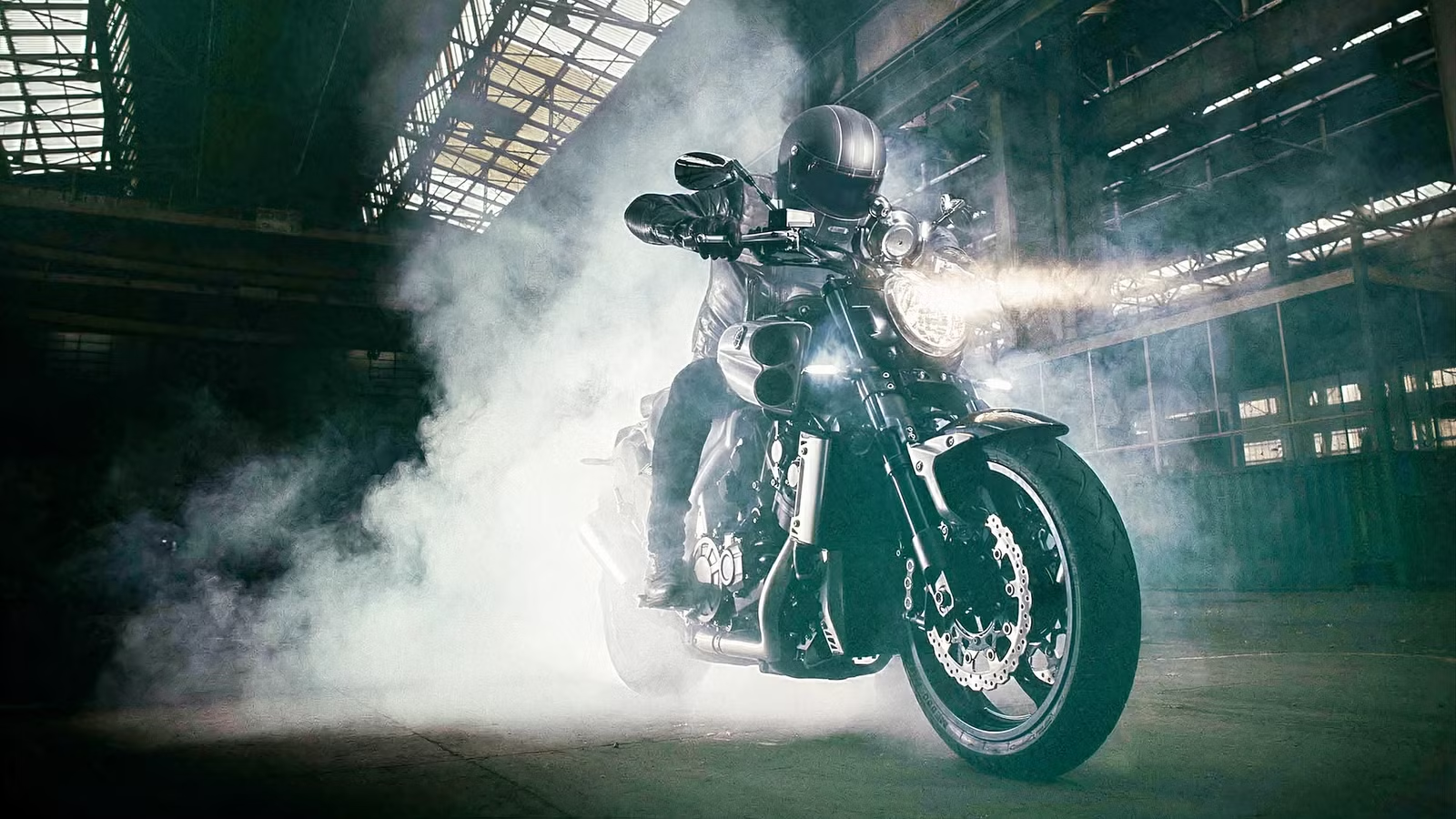
This discontinued power cruiser still holds the tag of the “most powerful production cruiser bike ever”. The second-gen Yamaha VMAX sent shockwaves with its sophisticated engineering that somehow balances explosive superbike-grade performance with riding comfort. This muscle-cruiser beast packs a unique liquid-cooled V4 engine. The 1,679 cc mill produces a whopping 200 horsepower at 9,000 RPM and 123 pound-feet at 6,500 RPM.

This drag-strip-ready cruiser bike is tamed by top-spec technology like an electronically controlled intake system, fly-by-wire throttle, and racetrack-derived ramp-type clutch. An aluminum frame with a low center of gravity adds nimbleness by placing the heavy engine low and forward for better weight distribution. The fuel tank is even relocated beneath the seat to centralize mass and improve handling. Hardware is top-spec even by 2026 standards, with Brembo brakes and a heavy-duty, adaptive suspension setup. No other untamed power cruiser will ever match the Yamaha VMAX.
Third-Gen Yamaha YZF-R6
Production Years: 2008–2016

The third-gen Yamaha R6 stands out because many consider it the peak of the R6 series. This generation got a variable-length intake system for optimized high-RPM power delivery, a refined Deltabox frame for superior cornering stability, and one of the coolest designs of a middleweight sportbike. It is sharp and agile, with Yamaha R1-derived components and M1-inspired aerodynamics for its generation.

Powering this R6 is a gorgeous-sounding, high-revving 599 cc inline-four engine—a rare sight today. It produces 129 horsepower at 14,500 RPM and 47.7 pound-feet of torque at 11,500 RPM. Yamaha also offers a RAM Air kit that boosts power to 135 horsepower. With a curb weight of just 415.8 pounds, the power-to-weight ratio is insane here. This generation R6’s performance and agility remain unmatched, even by newer rivals.
Second-Gen Kawasaki KLR650
Production Years: 2008–2018

This Kawasaki dual-sport has proven its longevity by being virtually unchanged since its inception in 1987 and is still going strong. The secret lies in its simple engineering of the engine, chassis, and complementary hardware. Every component is designed to be low-stress and take a lot of beating. Its simple design and decades of existence also make the KLR a recognizable motorcycle worldwide and easy to work on.

Powering this workhorse of a globetrotter is a 652 cc liquid-cooled single that produces 40 horsepower at 6,000 RPM and 39.1 pound-feet of torque at 4,500 RPM. Its long-travel suspension, rugged chassis, and add-on luggage solutions help the KLR650 become a formidable adventure companion. While it’s still available new, the older second-gen model offers better value: you get the same package for much less, thanks to depreciation.
Kawasaki Vulcan 2000
Production Years: 2004–2010

Forget Harley-Davidson and Indian Motorcycle; the biggest production V-twin engine ever made is on a Kawasaki. The Vulcan 2000 (VN2000) is Kawasaki’s version of the American cruiser-bike dream with old-school-inspired styling that is spot on. There’s a lot of chrome, and the comfort quotient is as high as it gets on a cruiser bike.

Between all that lies a gigantic 2,053 cc liquid-cooled mill that produces 103 horsepower at 4,800 RPM and 130.5 pound-feet of torque at 3,200 RPM. Its insane torque remains undisputed by V-twin cruiser standards, even as a 20-year-old offering. Underpinnings are heavy-duty: a double-cradle, high-tensile steel frame suspended on chunky 49 mm front telescopic forks and a swingarm-mounted rear monoshock with rebound and preload adjustability.
Harley-Davidson V-Rod
Production Years: 2002–2017

This forgotten Harley-Davidson redefined American V-twin performance, and it is the result of a revolutionary partnership with Porsche. You get a firecracker of a V-twin with 1,131 cc and liquid cooling, topped with dual overhead cams and four-valve cylinder heads. It produces 115 horsepower at 8,250 RPM and 74 pound-feet of torque at 7,300 RPM.

Power is sent to the rear wheel through a five-speed manual gearbox and a final belt-drive system. The underpinnings are unique, designed to deliver nimble dynamics and balanced weight distribution. A hydroformed frame and under-seat fuel tank further support this layout. Its timeless custom drag-bike styling is elevated with features like a chunky rear tire and low-slung stance. This is a Harley we’d love to see revived.
Ducati 916
Production Years: 1994–1998

The 916 redefined superbike design and performance. It stood out from the rivals with distinctive features like an under-seat exhaust, a single-sided swingarm, a slim form factor, and aggressive bodywork. Its exotic appeal was backed by precision engineering, with features like the gorgeous Desmoquattro L-twin engine that balances weight, a patented adjustable steering to tweak the rider triangle, and top-tier components.

Its 90-degree 916 cc L-twin engine produces 114 horsepower at 9,000 RPM and 66.3 pound-feet of torque at 7000 RPM. Power is sent to the rear wheel via a six-speed manual gearbox. The underpinnings are lightweight and complemented with top-tier hardware like adjustable inverted Showa front suspension, a progressive-linkage rear suspension, and powerful Brembo brakes.
Honda RVF750
Production Years: 1994–1999

This is a very desirable sport bike from the 1990s. This exotic Honda is an elite, race-bred homologation motorcycle built for outright performance and precision engineering. It is powered by a high-revving 90-degree V4 engine with DOHC and four valves per cylinder. This 749 cc liquid-cooled mill has an 11.5:1 compression ratio and produces 119 horsepower at 12,000 RPM and 56 pound-feet of torque at 10,000 RPM.

Power is sent to the rear wheel via a six-speed manual gearbox. As a race bike for the road, weight saving is the top priority. Its low curb weight of 467.3 pounds comes from a lightweight diamond aluminum twin-spar frame. It is suspended on 41 mm inverted front forks and a Pro-Link rear monoshock. Other cool features that still matter today include a single-sided swingarm, an advanced fuel injection system, and exotic materials like titanium alloy.
Sources: Yamaha Motorsports, Kawasaki, Harley-Davidson, Honda Powersports, and Ducati.

Related posts

Latest Post


No Comments